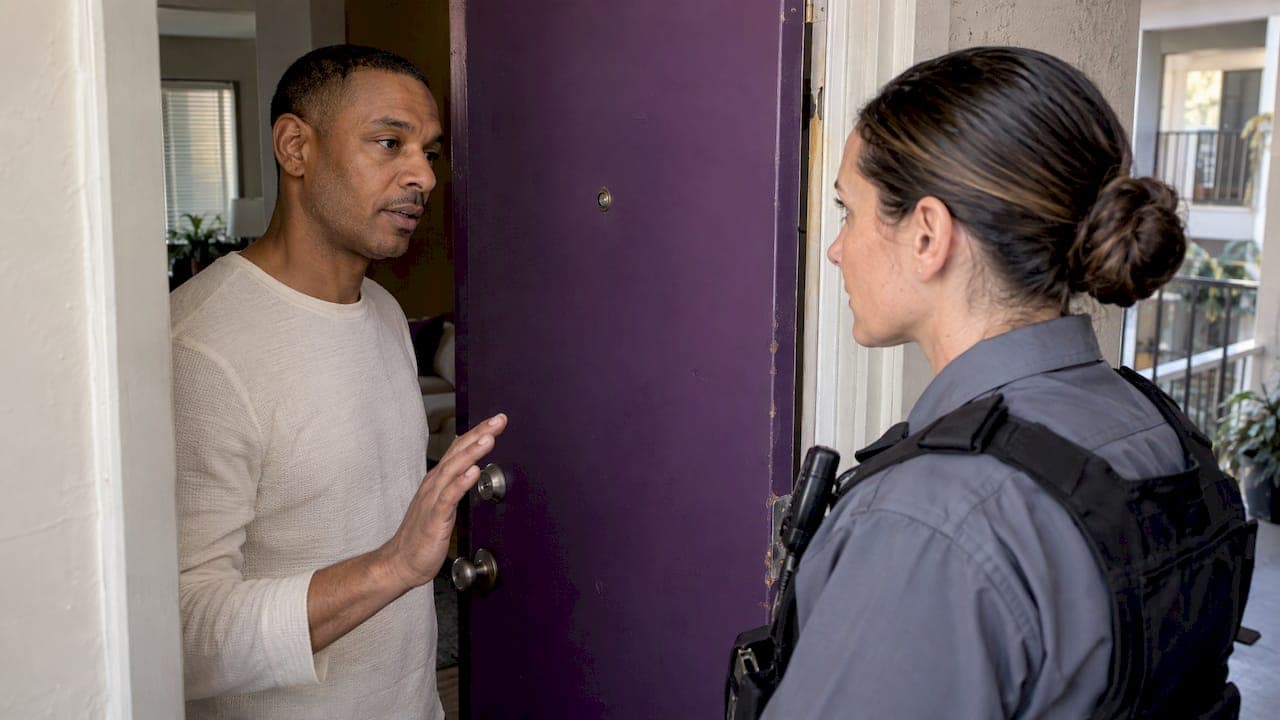
In almost every situation, you should not answer police questions about a possible crime without a lawyer. That holds even if you are innocent and even if no one has arrested you. You can politely say that you do not want to talk and that you want a lawyer. Then stop talking and call a criminal defense attorney.
This guide explains why that advice is so consistent. It covers when Miranda rights apply, the exact words to use, what you still must hand over, and whether officers can lie to you. It is written for people in the United States. Where a rule belongs to one state, we say so.
TL;DR
- The Fifth Amendment gives you the right to remain silent, and that right does not depend on being arrested or in custody.
- Say it out loud and plainly: you are choosing to remain silent and you want an attorney. Then stop answering.
- Miranda warnings are required only before custodial interrogation, so officers can question you without them in many situations.
- Police may use deception in interviews, and a lie alone does not automatically make a confession inadmissible.
- Staying silent is not the same as lying. Never give false information to an officer.
Table of Contents
- Why talking without a lawyer is risky even if you are innocent
- Your right to remain silent: when it applies
- Miranda rights: what they cover and what they do not
- How to invoke your rights: the exact words
- Can police lie during an interrogation?
- Silence is allowed. Lying is not.
- What you may still have to do
- A short guide for common situations
- Our perspective
- If police want to talk to you, get a defense lawyer first
- FAQ
- Sources
Why talking without a lawyer is risky even if you are innocent
Most people talk to police because they want to clear things up. They think a quick explanation will end the matter. The problem is that an interview is not a conversation between equals. The officer is gathering evidence, and your words become part of it.
According to the Ohio State Bar Association, anything you say can be used as evidence against you, and answering questions while in custody can make it harder for your lawyer to defend you later. A University of California, Berkeley legal services guide makes a related point: you may unwittingly incriminate yourself by volunteering information.
Here is how that happens in practice:
- A harmless detail becomes a contradiction. You say you left the bar at 11, then a receipt shows 11:40. You were not lying, only guessing, but now your account looks unreliable.
- You confirm something the police could not prove. Admitting you were at a location, owned a phone, or knew a person can supply a missing piece.
- You say too much about someone else. Explaining a friend's situation can drag you into it.
- Your honest answer sounds different on paper. A summary in a police report drops tone, context and the questions that came before.
Silence cannot give officers any of those things. That is why defense lawyers give the same advice whether a client is guilty or innocent: the interview is not where an innocent person's case is won.
"I'm not a suspect" does not settle it
Officers sometimes say you are only a witness or that they just need a statement. You cannot see their file. A witness can become a suspect during the conversation, based on what you say. If an officer tells you that you are not in trouble, you can still say you would like to speak with a lawyer first.
Your right to remain silent: when it applies
The right comes from the Fifth Amendment. According to a Columbia Law School chapter on pretrial rights, the protection applies whether or not you have been arrested or are in custody. You do not need to wait for handcuffs. A police officer at your door, a detective calling your phone and a patrol officer on the sidewalk are all situations where you may decline to answer questions.
You can also exercise it late. The ACLU explains that you can invoke your right to remain silent at any point, even after you have already answered some questions. If you realize ten minutes in that you have said too much, you can stop then. What you already said may still be used, but you can prevent more.
Miranda rights: what they cover and what they do not
Many people believe police must read them their rights before they can ask anything. That is not how it works.
The Constitution Annotated, published by Congress, explains that Miranda applies before police interrogate a person in custody, including direct questioning or its functional equivalent. The warnings cover the right to remain silent, the right to an attorney before and during questioning, and the right to a court-appointed attorney if you cannot afford one.

The Department of Justice has described the rule in a Supreme Court filing as a constitutional rule of evidence applied in court, not a code of conduct for officers in the field. In plain terms: if an officer skips the warnings, the remedy usually comes later, when a lawyer asks a judge to exclude the statement. It does not stop the officer from asking.
What "custodial interrogation" means
The Columbia chapter defines custodial interrogation as being in custody or deprived of freedom of movement and subjected to direct questioning or its functional equivalent. Both parts matter:
| Situation | Custody? | Are Miranda warnings required? |
|---|---|---|
| Officer asks questions on the street and you are free to leave | Usually no | Not required |
| You are handcuffed in a patrol car and questioned | Yes | Required before questioning |
| You are arrested but officers ask no questions | Yes | Not triggered without interrogation |
| You volunteer a statement without being asked | Depends | Volunteered statements are generally not the product of interrogation |
The lesson is not to wait for a warning. If you have not heard the words, your right to silence still exists. For more on how these warnings work under California law, see our guide to Miranda rights in California.
How to invoke your rights: the exact words
Being silent is not always enough. The Columbia chapter says you must explicitly tell the officer out loud that you are choosing to remain silent and that you want an attorney before answering further questions. The ACLU's advice is similar: say that you do not want to talk and want to speak to a lawyer before answering questions.
A script that covers it:
- "I am going to remain silent."
- "I want a lawyer."
- "I do not consent to a search." (Say this if officers ask to look at your car, bag, home or phone.)
- Then stop. Do not explain, apologize, or add "but I did nothing wrong."
Be calm and polite. Arguing does not help and can escalate things. Do not run or physically resist, even if you believe the officer is wrong. Disputes about a stop are fought later, in court, with a lawyer.
What happens after you ask
The Constitution Annotated summarizes the rule: once a suspect asserts the right to remain silent, interrogation must stop. After a request for counsel, it cannot resume until a lawyer is available or the suspect starts further communication. The last part is the trap. If you say "I want a lawyer" and then chat while waiting, you may be treated as having reopened the conversation. After you ask, say nothing else about the case.
The same source notes that the Sixth Amendment right to counsel is offense-specific: it protects you regarding the particular crime you have been charged with, not every possible investigation.
Can police lie during an interrogation?
Yes, in many circumstances. This surprises people, because a lie from an officer feels like it should be illegal.
In Frazier v. Cupp, the Supreme Court considered an officer falsely telling a suspect that his co-suspect had confessed. The Court said that the misrepresentation was relevant but not enough, in those circumstances, to make the otherwise voluntary confession inadmissible. Courts look at the "totality of the circumstances," so deception is one factor among many, not an automatic bar.
What does this mean for you?
- An officer may claim they have video, fingerprints or a witness who named you. It may be true or it may not.
- An officer may suggest that cooperating now will "help you out." Officers do not decide charges or deals. Prosecutors do.
- A friendly tone is a technique, not evidence that you are safe.
Because you cannot tell a bluff from a fact, the safest move is the same either way: invoke your rights and let a lawyer ask what the evidence is. If an interrogation went wrong, a defense attorney can challenge it. We explain how in our article on challenging a coerced confession in California.
Silence is allowed. Lying is not.
The right to stay silent does not include a right to give false information. The ACLU advises that you should not lie to law enforcement officers, because false information can itself be a crime.
California has specific laws on this. Giving a false name can implicate PC 148.9, false identification to police, and knowingly filing a false report can implicate PC 148.5, false police report. A lie meant to get you out of an awkward moment can create a new charge. Declining to answer is always the safer path.
What you may still have to do
Invoking your rights does not mean refusing every request. A few situations carry duties:
- Traffic stops. The ACLU explains that drivers are typically required to provide a license, registration and proof of insurance, but generally do not have to answer other questions, such as where you are coming from or whether you have been drinking. For stops specifically, see our pages on probable cause for traffic stops and pretextual stops in California.
- Stop-and-identify laws. Some states require you to identify yourself in certain situations. Ohio, for example, has required since April 2006 that people in public places under specific circumstances give their name, address and date of birth, and failing to do so is a fourth-degree misdemeanor. These laws vary by state, so ask a local lawyer what applies where you live.
- Immigration documents. The ACLU notes that non-citizens aged 18 or older who have been issued valid U.S. immigration documents must carry them, and failure to comply can be a misdemeanor.
- DUI checkpoints. Rules differ from regular stops. Read whether you have to answer questions at a DUI checkpoint and what arrested drivers should do at Los Angeles checkpoints.
Providing required documents is different from answering questions about the case. You can hand over the license and still say, "I do not wish to answer questions."
A short guide for common situations
Officers at your door
You do not have to let them in without a warrant. Step outside and close the door if you wish to talk, or simply say you will not answer questions without a lawyer. Ask for a business card and tell them your attorney will call.
A detective calls or leaves a voicemail
Do not call back to explain. A request for a "quick chat" about a matter involving you is a reason to call a defense lawyer first. The lawyer can contact the detective, learn whether you are a target, and decide if any interview should happen.
You are arrested
Say you are remaining silent and want a lawyer. Do not discuss the case with cellmates, on jail phone lines or in the car. Those conversations can be recorded or repeated. If you do not have a lawyer, the Miranda rights include a court-appointed attorney for people who cannot afford one.
Federal agents
The same Fifth Amendment protection applies. Agents often arrive unannounced, and a casual conversation with a federal agent can create exposure to separate charges. If agents approach you, decline questions and ask for a lawyer. Our federal crimes defense page explains how federal matters differ, and so does our piece on federal versus state prosecution in California.
Our perspective
We spend our working lives in Los Angeles County courtrooms, and the pattern is consistent: the worst moments in a case often happen before the client ever calls us. A friendly conversation in a driveway, a recorded phone call to a detective, a few sentences in a patrol car. Those statements follow the case from the first hearing to the last.
What we try to do is give clients back control. Because our attorneys appear in court often, we know how local judges respond to motions and how prosecutors tend to build a case from a statement. That experience shapes how we approach a case. We examine whether a stop was lawful, whether a search can be challenged, and whether a statement was taken properly under the Constitution.
If you are being asked to talk, you do not owe anyone an answer without counsel. Call us before you give a statement, not after. Early involvement can include pre-file intervention, where we engage with prosecutors before charges are filed, and in appropriate cases alternative sentencing or diversion options.
Jake
If police want to talk to you, get a defense lawyer first
If you have been arrested, contacted by a detective, or told that officers "just have a few questions," Rubin Law, P.C. can speak with you before you decide anything. We defend drug, DUI, domestic violence, sex crime, violent crime and federal cases in Los Angeles, and we can contact investigators on your behalf so you are not facing them alone.
See the full list of cases we handle on our criminal defense page, or reach us through rubinlawpc.com. If you are worried about a false accusation or an unlawful arrest, our page on police misconduct and false arrest in California explains the possible remedies.
FAQ
Is it ever a good idea to talk to the police without a lawyer?
In a situation where you may be accused of a crime, almost never. Reporting that you are a victim or calling 911 in an emergency is different. Once questions turn toward your own conduct, tell the officer you want a lawyer first. A defense attorney can decide whether any statement is worthwhile and arrange the terms.
Can police question me if I have not been read my rights?
Yes. Miranda warnings are required before custodial interrogation, meaning you are in custody and being questioned. Outside of custody, officers can ask questions without reading them, and you can still decline to answer. If a statement was taken in violation of Miranda, your lawyer can ask a court to exclude it.
What should I say when police question me?
Say calmly: "I am remaining silent, and I want a lawyer." Do not explain why or add details. If officers ask to search your belongings, say you do not consent. Then stop talking, even if the silence feels uncomfortable.
Can police lie to me during questioning?
Often they can. The Supreme Court's decision in Frazier v. Cupp shows that a false claim about a co-suspect's confession did not by itself make a voluntary confession inadmissible. Courts weigh all of the circumstances. Since you cannot know what is true, do not rely on what an officer says about the evidence.
Does asking for a lawyer make me look guilty?
No. Using a constitutional right is not evidence of guilt, and defense attorneys advise it for innocent and guilty clients alike. An attorney can present your side in a controlled way, with the facts and documents in hand, instead of in a pressured interview.
Sources
- Columbia Law School, Pretrial Detainees chapter
- Ohio State Bar Association, Law Facts on being questioned, stopped or arrested
- ACLU, What to do if you get pulled over
- ACLU, Know Your Rights for immigrants
- ACLU, What to do when encountering law enforcement questioning
- UC Berkeley Student Legal Services, Interacting with Law Enforcement
- Constitution Annotated, Miranda Requirements
- U.S. Department of Justice, Supreme Court brief (2022)
- Frazier v. Cupp, 394 U.S. 731 (1969)