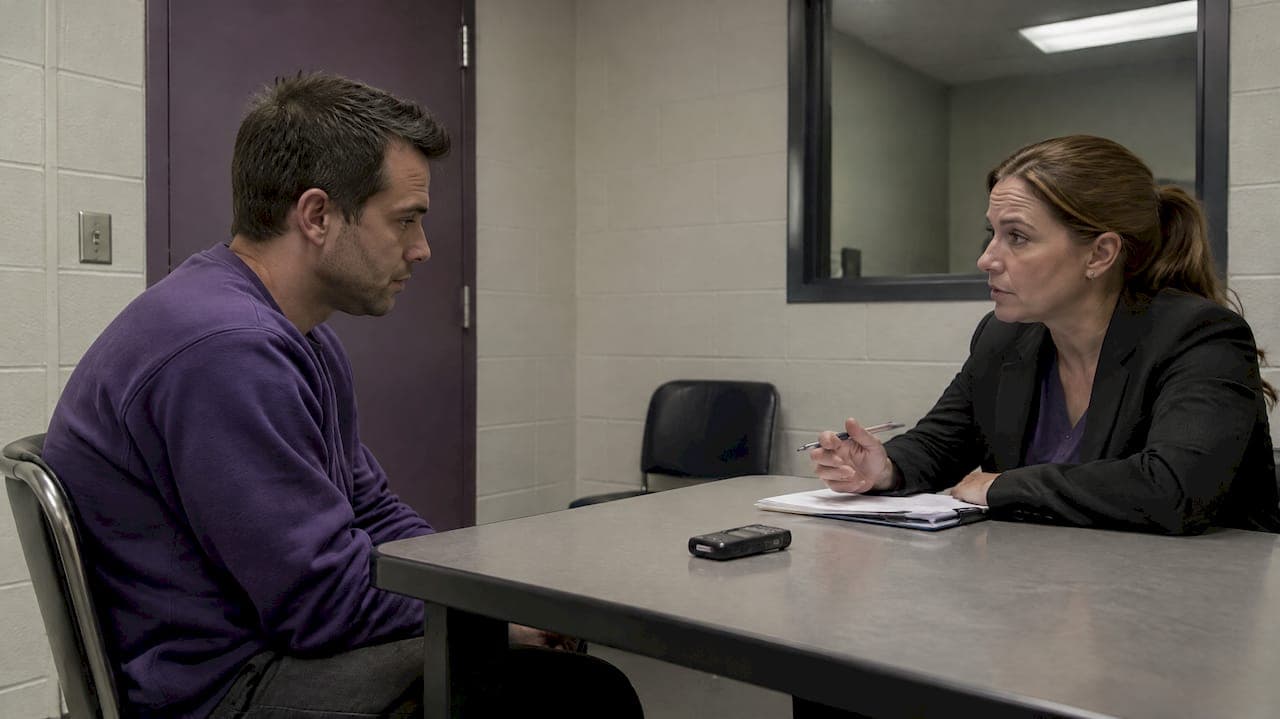
A confession is coerced under California law when police conduct or another form of state pressure overcomes a suspect's free will, making the statement involuntary rather than freely given. Courts look at the totality of the circumstances, state and federal case law, and, for minors, specific statutory protections under SB 203. Suppression, and sometimes dismissal, are available remedies. If you believe a confession was coerced, stop talking immediately, invoke your right to counsel, write down names and times, and contact a criminal defense attorney.
TL;DR:
- Coerced confessions in California occur when police pressure overwhelms a suspect’s free will, especially involving threats, prolonged isolation, or false evidence tactics.
- Fatigue, youth, and mental illness significantly increase the risk of a confession being involuntary, and courts consider the pattern of interrogation tactics used.
- Recording of custodial interrogations, especially for minors and homicide suspects, is legally required and crucial for challenging coercion claims.
- Suppression hearings focus on recordings, notes, and witness testimony, with the burden of proof placed on the prosecution by a preponderance of evidence.
- Acting within the first 48 hours is vital, as recordings and memories fade quickly, making early legal intervention essential to protect your rights.
Table of Contents
- Types of false and coerced confessions
- Interrogation tactics courts treat as coercive
- Miranda warnings, voluntariness, and the cases that define them
- How courts evaluate coercion and what remedies exist
- A practical checklist for challenging a coerced confession
- California's juvenile protections and recording requirements
- What landmark cases teach about coerced confessions
- How Rubin Law, P.C. approaches coerced confession claims
- Why acting early changes everything
- Talk to Rubin Law, P.C. about your case
- Primary legal authorities behind this article
- Sources
- FAQ
Types of false and coerced confessions
Not every false confession happens the same way. Researchers and courts generally recognize three patterns, each with different causes and warning signs.
- Voluntary false confessions happen when someone confesses without real pressure from police, often to protect another person, seek attention, or because of a mental health crisis.
- Compliant false confessions occur when a suspect knows they are innocent but confesses anyway to escape an unbearable interrogation, stop a threat, or get out of a small, locked room.
- Persuaded false confessions happen when prolonged pressure actually convinces a suspect, at least temporarily, that they might have committed the crime even though they did not.
Fatigue, isolation, youth, and mental illness all raise the risk of each type. A sleep-deprived teenager questioned alone for hours behaves very differently than an adult with counsel present, and psychological coercion can overbear a suspect's will as effectively as physical force, according to legal reference sources. Courts examining a disputed confession usually start by asking which of these patterns fits the facts, because that shapes what evidence will matter later.
Interrogation tactics courts treat as coercive
Some tactics almost automatically support a claim that a confession was coerced. Others sit in a gray area that police departments often defend as standard practice.
- Physical force or the threat of it during questioning.
- Deprivation of food, sleep, water, or bathroom access over an extended interview.
- False evidence ploys, such as claiming a co-defendant already confessed or that DNA proves guilt when it does not.
- Minimization, where an officer downplays the seriousness of the crime to make confessing feel low-stakes.
- Maximization, where an officer exaggerates the evidence or likely punishment to make silence feel pointless.
- Explicit promises of leniency, like suggesting a confession will mean going home that night.
- Prolonged, repetitive questioning that continues for many hours without rest.
Courts weigh these factors together under the totality of the circumstances rather than applying a simple checklist. Deception alone is often permitted under federal law, but when it combines with isolation, exhaustion, or a suspect's youth or cognitive limits, it can tip the balance toward involuntariness.
Pro Tip: If you are ever told "it will go easier if you just tell us," treat that as a signal to stop talking and ask for a lawyer, not as a reason to keep explaining yourself.
Miranda warnings, voluntariness, and the cases that define them
Miranda warnings and voluntariness are related but legally distinct questions, and confusing them is a common mistake. A suspect can waive their Miranda rights cleanly, on the record, and still have the resulting confession thrown out if the circumstances show their will was overborne.
- Miranda warnings tell a suspect they have the right to remain silent and to an attorney; a valid waiver must be knowing and voluntary.
- Voluntariness asks a separate question: given everything that happened, was the statement the product of free choice?
- Under Colorado v. Connelly, the U.S. Supreme Court held that voluntariness depends on the totality of the circumstances, and the state only has to prove voluntariness by a preponderance of the evidence at a suppression hearing, a comparatively low bar for prosecutors.
- Other foundational authorities, including Culombe v. Connecticut and Jackson v. Denno, established that trial judges, not juries alone, must independently determine voluntariness before a confession reaches the jury.
The burden is lighter than many suspects assume. Because Connelly set the standard at preponderance of the evidence rather than a higher threshold, a solid factual record from the defense side matters enormously at a suppression hearing. For a closer look at how Miranda warnings work in practice, see our guide to Miranda rights in California.
How courts evaluate coercion and what remedies exist
When a defense attorney challenges a confession, the case moves through a fairly predictable sequence.
- Suppression hearing: the judge hears testimony from officers and, often, the defendant, reviews any recordings, and makes independent factual findings about voluntariness.
- Ruling: the judge either admits the confession, suppresses it entirely, or suppresses specific statements made after a particular point in the interrogation.
- Trial or plea impact: a suppressed confession often changes the prosecution's leverage significantly, sometimes leading to reduced charges or dismissal.
- Appellate review: if a confession was wrongly admitted, Arizona v. Fulminante established that the error is reviewed under a harmless-beyond-a-reasonable-doubt standard rather than automatic reversal, meaning the conviction can still stand if other evidence was overwhelming.
Recordings, contemporaneous notes made by anyone present, and expert testimony on interrogation psychology all strengthen a suppression claim considerably. Without a recording, a suppression hearing often becomes a credibility contest between the suspect and the officers who questioned them, which is a harder position for the defense.
A practical checklist for challenging a coerced confession
Acting quickly after an interrogation protects the legal arguments available later. A few concrete steps make a real difference.
- Stop talking the moment you sense pressure to confess, even if you already said something you regret.
- Invoke your right to counsel clearly and repeatedly if questioning continues.
- Write down names, badge numbers, and approximate times as soon as you can.
- Request the interrogation recording and custody logs through your attorney.
- Preserve phone and medical records that might show your physical or mental state at the time.
From there, a defense attorney typically files a motion to suppress under Penal Code 1538.5, subpoenas any recordings and officer notes, and may retain an expert to analyze the interrogation technique used. Bringing a timeline of events, any paperwork you received, and contact information for witnesses to your first consultation speeds this process considerably.
Pro Tip: Write down what you remember within 24 hours of release. Memory of a stressful interrogation fades fast, and small details often matter most in a suppression hearing.
California's juvenile protections and recording requirements
California has built some of the country's strongest statutory protections around youth interrogations in recent years, on top of the general voluntariness rules that apply to adults.
- SB 203, codified at Welfare & Institutions Code §625.6, requires that any youth 17 or younger consult with an attorney before police can conduct a custodial interrogation or obtain a Miranda waiver, and that consultation cannot be waived, according to the California DOJ's 2023-DLE-02 bulletin.
- Welfare & Institutions Code §625.7 goes further, prohibiting threats, physical harm, deception, and psychologically manipulative tactics during custodial interrogation of minors, and directs courts to weigh any noncompliance when ruling on admissibility.
- Penal Code §859.5 requires electronic recording of custodial interrogations for murder suspects questioned in a fixed place of detention, giving the defense an objective record of tone, length, and any promises made.
Together, these statutes shift real leverage toward the defense in juvenile and homicide cases, since noncompliance itself becomes evidence a court must consider.
What landmark cases teach about coerced confessions
Appellate decisions translate these legal standards into real outcomes, and a few cases come up again and again in suppression litigation.
- Colorado v. Connelly held that a confession driven by mental illness, without police coercion, is not automatically involuntary, which narrows the voluntariness doctrine to state action rather than a suspect's internal state alone.
- Arizona v. Fulminante set the harmless-error standard for appeals, meaning a wrongly admitted confession does not guarantee reversal if other evidence was strong.
- People v. Jimenez and similar California appellate opinions emphasize that trial courts must make independent factual findings on voluntariness, and appellate courts generally defer to those findings unless they are unsupported by the record.
The practical lesson across all three: a complete record, recordings, notes, and witness statements, gives a trial judge more to work with and gives an appellate court less room to call an error harmless.
How Rubin Law, P.C. approaches coerced confession claims
Our courtroom work includes reviewing interrogation recordings early, filing suppression motions, and coordinating with experts on interrogation psychology when a case calls for it. We handle juvenile defense matters where SB 203 and WIC §625.6 protections apply, and we have experience with local courts' approaches to voluntariness disputes.

Why acting early changes everything
Every coerced confession case I have reviewed comes down to what got preserved in the first 48 hours. Recordings disappear, memories fade, and witnesses move on. Contact a lawyer immediately, expect a suppression fight to take weeks or months, and know that a strong result often means suppression or reduced charges, not an instant dismissal.
— Jake
Talk to Rubin Law, P.C. about your case
If you are facing charges built around a confession you believe was coerced, legal counsel can assist with suppression motions, juvenile defense under SB 203, murder defense, and the pretrial motions that shape how a case resolves long before trial.

Bring any paperwork from your arrest, names of officers involved, and your own timeline of events to a first consultation. The criminal defense practice page outlines the range of charges handled, and for minors facing juvenile interrogation issues, a juvenile defense page covers SB 203 protections directly. Call us to set up a consultation and start building your defense before key evidence disappears.
Primary legal authorities behind this article
This article draws on Colorado v. Connelly and Arizona v. Fulminante for federal voluntariness and harmless-error standards, Penal Code §859.5 and WIC §625.7 for California's recording and juvenile interrogation rules, and the California DOJ's 2023-DLE-02 bulletin for SB 203 guidance to law enforcement. For readers researching how police records requests work in California, the Javitch Law Office guide to CPRA requests offers useful background.

This article is general information, not a substitute for advice from a qualified lawyer. Consult a qualified legal professional about your own circumstances before acting on anything here.
Sources
- Colorado v. Connelly (479 U.S. 157) — FindLaw
- Arizona v. Fulminante — Harmless-error analysis (Law Commons note)
- 2023-DLE-02 Information Bulletin — California Department of Justice
- AB 2644 / WIC §625.7 (California legislative text) — California Legislative Information
FAQ
How do you prove a coerced confession?
Proof usually combines interrogation recordings, officer notes, witness statements, and sometimes expert testimony on interrogation psychology to show the statement was not voluntary. A defense attorney presents this evidence at a suppression hearing, where the judge makes an independent factual finding on voluntariness under the totality of the circumstances.
Is it illegal to coerce a confession?
Using threats, physical force, or psychologically manipulative tactics to extract a confession violates due process and can make the resulting statement inadmissible in California courts. For minors, Welfare & Institutions Code §625.7 specifically bars threats, deception, and manipulative tactics during custodial interrogation.
What counts as a coerced confession?
A confession counts as coerced when police conduct or another form of state pressure, such as prolonged isolation, threats, or false evidence claims, overcomes a suspect's free will. Courts assess this under the totality of the circumstances rather than any single factor alone.
What are some examples of coerced confessions?
Common examples include a suspect confessing after hours of sleep-deprived questioning, a minor waiving Miranda rights without the attorney consultation required under WIC §625.6, or a confession obtained after officers falsely claimed to have DNA evidence. Each scenario can support a motion to suppress depending on the full record of what happened during questioning.