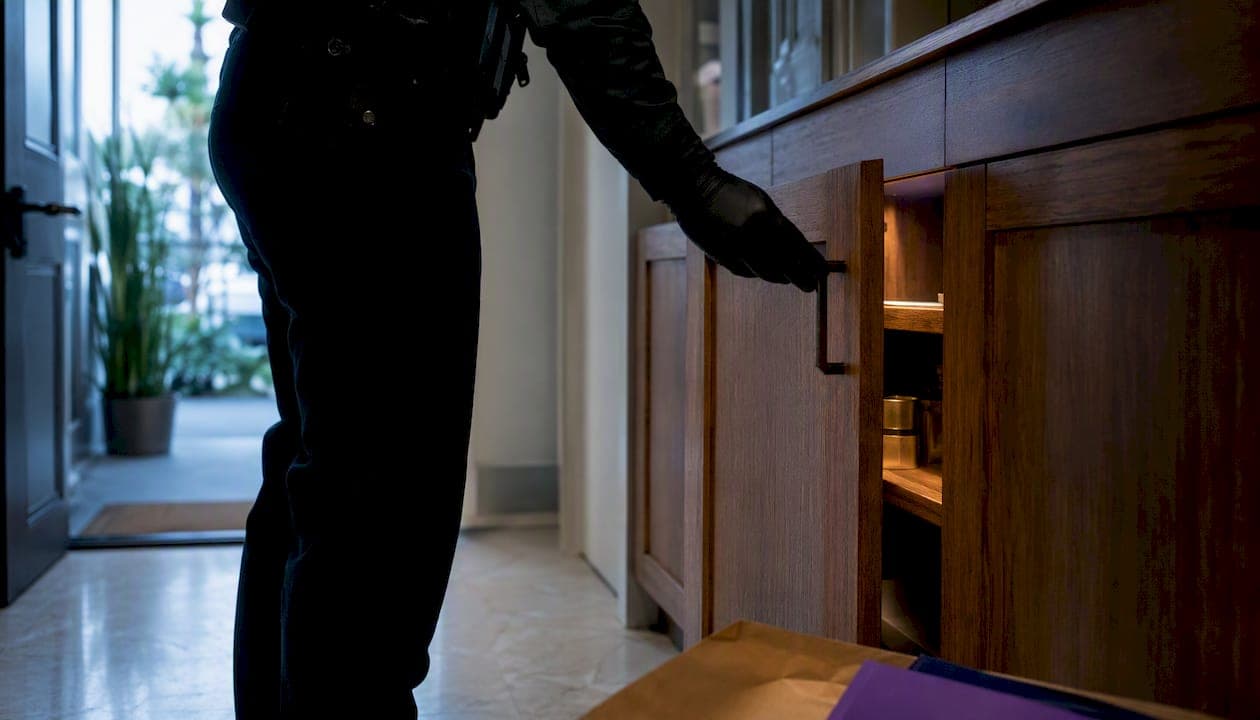
A police search in California is unlawful when officers had no warrant and no valid exception applied to your situation, such as genuine consent, a search tied directly to an arrest, or an emergency, according to constitutional protections. If that describes what happened to you, say "I do not consent to a search," don't physically resist, write down every detail you can remember, and call a criminal defense attorney before you talk to investigators again.
TL;DR:
- Police searches without a warrant are unlawful unless a valid exception such as consent, exigency, or a search incident to arrest applies, even if you initially consented.
- Commonly challenged searches include vehicle stops without proper cause, phone searches without a warrant or consent, and probation or parole searches not directly tied to lawful detention.
- Immediately asserting your rights, documenting officer details, and recording the scene within the first hour increase chances of success in suppression motions.
- Filing a motion to suppress evidence swiftly can lead to case dismissals or evidence exclusion, but must be done within strict procedural deadlines.
- Courts in California consider whether illegal detention taints subsequent searches; even valid conditions like parole do not automatically justify searches that follow unlawful stops.
Table of Contents
- What Counts as an Unlawful Search in California?
- Which Scenarios Get Challenged Most Often in California?
- What Should You Do Right After the Search?
- What Legal Remedies Exist for an Illegal Search?
- How Do Courts Decide Whether to Toss the Evidence?
- When Should You Call a Criminal Defense Attorney?
- A Straight Answer on Why Speed Matters
- Talk to Rubin Law About Your Search and Seizure Case
- Sources
- FAQ
What Counts as an Unlawful Search in California?
The Fourth Amendment and Article I, Section 13 of the California Constitution both bar unreasonable searches and seizures. In plain terms, that means officers generally need a warrant, signed by a judge based on probable cause and describing with particularity what they're looking for and where, before they can search your home, car, or belongings.
Courts carved out several exceptions over the decades, and most contested searches in California turn on whether one actually applied. The main ones:
- Consent. You voluntarily agreed to the search, without coercion.
- Search incident to arrest. Officers can search you and your immediate surroundings after a lawful arrest.
- Plain view. An officer sees contraband in open view from a lawful vantage point.
- Exigent circumstances. An emergency, like a person in danger or evidence about to be destroyed, justifies immediate action.
- Inventory searches. Police can catalog belongings when they lawfully impound a vehicle.
- Parole or probation conditions. Many parolees and probationers waive some search protections as a condition of release.
Here's the detail people miss: even if one of these exceptions technically applies, the search can still be unlawful if the stop or detention leading up to it wasn't lawful in the first place. An illegal detention poisons what comes after it, even when the officer eventually finds a legitimate reason to search. This issue is central in one of California's significant recent search-and-seizure rulings, discussed below.
Which Scenarios Get Challenged Most Often in California?
Most unlawful search claims fall into a handful of recurring patterns. Recognizing yours helps you and your attorney focus on the right legal argument.
- Vehicle stops. Officers need a valid reason for the stop itself, a broken taillight, a traffic violation, matching a suspect description. They can order you and passengers out of the car for safety, but searching the vehicle's interior or trunk generally requires consent, probable cause, or one of the exceptions above. A search that starts with a pretextual stop and expands into a full vehicle search is one of the most commonly challenged patterns in California courts.
- Consent searches. Consent has to be freely given, not the product of intimidation or a misleading claim that officers "will get a warrant anyway." You can also revoke consent mid-search. The ACLU of Southern California notes that telling an officer you no longer consent, clearly and calmly, preserves your right to challenge the search later, even if the officer continues anyway.
- Phone and electronic device searches. Phones hold a staggering amount of personal data, and California courts generally treat them differently from a wallet or a bag. Absent a warrant, exigency, or valid consent, officers usually cannot search the contents of your phone just because they seized it.
- Parole and probation searches. Courts distinguish between a search that's genuinely tied to supervision conditions and one that's discretionary or pretextual, used as a workaround after an otherwise unlawful stop.
What Should You Do Right After the Search?
What you do in the first hours after an unlawful police search in California often determines whether a suppression motion later succeeds. Memory fades fast, and small details, an officer's exact words, the sequence of events, matter enormously to a judge.
At the scene:
- Say clearly, "I do not consent to a search," even if officers proceed anyway.
- Keep your hands visible and don't physically resist, no matter how wrong the search feels in the moment.
- Ask directly: "Am I being detained? Am I free to go?"
- Avoid volunteering explanations or answering questions beyond identifying yourself.
As soon as you can afterward:
- Write down the officer's name, badge number, patrol car number, and the exact time and location.
- Note any witnesses and get their contact information if possible.
- Photograph any property damage, injuries, or the scene itself.
- Seek medical care if you were hurt during the encounter, and keep those records.
Pro Tip: Write your account down within an hour of the incident, even a few bullet points on your phone. Prosecutors and defense attorneys both know that details recalled a week later carry far less weight in a suppression hearing than a same-day account.
What Legal Remedies Exist for an Illegal Search?
California gives you several distinct paths after an unlawful search, and they aren't mutually exclusive. Which one makes sense depends on whether you're facing charges, whether property was taken, and how serious the misconduct was.
- Motion to suppress evidence, PC §1538.5. This is the core criminal defense tool. Your attorney argues the search violated your rights and asks the judge to exclude the evidence from trial. Timing matters enormously here, and filing this motion correctly and early can lead to reduced charges or a full dismissal if the prosecution's case depends on the excluded evidence.
- Motion for return of property. If police seized cash, a phone, or other belongings that aren't tied to a conviction or aren't legitimate evidence, you can petition the court to get them back. This applies whether or not criminal charges were ever filed, and the San Diego Law Library's guide on search and seizure outlines the statutory basis for these petitions in detail.
- Administrative complaints. You can file a complaint with the department's internal affairs division, a local oversight board, or the state's POST commission if officer conduct itself was the problem, not just the search's legality.
- Civil claims. Federal civil rights suits under Section 1983, or related California claims, are available for serious violations, though they carry a higher evidentiary bar and take longer to resolve than a suppression motion tied to an active criminal case.
How Do Courts Decide Whether to Toss the Evidence?
Under the exclusionary rule, evidence obtained through an unlawful search generally gets suppressed, along with anything derived from it, unless prosecutors can show the connection was "attenuated," meaning enough time or intervening events separated the illegal conduct from the evidence found.
Courts weigh three factors from the Brown line of cases: how much time passed, what happened in between, and how purposeful or flagrant the officer's misconduct was. This is where People v. McWilliams matters. The California Supreme Court reversed a conviction where an officer's unlawful detention led directly into a discretionary parole search. The court held that a parole search condition alone does not automatically wash away the taint of an illegal stop that came before it, because the officer chose to invoke that condition after violating the person's rights.
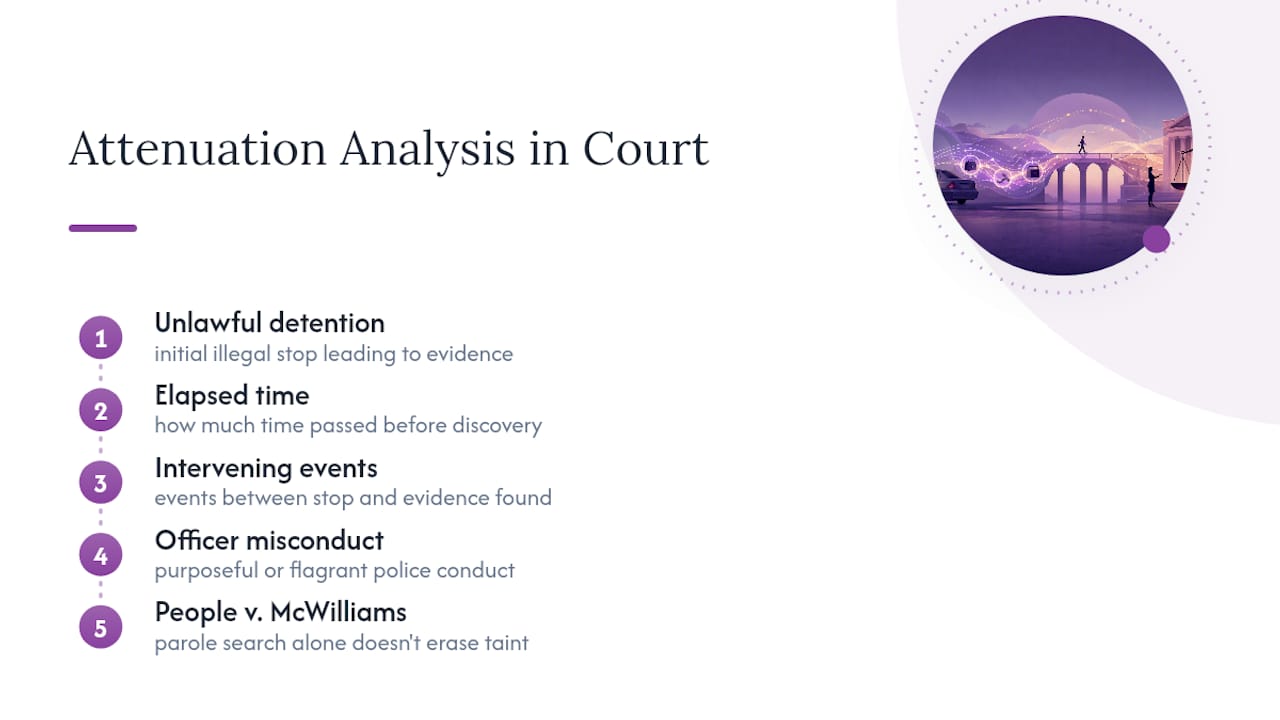
That ruling reshaped how California defense attorneys argue attenuation. Parole or probation status does not automatically justify police searches following an unlawful detention.
When Should You Call a Criminal Defense Attorney?
The moment you suspect a search crossed the line, contact counsel, not weeks later. Evidence disappears fast: body-camera footage gets overwritten, witnesses forget details, and procedural deadlines for filing motions start running immediately.
Consider contacting a criminal defense firm with experience in constitutional search-and-seizure challenges and courtroom procedures in your area. A defense lawyer's early work typically includes:
- Requesting and preserving body-cam and dash-cam footage before it's deleted
- Locating and interviewing witnesses while memories are fresh
- Filing a PC §1538.5 motion, or related pretrial motions, within the court's procedural windows
- Advising on whether to negotiate, pursue diversion, or take the suppression issue to a hearing
Pro Tip: Bring dates, officer names or descriptions, and any photos or notes you took to your first consultation. That single hour of preparation on your end often shapes the entire suppression strategy.
A Straight Answer on Why Speed Matters
Courtroom experience teaches you fast that suppression hearings get won or lost on details preserved in the first 48 hours, not on legal theory. Judges respect a timeline built from contemporaneous notes and quickly requested footage far more than an account reconstructed months later. Acting immediately isn't just good practice. It's often the entire case.
— Jake
Talk to Rubin Law About Your Search and Seizure Case
If a search happened without your consent and without a warrant, you have real options, and waiting costs you the evidence that makes those options work. Legal firms often handle PC §1538.5 suppression motions, property return petitions, and pre-trial motion strategy for clients, with varying courtroom experience affecting case management.

Before your first consultation, gather what you already have: dates, officer descriptions, photos, witness names, anything that pins down the timeline. That preparation, paired with prompt legal action to request body-cam footage before it's overwritten, is often what separates a successful suppression motion from a missed opportunity. Rubin Law's service area covers Los Angeles County, and the firm also handles related pre-trial motion work for clients navigating suppression, diversion, or dismissal strategies. Reach out now, before the footage disappears and the deadline passes.
This article is general information, not a substitute for advice from a qualified lawyer. Consult a qualified legal professional about your own circumstances before acting on anything here.
Sources
- ACLU SoCal: Know your rights — what to do if questioned by police / FBI (PDF)
- People v. McWilliams, S268320 — California Supreme Court opinion (Kruger, J.)
- San Diego Law Library LibGuide: California search and seizure — motion for return of seized property
FAQ
What Makes a Police Search Illegal in California?
A search is illegal when officers act without a warrant and no exception, like consent, exigent circumstances, or a search incident to arrest, actually applies to the situation.
Can I Refuse a Police Search in California?
Yes. You can clearly state "I do not consent to a search," and you can revoke consent even after initially agreeing, according to the ACLU of Southern California.
How Do I Challenge an Unlawful Search After an Arrest?
Your attorney files a motion to suppress under PC §1538.5, arguing the evidence was obtained illegally and should be excluded from trial.
Can Police Search My Phone Without a Warrant?
Generally no. California courts treat phone data differently from physical property, and officers usually need a warrant, genuine consent, or an emergency justification before searching a phone's contents.
What Happened in People v. McWilliams?
The California Supreme Court ruled that a discretionary parole search following an unlawful detention did not sufficiently attenuate the taint of that initial illegal stop, so the evidence was suppressed.