
If police searched you, your car, or your home without a warrant, probable cause, or a valid legal exception, that search may be illegal under the Fourth Amendment and California law. The main remedy is a motion to suppress the evidence under Penal Code §1538.5, which can lead to dismissed or reduced charges. Right now: stop talking, do not consent to anything further, and call a criminal defense attorney before your next court date.
TL;DR:
- Police must have a warrant, probable cause, or valid exception for searches; otherwise, evidence may be suppressed under Penal Code §1538.5.
- Warrantless home entries and searches of digital devices like phones and laptops are highly scrutinized and often deemed illegal without proper justification.
- Common illegal search scenarios include warrantless home entries, vehicle searches lacking probable cause, and searches exceeding scope after arrests or during pat downs.
- Consent is the most challenged warrant exception, especially if obtained through misrepresentation or coercion, making immediate documentation crucial.
- Filing a suppression motion promptly can significantly weaken the prosecution’s case and impact plea negotiations or case outcomes.
Table of Contents
- What Makes a Search Illegal Under California Search Laws?
- Was Your Search Illegal? Five Common Scenarios
- The Six Warrant Exceptions Police Actually Rely On
- How Penal Code §1538.5 Suppression Motions Actually Work
- What to Do in the First Hours After a Search
- When to Call a Defense Attorney and What Happens Next
- Recent California Rulings Shaping Illegal Search Standards
- How California Search Law Differs From the Federal Standard
- Civil Rights Claims Beyond a Suppression Motion
- Why Appellate Courts Matter More Than Most Defendants Realize
- How an Illegal Search Can Change Your Entire Case
- A Defense Attorney's View on Constitutional Challenges
- How Rubin Law, P.C. Handles Illegal Search Cases
- Sources
What Makes a Search Illegal Under California Search Laws?
The Fourth Amendment to the U.S. Constitution protects people from "unreasonable searches and seizures," and it generally requires police to get a warrant backed by probable cause before searching your home, body, car, or belongings. California doesn't just borrow that language. Article I, §13 of the California Constitution mirrors it almost word for word, and California courts have at times interpreted it to give residents broader protection than the federal floor, particularly around consent and vehicle searches.
Whether a search is legal usually turns on one question: did you have a "reasonable expectation of privacy" in the place or thing that got searched? Courts apply this test unevenly depending on context.
- Your home carries the strongest protection. Absent a warrant, consent, or an emergency, police generally cannot enter without violating your rights.
- Your body and clothing carry a high expectation of privacy, which is why pat searches are limited to weapons unless there's more.
- Your car carries a reduced expectation of privacy because vehicles are mobile and heavily regulated, which is why courts allow more warrantless vehicle searches than home searches.
- Your phone or laptop now carries some of the strongest protection in California law, since a smartphone holds years of private data most people never store anywhere else.
A California search warrant, when one is used, must be supported by probable cause and must describe with particularity the place to be searched and the items officers are looking for. The statutes governing how warrants are issued and executed, including timing rules for when officers can act on one, are laid out in Penal Code Chapter 3, Sections on search warrants. If a warrant is missing required detail or officers exceed what it authorizes, that gap alone can support a suppression motion.
Was Your Search Illegal? Five Common Scenarios
Most illegal search claims in California fall into a handful of recurring patterns. Here's how to recognize your situation.
- Police entered your home without a warrant, consent, or emergency. Absent a genuine exigency, such as someone screaming for help inside, officers generally need a warrant or your voluntary consent to cross your threshold. A warrantless home entry based on nothing more than "we thought we smelled something" is one of the most frequently successful grounds for suppression.
- Officers searched your car without probable cause or a recognized exception. Cars get less protection than homes, but police still need probable cause, your consent, or a specific exception like a search incident to arrest. A hunch, a nervous driver, or a "high-crime area" alone doesn't cut it.
- A search incident to arrest went beyond its legal scope. Once you're handcuffed and secured, officers can search you and the area within your immediate reach, not the entire vehicle. California courts apply the restraint set out in Arizona v. Gant through cases like People v. Norman, which limits vehicle searches incident to arrest once the arrested no longer has access to the car's interior.
- Police dug through your phone or laptop without a warrant or valid exception. Digital devices get heightened privacy treatment in California. A search of your text messages, photos, or apps typically requires its own warrant, separate from consent to search your bag or car.
- A pat down turned into a full search. A Terry stop lets an officer briefly detain you and frisk for weapons if there's reasonable suspicion you're armed and dangerous. That's a narrow, exterior pat down, not license to empty your pockets or dig through your bag. When an officer's "frisk" produces drugs from a pocket with no weapon-related justification, that often exceeds what a Terry stop permits.
The Six Warrant Exceptions Police Actually Rely On
Warrants are the default rule, but exceptions swallow a lot of that rule in practice. Understanding which one an officer is likely to claim helps you and your attorney evaluate whether it actually applies.
- Consent. If you agreed to the search, officers don't need anything else, but consent must be voluntary. Courts look at the totality of the circumstances, including any coercion, false promises, or misrepresentations by police.
- Search incident to arrest. Once you're lawfully arrested, officers can search your person and the immediate area to protect themselves and preserve evidence, but not your whole house or car interior once you're secured.
- Plain view. If an officer is lawfully present and sees contraband in plain sight, no warrant is needed to seize it. The "plain smell" or "plain touch" of contraband during a lawful stop can sometimes supply probable cause too, though these claims are fact-sensitive and get challenged often.
- Exigent circumstances. Emergencies like a fire, an ongoing assault, or evidence about to be destroyed can justify immediate action without a warrant.
- Vehicle exception. Because cars are mobile, officers with probable cause can search a vehicle without a warrant, though Arizona v. Gant limits how far this extends after an arrest.
- Protective sweeps. Officers making a lawful arrest inside a home can do a quick, limited sweep of adjoining spaces for other people who might pose a danger, but this isn't a license to search drawers or containers.
Consent is the exception most often challenged and won. In Boitez v. Superior Court, the California Court of Appeal recognized that consent obtained through a false threat, like telling someone their car would be towed unless they let officers search it, can be involuntary and therefore invalid.
Pro Tip: If an officer says anything like "we're going to tow your car anyway" or "this will go easier if you let us look," write down the exact words as soon as you can. That phrasing is often the strongest evidence your attorney needs to challenge consent later.
How Penal Code §1538.5 Suppression Motions Actually Work
Penal Code §1538.5 lets a defendant move to suppress evidence, or seek the return of property, obtained through an unreasonable search or seizure. It's the single most important procedural tool in California illegal search cases, and understanding its mechanics matters more than knowing the constitutional theory behind it.
Filing and timing. A §1538.5 motion is typically filed before or during the preliminary hearing in felony cases, though it can sometimes be renewed later. Missing the filing window can waive your right to challenge the search entirely, which is why evaluating timing needs to happen the moment you retain counsel, not weeks later.
Burden shifts back and forth. The defense makes an initial showing that the search happened without a warrant, or that a warrant was defective. Once that showing is made, the burden shifts to the prosecution to justify the search under a recognized exception. If the prosecution can't meet that burden, the evidence gets excluded.
What happens if you win. Suppressed evidence cannot be used at trial under the exclusionary rule, and this often triggers the "fruit of the poisonous tree" doctrine, which excludes not just the illegally obtained item but anything discovered because of it. When suppressed evidence is central to the prosecution's case, charges frequently get reduced or dismissed outright, and even a partial win can dramatically shift plea negotiations in your favor.
- A granted motion can mean full dismissal if the excluded evidence was the prosecution's entire case.
- A partial win can still eliminate the most serious charge while lesser ones survive.
- Even a denied motion preserves the issue for appeal in many circumstances.
Suppression and return of property are related but separate. Getting evidence thrown out at trial doesn't automatically get your seized property back. That's a distinct process, and California courts recognize a contraband exception: illegal drugs, unregistered firearms, or other contraband won't be returned even when the underlying search was unlawful. Guides from resources like the San Diego Law Library on return of seized property walk through how that process differs by item type and case status. Judicial Council forms for filing these special hearings are available through California Courts' official procedural guides.
What to Do in the First Hours After a Search
What you do in the hours right after a search can determine whether your attorney has a strong suppression case or an uphill one. Follow this sequence as closely as you can.
- State clearly that you do not consent, even if officers are already searching. Say it once, calmly, and stop talking otherwise.
- Write down officer names, badge numbers, patrol car numbers, and the exact time, along with any witnesses present.
- Photograph damage or entry points if it's safe to do so, especially broken doors, locks, or windows.
- Request a receipt for anything seized and ask for a copy of the incident report once available.
- Do not factory-reset, delete files from, or "clean up" any device that was searched or seized. That can look like evidence tampering and can undercut a chain-of-custody argument.
- Write a contemporaneous account of exactly what happened while it's fresh, then call an attorney before speaking to investigators again.
Pro Tip: Save your written account as a dated note or email to yourself, not just a mental memory. A timestamped account carries far more weight than a recollection reconstructed months later during a preliminary hearing.
If you believe evidence was damaged, altered, or destroyed during a search, California's evidence tampering statutes may also come into play, and your attorney should know about it immediately.
When to Call a Defense Attorney and What Happens Next
The moment to call counsel isn't after your arraignment. It's the same day, ideally before you answer any more questions. An attorney evaluating a potential §1538.5 motion needs specifics: what officers said, whether you were read your rights, whether you signed anything, and exactly what was searched and when.
- Expect your attorney to request police reports, body camera footage, dispatch logs, and any warrant paperwork immediately, since these documents often contain the inconsistencies that win suppression hearings.
- A pre-trial motion for suppression is typically filed and argued before trial, with hearings scheduled weeks to months out depending on court calendars.
- Favorable outcomes range from full suppression and dismissal to negotiated reductions once prosecutors realize their evidence is vulnerable.
- Bring everything you documented: your written account, photos, receipts, and any names or badge numbers you collected.
Rubin Law, P.C. builds these arguments from repeated courtroom experience with Los Angeles County judges and prosecutors, which shapes how a suppression motion gets framed from the first filing.
Recent California Rulings Shaping Illegal Search Standards
California courts continue to refine how far officers can push warrant exceptions, particularly around vehicle searches and consent. The restraint set out in Arizona v. Gant, and applied by California courts through cases like People v. Norman, keeps narrowing what "search incident to arrest" actually permits, especially once a suspect is handcuffed and has no access to the vehicle.
The 2023 Boitez v. Superior Court decision is one of the more consequential recent rulings for everyday drivers. It reinforced that consent obtained through misleading statements, like threatening to tow a car unless the driver agrees to a search, doesn't count as voluntary consent. That ruling matters because towing threats and similar pressure tactics show up constantly in traffic stop reports, and Boitez gives defense attorneys a concrete, citable hook to challenge them.
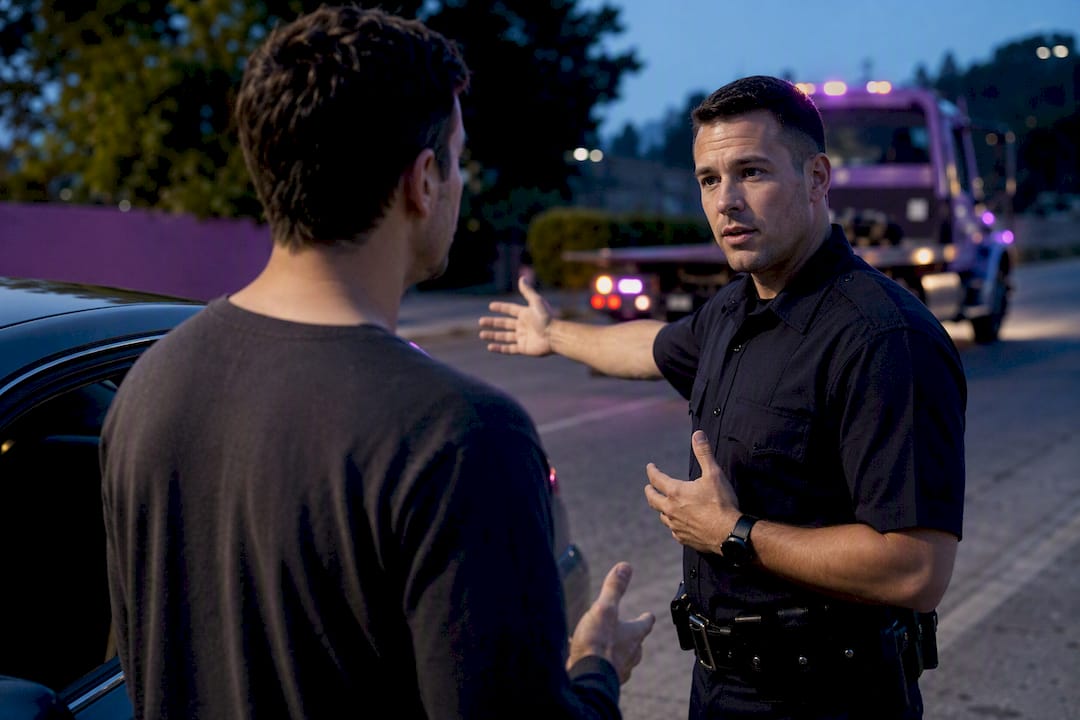
Older cases like People v. Kiefer and People v. Brisendine remain foundational to how California courts analyze search incident to arrest and the scope of searches following a lawful stop, and they still get cited in suppression briefs today. Together, these rulings show a consistent theme in California jurisprudence: courts scrutinize the manner in which consent or an exception was obtained just as closely as whether the exception technically applied.
How California Search Law Differs From the Federal Standard
The Fourth Amendment sets the floor, but it's not the ceiling. California's Article I, §13 tracks the same core language, yet state courts have at points read it to demand more from police, particularly around consent searches and vehicle stops. This distinction matters practically: a search that might survive a federal Fourth Amendment challenge in another state can still get suppressed under California's own constitutional and statutory framework.
Penal Code §1538.5 itself is a state-created procedural mechanism that has no exact federal twin. Federal defendants challenge searches through different rules and different timelines, and federal courts don't apply California's specific case law on issues like towing-threat consent or the scope of vehicle searches incident to arrest.
This dual-track system is part of why California defense strategy leans heavily on state precedent, not just federal constitutional theory. A California appellate opinion interpreting Article I, §13 can sometimes offer a stronger suppression argument than a comparable federal Fourth Amendment case, simply because California courts have been willing to hold state and local police to a more exacting standard on specific fact patterns, especially around coerced or misleading consent.
Civil Rights Claims Beyond a Suppression Motion
Suppression fixes what happens in your criminal case, but it doesn't compensate you for what happened during the search itself. If officers used excessive force, damaged your property, or violated your rights in a way that caused real harm, a separate civil rights claim under 42 U.S.C. §1983 may be available against the officers or department involved.
These civil claims run on a different track and timeline than your criminal defense, and they require their own evidence: injury documentation, property damage estimates, and often independent witness statements. A successful §1538.5 suppression motion can actually strengthen a later civil claim, since a judge's finding that a search was unconstitutional carries real weight if you pursue compensation afterward.
Civil rights claims aren't a replacement for a strong criminal defense, and they move slower. Most defendants focus first on the criminal case, where the immediate stakes (jail time, a criminal record, probation terms) are higher, and consider civil claims once the criminal matter resolves.
Why Appellate Courts Matter More Than Most Defendants Realize
Trial court suppression rulings only bind that one case. California Courts of Appeal, and ultimately the California Supreme Court, are where the actual rules governing future searches get written. Every time an appellate panel decides how far a vehicle search incident to arrest can go, or whether a specific consent scenario was voluntary, that ruling becomes precedent trial courts across the state have to follow.
This is why case names like People v. Norman, People v. Kiefer, and People v. Brisendine keep surfacing in suppression briefs decades after they were decided. Appellate rulings don't just resolve one person's case. They set the standard every subsequent defendant in a similar situation gets to invoke, which is part of why an attorney's familiarity with recent appellate trends, not just the statute text, often determines how strong a suppression argument turns out to be.
How an Illegal Search Can Change Your Entire Case
An illegal search rarely just removes one piece of evidence. It tends to reshape the entire prosecution strategy. When the excluded evidence was central, like drugs found during an unlawful vehicle search or a gun discovered after a coerced consent, prosecutors often lose their strongest leverage at the exact moment they need it most.
That shift shows up most visibly in plea negotiations. A prosecutor facing a pending suppression motion with real odds of success has a strong incentive to offer a reduced charge or a diversion program rather than risk losing the case entirely at a suppression hearing. Defense attorneys who file well-supported §1538.5 motions early are often negotiating from a fundamentally stronger position than those who wait.
Even when a motion doesn't fully succeed, raising it can still change outcomes. Prosecutors sometimes recalibrate their offer once they see how exposed a key piece of evidence is, even before a judge rules. That's part of why the timing and quality of a suppression motion isn't just a legal formality. It's often the single biggest lever in how a California criminal case actually resolves.
A Defense Attorney's View on Constitutional Challenges
Search and seizure issues get treated as a technicality by people who haven't sat through a suppression hearing. That's backwards. In practice, these motions are often the single biggest lever in a case, bigger than most plea negotiations that happen without one being filed first.
What tends to separate a successful challenge from a failed one isn't the legal theory. It's the factual record built in the first 48 hours: what was said during the stop, whether consent was pressured, whether the paperwork matches the officer's story. Jake has watched cases turn entirely on a single mismatched detail between a police report and body camera footage. No two searches play out the same way, and outcomes depend heavily on facts specific to your stop. That's exactly why it's worth having a real conversation about yours before assuming nothing can be done.
— Jake
How Rubin Law, P.C. Handles Illegal Search Cases
If a search feels wrong to you, that instinct is worth checking before you plead to anything. Rubin Law, P.C. focuses on criminal defense throughout Los Angeles County, and constitutional search and seizure challenges are a core part of how the firm approaches drug, DUI, domestic violence, and weapons cases where a §1538.5 motion could reshape the entire prosecution.

What sets this apart from waiting it out or hoping a public defender's caseload leaves room for a deep dive into your search facts is straightforward: frequent courtroom appearances in front of the same judges and prosecutors means the firm often knows how a specific bench is likely to view a given fact pattern before the motion is even filed. That's not something you get from generic legal research. It comes from repetition in the exact courtrooms your case will be heard in.
For your first meeting, bring anything you have: police reports, your written account of the search, photos, receipts for seized property, and contact information for any witnesses. From there, the firm evaluates whether a suppression motion is viable, what a realistic timeline looks like, and whether diversion or negotiated resolution makes sense alongside or instead of a courtroom fight. Review the firm's criminal defense practice areas or reach out directly to schedule a consultation and go over your specific search facts.

This article is general information, not a substitute for advice from a qualified lawyer. Consult a qualified legal professional about your own circumstances before acting on anything here.
Sources
- California Penal Code § 1538.5 (Justia)
- Suppression of Evidence (Law Cornell Wex)
- California Penal Code — Chapter 3. Of Search Warrants (leginfo.ca.gov)
- Boitez v. Superior Court (Court of Appeal), 2023