
California Penal Code 243(e)(1) makes it a crime to willfully touch a spouse, cohabitant, dating partner, or co-parent in a harmful or offensive way, even without leaving a mark. It's charged as a misdemeanor, punishable by up to one year in county jail and a fine of up to $2,000. If a judge grants probation instead of jail, state law requires enrollment in a batterer's intervention program lasting no less than one year. That last part often shapes a defendant's life far more than the jail exposure ever does.
TL;DR:
- A domestic battery conviction under PC 243(e)(1) can lead to probation with mandatory batterer's intervention, lasting at least one year, often more impactful than jail time.
- Prosecutors must prove willful touching, harmful or offensive contact without injury, and that the victim is a protected intimate partner, with ambiguous relationships often resulting in case dismissal.
- Plea negotiations often seek to reduce felony charges to misdemeanors to avoid lengthy programs and restrictions, but collateral consequences like loss of firearms or immigration issues remain significant.
- Defenses include self-defense, lack of intent, mistaken identity, or procedural violations, emphasizing early evidence review and preservation before trial.
- The legal focus extends beyond jail time, as mandatory programs, protective orders, and record impacts can substantially alter a person's life long after sentencing.
Table of Contents
- Understanding PC 243(e)(1) California: Elements and Protected Relationships
- Penalties and Mandatory Probation Terms Under PC 1203.097
- PC 243(e)(1) vs. PC 273.5 vs. General Battery: What Changes and Why
- Building a Defense Against a PC 243(e)(1) Charge
- From Arrest to Sentencing: What the Process Actually Looks Like
- The Consequences That Outlast the Case Itself
- How Rubin Law Approaches PC 243(e)(1) Defense
- What You Should Do in the Next 48 Hours
- Why the "Just a Misdemeanor" Framing Misleads People
- Get Legal Help for a PC 243(e)(1) Charge in Los Angeles
- The Core Facts to Remember About PC 243(e)(1)
- Where to Verify These Laws and Instructions Yourself
- Sources
Understanding PC 243(e)(1) California: Elements and Protected Relationships
Prosecutors have to prove three specific things before a domestic battery conviction sticks, and all three come straight from CALCRIM No. 841, the jury instruction judges read in these cases.
1. The touching was willful. This doesn't mean the defendant intended to hurt anyone. It means the touching was done on purpose, not by accident. Tripping and bumping into someone is not willful. Shoving them out of your way is.
2. The touching was harmful or offensive. Under Penal Code § 243, no injury is required at all. CALCRIM's own language makes clear that the slightest touching can satisfy this element if it's done in a rude, angry, or disrespectful way. A slap that leaves no mark, a shove, a grabbed wrist, even throwing an object that makes contact, can all qualify.
3. The victim falls into a legally protected relationship category. The statute names spouses, cohabitants, the parent of the defendant's child, a fiancé or fiancée, and anyone in a current or former dating relationship. Cohabitation doesn't require a lease with both names on it. Courts look at factors like shared finances, sexual relations, and how long the couple lived together.
Pro Tip: If the alleged relationship is genuinely ambiguous, like a short-term dating situation or roommates who never dated, that gray area is often where a case falls apart. Relationship status is a fact prosecutors must prove beyond a reasonable doubt, not something that gets assumed.
The touching-without-injury design of PC 243(e)(1) surprises a lot of people. It exists precisely because domestic violence cases frequently involve force that doesn't produce visible injury, and lawmakers didn't want that gap to let conduct go unpunished.
Penalties and Mandatory Probation Terms Under PC 1203.097
A PC 243(e)(1) conviction caps out at one year in county jail and a $2,000 fine, according to FindLaw's summary of Penal Code § 243. Most first-time defendants without aggravating facts don't see the maximum. What they almost always see is probation, and probation in a domestic violence case comes loaded with conditions under Section 1203.097 that can run longer and cut deeper than a jail sentence would.
When a judge grants probation, state law generally requires:
- A batterer's intervention program running for no less than one year, with the defendant covering program fees.
- A minimum probation term set by the court, during which any violation can trigger jail time.
- Restitution to the victim for medical bills, therapy, lost wages, or property damage.
- A criminal protective order restricting contact with the victim, sometimes including the family home.
- Community labor or service hours in some counties.
The probation itself is often the real sentence. A year-long weekly class, supervised probation, and a no-contact order affect employment, housing, and family life in ways a short jail stint doesn't. Practitioners who handle these cases regularly point out that the mandatory program frequently outlasts and outweighs whatever custody time was on the table, which is exactly why early plea strategy and diversion discussions matter so much before a case gets to sentencing.
Courts do allow modification of some conditions later, particularly program completion timelines or protective order terms, but that requires a formal motion and a judge willing to grant it.
PC 243(e)(1) vs. PC 273.5 vs. General Battery: What Changes and Why
Prosecutors pick a charging statute based largely on injury and relationship, and that choice determines everything downstream.
- PC 243(e)(1) applies when the victim is a qualifying intimate partner and the touching caused no visible injury or only minor discomfort. It's a misdemeanor with a one-year jail ceiling.
- PC 273.5 applies when that same intimate partner suffers a "traumatic condition," meaning any wound or bodily injury, even minor bruising or swelling. It can be charged as a felony, carrying up to four years in state prison.
- PC 242/243(a) covers general battery when the victim doesn't fit any protected relationship category at all, such as a stranger, coworker, or roommate with no romantic history.
The gap between 243(e)(1) and 273.5 often comes down to a single photograph or medical note. If police document redness or swelling, prosecutors frequently file under 273.5 instead, and the sentencing exposure jumps considerably. This is why plea negotiations in domestic violence cases so often revolve around reducing a felony 273.5 charge down to a misdemeanor 243(e)(1), a move that can mean the difference between state prison and a probation-based resolution. Rubin Law's comparison of PC 273.5 to domestic battery charges walks through how that distinction plays out case by case.
Building a Defense Against a PC 243(e)(1) Charge
1. Self-defense or defense of others. If the defendant used only reasonable force to stop an attack, that's a complete defense. Evidence here includes 911 call timing, injuries on the defendant, prior threats, and witness accounts of who moved first.
2. Lack of willfulness. Accidental contact during an argument, someone getting knocked while reaching for a phone, doesn't meet the willful-touching requirement. This defense lives or dies on the physical layout of the room and any independent witnesses.
3. Mistaken identity or unreliable witnesses. Domestic calls often get logged by responding officers who arrive after tempers have cooled and rely heavily on one party's account. Inconsistent statements, recanted claims, or a victim who later says the incident was exaggerated can undercut the entire case.
4. Procedural challenges. If police entered a home without a warrant or exigent circumstances, or if a statement was taken without proper Miranda warnings, a suppression motion can remove key evidence before trial even starts.
Pro Tip: Domestic violence calls are frequently made in the heat of an argument, and callers sometimes minimize or retract statements once emotions settle. That shift in a 911 transcript or a follow-up interview can become the strongest piece of a defense, but only if counsel gets to it before the case is set for trial.
Diversion and early intervention programs also come into play here, and whether a case is a candidate for reduced charges or dismissal often depends on how quickly a defense attorney gets involved and starts preserving evidence.
From Arrest to Sentencing: What the Process Actually Looks Like
1. Arraignment. This is the first court date, where the charge is read and a plea is entered. Pleading not guilty preserves every option; pleading guilty or no contest at this stage, before an attorney has reviewed the evidence, forecloses defenses that might otherwise work.
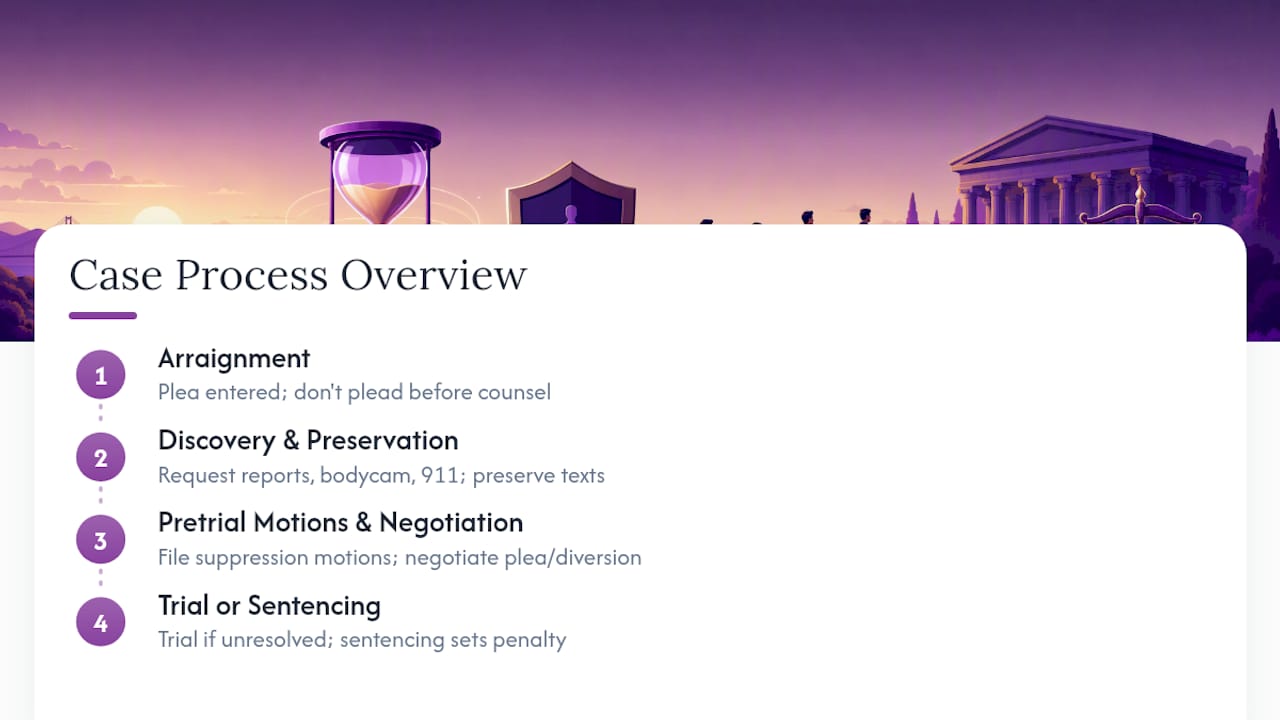
2. Discovery and evidence preservation. Defense counsel requests police reports, bodycam footage, 911 recordings, and photographs. Text messages and witness statements need to be locked down early, since memories fade and phones get replaced.
3. Pretrial motions and negotiation. This is where suppression motions get filed, and where most cases actually resolve through negotiated pleas, sometimes to a lesser charge, sometimes into a diversion track.
4. Trial or sentencing. If no resolution is reached, the case proceeds to trial. If a plea or conviction results, sentencing includes the jail/fine determination and, if probation is granted, the PC 1203.097 program requirements described above.
Each stage carries deadlines that, once missed, can't be undone, which is the core reason defense attorneys push clients to engage before the arraignment rather than after.
The Consequences That Outlast the Case Itself
A conviction under PC 243(e)(1) follows a person well past the courtroom.
- Firearms: California and federal law both restrict firearm ownership after a domestic violence conviction, and restoring those rights later is difficult and not guaranteed.
- Immigration: For non-citizens, a domestic battery conviction can trigger removal proceedings or bar future immigration benefits, which is why immigration counsel needs to weigh in before any plea is finalized.
- Record and employment: Expungement under California law can relieve some penalties, but it doesn't erase the conviction for licensing boards, immigration authorities, or certain background checks tied to jobs requiring security clearances.
- Family court: Custody and visitation determinations routinely factor in a domestic violence record, and a conviction can shift the presumption against the convicted parent in ongoing custody disputes.
Anyone facing this charge who is also navigating a family court matter or worried about their own safety can find self-help materials and forms through California Courts' domestic violence resources, and readers trying to understand the dynamics of an abusive relationship from the other side of this issue can find grounding information through Unmasked's guide on recognizing abuse.
How Rubin Law Approaches PC 243(e)(1) Defense
Rubin Law, P.C. handles domestic violence defense as a core practice area, not a side offering, and that focus shows up in how cases get built from day one.
- Evidence review starts immediately: 911 recordings, bodycam footage, and witness statements get pulled before memories or footage retention windows close.
- Motions strategy targets weak points in the arrest itself, including unlawful entry or improper statements, before the case ever reaches trial.
- Diversion and reduced-charge proposals get raised early with prosecutors, particularly in first-offense cases where a program-based resolution serves everyone better than a contested trial.
- Courtroom advocacy draws on familiarity with how specific Los Angeles County judges and prosecutors tend to handle these charges, which shapes realistic expectations from the first consultation onward.
Clients meeting with the firm for the first time typically walk through the specific facts of the arrest, the relationship history at issue, and any evidence already in hand, so the defense strategy is grounded in the actual record rather than generic advice.
What You Should Do in the Next 48 Hours
Don't enter a plea at arraignment without talking to an attorney first, even if the charge feels minor or you just want it over with. Request counsel immediately if you haven't already.
Avoid contacting the alleged victim directly, even to apologize or explain your side. That communication can be used against you and may violate an emergency protective order already in place.
Start gathering what you can: a written timeline of the incident, names of anyone who witnessed it, and any texts, photos, or messages relevant to that day. Bring all of it to your first consultation.
When evaluating an attorney at that first meeting, ask directly how many domestic violence cases they've handled in your specific county and what outcomes they typically pursue, dismissal, diversion, or reduced charges, before deciding whether trial is even on the table.
Why the "Just a Misdemeanor" Framing Misleads People
The word "misdemeanor" makes people relax when they shouldn't. I understand the instinct: compared to a felony, a max sentence of a year in county jail sounds manageable, and most people never serve anywhere close to that. But that framing misses where the actual damage happens.
A year-long batterer's intervention program, a protective order that might bar you from your own home, a permanent record that immigration officers and licensing boards can see regardless of any later expungement, these are the parts of a PC 243(e)(1) case that reshape someone's life for years. Jail time is often the smallest piece of the exposure, yet it's the piece everyone fixates on.
The other misconception I'd push back on: people assume that because no injury occurred, the case is weak or won't stick. CALCRIM's own instruction says the opposite, the slightest touching can be enough. That means defense strategy can't lean on "there's no bruise" as a standalone argument. It has to dig into willfulness, relationship status, and the credibility of what actually happened in that room, because the physical evidence bar is set lower than most defendants expect.
None of this is a reason to panic. It's a reason to treat a misdemeanor domestic battery charge with the same urgency as anything more serious, because the consequences that outlast the case are rarely the ones written into the statute's maximum sentence.
— Jake
Get Legal Help for a PC 243(e)(1) Charge in Los Angeles
Rubin Law, P.C. is built specifically for cases like this, where the real fight isn't just avoiding jail, it's avoiding a mandatory program, a protective order, and a record that follows you into immigration proceedings and family court. The firm's frequent courtroom presence in Los Angeles County means its attorneys already know how local judges and prosecutors tend to handle domestic battery filings, which shapes a sharper strategy from the first meeting instead of a generic one.
At an initial consultation, bring your arrest paperwork, any protective order documents, and a written timeline of what happened. Rubin Law will review the specifics of the arrest, discuss whether a suppression motion, diversion program, or negotiated plea fits your situation, and lay out realistic outcomes before you commit to anything. Visit the domestic violence defense page to see the firm's full approach, or explore the broader California criminal laws resource to understand how domestic battery fits into the wider criminal code before you schedule a call.
The Core Facts to Remember About PC 243(e)(1)
PC 243(e)(1) is misdemeanor domestic battery: willful, harmful, or offensive touching of a qualifying intimate partner, no injury required. Jail exposure tops out at one year, but the mandatory batterer's program under probation is usually the longer-lasting consequence. Defense priorities center on evidence preservation, challenging willfulness or the relationship element, and pursuing diversion before a case hardens into a conviction.
| Factor | Detail |
|---|---|
| Charge classification | Misdemeanor |
| Max jail time | Up to 1 year (county jail) |
| Max fine | Up to $2,000 |
| Probation program | Minimum 1 year batterer's intervention (PC 1203.097) |
| Injury required | No, slightest touching can qualify |
- Protected relationships include spouses, cohabitants, co-parents, and current or former dating partners.
- Collateral consequences (firearms, immigration, custody) often matter more than the jail sentence itself.
Where to Verify These Laws and Instructions Yourself
- California Legislative Information — Penal Code § 243 for the exact statutory text.
- CALCRIM No. 841 (Justia) for the jury instruction courts actually use.
- California Courts domestic violence resources for forms and self-help guidance.
- Rubin Law's PC 243(e)(1) page for firm-specific defense information.
This article is general information, not a substitute for advice from a qualified lawyer. Consult a qualified legal professional about your own circumstances before acting on anything here.
Sources
- California Legislative Information — Penal Code § 243
- FindLaw — California Penal Code § 243
- CALCRIM No. 841 (Justia)
- California Courts — Domestic violence programs and resources