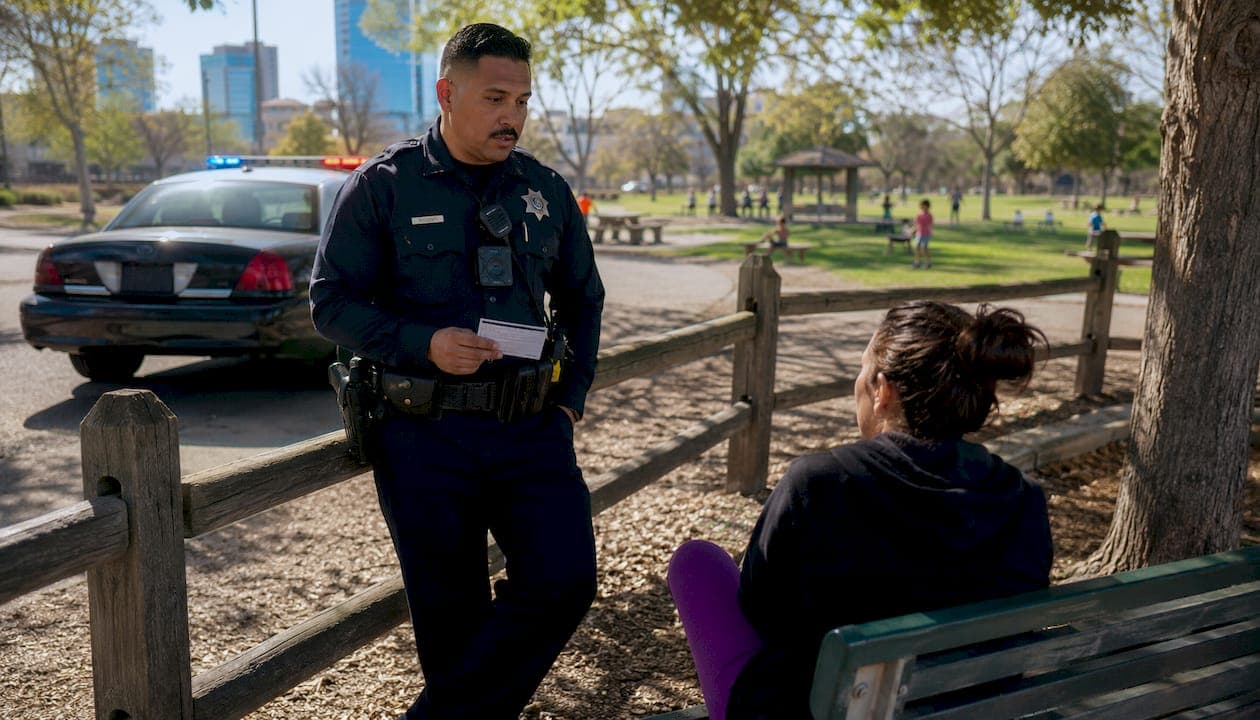
What are Miranda rights in California, and when must police read them?
Miranda rights in California are the constitutional warnings police must give before questioning someone in custody. They protect your Fifth Amendment right against self-incrimination and your Sixth Amendment right to counsel. The warnings come directly from the 1966 U.S. Supreme Court ruling in Miranda v. Arizona, and every California law enforcement agency is bound by them.
The standard warning covers four core points:
- You have the right to remain silent.
- Anything you say can and will be used against you in a court of law.
- You have the right to an attorney.
- If you cannot afford an attorney, one will be appointed for you before any questioning.
Here is the part most people get wrong: police do not have to read you these rights the moment they arrest you. The warnings are only required before a custodial interrogation — meaning questioning that is reasonably likely to produce an incriminating response. An arrest can be completely lawful without any Miranda warning at all, as long as officers do not question you afterward.
The trigger is custody plus interrogation, not arrest alone. Custody turns on whether a reasonable person in your position would feel free to leave. Handcuffs, a patrol car, a jail cell — those clearly indicate custody. A brief roadside stop generally does not, which is why officers can ask questions during a traffic pull-over without reading you your rights first.
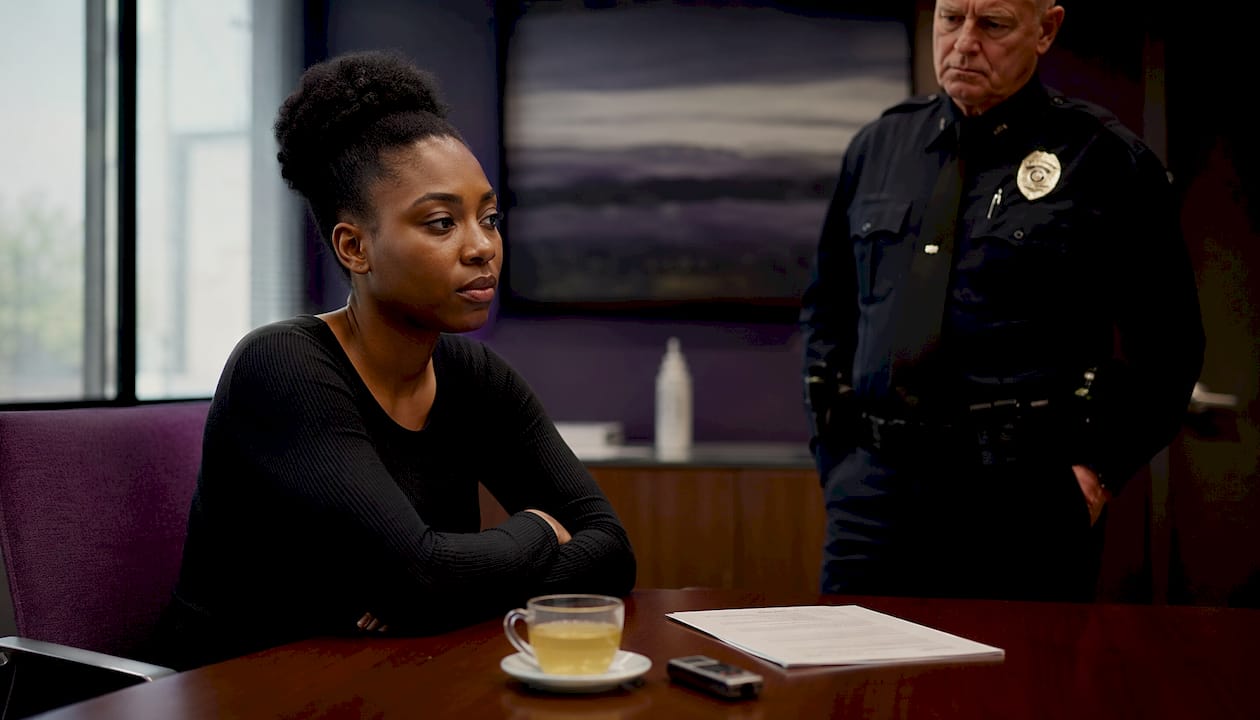
Table of Contents
- How waivers work and how to invoke your rights clearly
- Exceptions and special cases you need to know about
- What happens when Miranda rights are violated in California
- Facing charges in California? Rubinlawpc can help protect your rights
- Key Takeaways
How waivers work and how to invoke your rights clearly
Understanding the rights themselves is only half the picture. What happens after the warning is where cases are won or lost.
Express vs. implied waiver
A waiver can be express — you say out loud, "Yes, I understand my rights and I'll talk to you." Or it can be implied — you hear the warning, acknowledge you understand it, and then start answering questions. California courts accept both. The California Supreme Court confirmed in People v. Sauceda-Contreras that an implied waiver is sufficient when a suspect's conduct, after understanding the rights, shows a willingness to speak.
The legal standard for a valid waiver
For any waiver to hold up, the prosecution must prove it was:
- Voluntary — not the product of coercion, threats, or promises
- Knowing — the person understood what rights they were giving up
- Intelligent — the person grasped the consequences of waiving those rights
Courts look at the totality of the circumstances: age, education, mental state, the length of the interrogation, and whether officers used deceptive tactics. No single factor is automatically decisive.
What counts as an ambiguous invocation
This is where many people stumble. If you say something like "Maybe I should get a lawyer," that is not a clear invocation. California courts have held that an ambiguous statement allows officers to ask follow-up questions to clarify your intent — they do not have to stop questioning immediately. In Sauceda-Contreras, the defendant's response was found sufficiently ambiguous to justify clarifying questions, and his subsequent waiver was upheld.
How to invoke your rights so there is no ambiguity
The ACLU of Northern California recommends two specific phrases that leave no room for interpretation:
- "I want to remain silent."
- "I want a lawyer."
Say one of those sentences clearly, and questioning must stop. Once you invoke the right to counsel, police cannot resume interrogation until an attorney is present or you voluntarily restart the conversation yourself.
Pro Tip: Do not try to explain yourself or negotiate with officers while invoking your rights. Say "I want a lawyer" once, clearly, and then stop talking. Anything you add after that can complicate the invocation.
After arrest, you also have a separate statutory right under California Penal Code § 851.5 to make at least three completed phone calls within three hours of booking — one to an attorney, one to a bail bondsman, and one to a family member. Denying you those calls is a misdemeanor.
Exceptions and special cases you need to know about
Miranda protections are not absolute. Several well-established exceptions can change the analysis, and California has added its own layer of protections for specific groups.
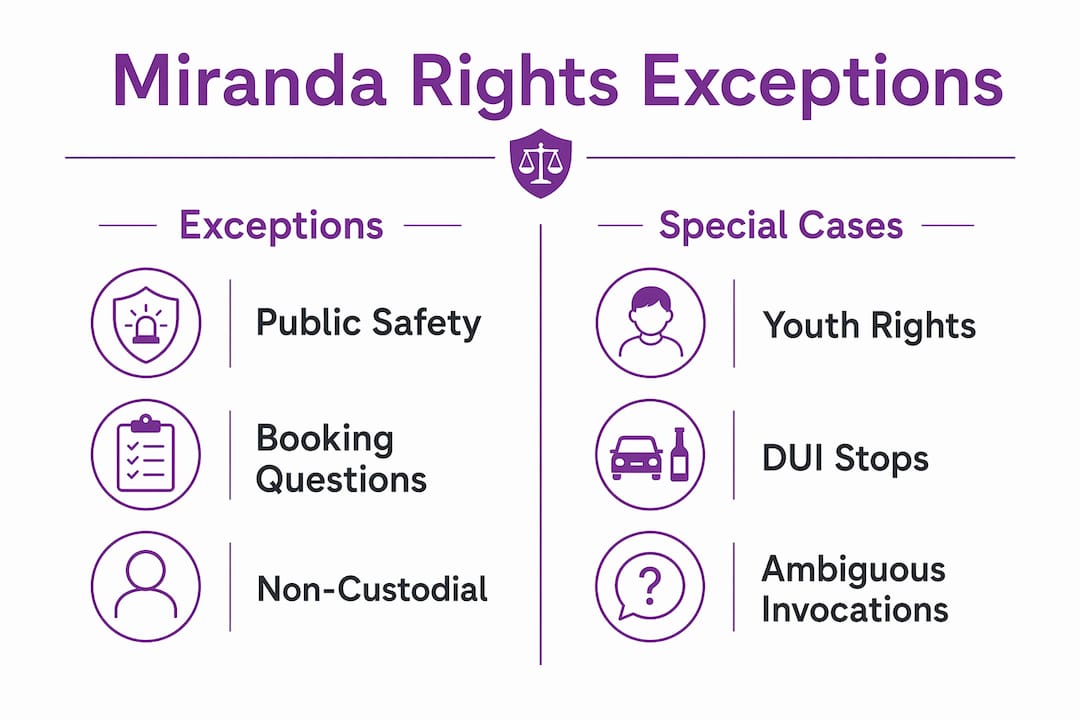
The public safety exception
If officers reasonably believe that questioning is necessary to protect someone from immediate danger, they can ask questions without first giving the Miranda warning. The classic example is asking a suspect where a weapon is hidden when there is an active threat to bystanders. Any statements made under this exception can be used against you at trial.
Routine booking questions
Basic administrative questions — your name, address, date of birth, physical description — do not require Miranda warnings. Courts treat these as clerical, not interrogative, based on the ruling in Pennsylvania v. Muniz. Officers can ask them freely at booking without triggering any suppression issue.
Youth Miranda rights under California Senate Bill 203
California goes further than federal law for anyone under 18. Since January 1, 2021, Senate Bill 203 requires that any youth 17 or younger must consult with legal counsel before any custodial interrogation and before waiving any Miranda rights. That consultation cannot be waived, period. It can happen in person, by phone, or by video conference, but it must happen first.
Courts are required to consider an officer's failure to provide that consultation when deciding whether a juvenile's statements are admissible. A willful violation also affects the officer's credibility under California Evidence Code § 780. This is a meaningful protection — California courts treat a minor's request to see a parent or probation officer as a potential invocation of Fifth Amendment rights, as established in In re Michael C.
DUI stops and roadside questioning
A standard traffic stop is not custody for Miranda purposes. Officers can ask whether you have been drinking, request your license and registration, and administer field sobriety tests without reading you your rights. The situation changes if you are placed under arrest. At that point, any substantive questioning about the incident requires a Miranda warning first. For a deeper look at how DUI evidence interacts with these protections, the rules around chemical tests and implied consent add another layer of complexity worth understanding before any DUI stop.
Non-custodial interrogations
If you are not in custody — say, you voluntarily go to a police station to answer questions — Miranda does not apply. You are technically free to leave, so there is no custodial interrogation. That said, the line between "voluntary" and "custodial" can blur quickly, especially when officers imply you are not free to go.
What happens when Miranda rights are violated in California
A Miranda violation does not automatically mean your case gets dismissed. The consequences are more targeted than that, and understanding them helps you know what your attorney can actually do.
Statements become inadmissible in the prosecution's case-in-chief
If police question you in custody without giving the Miranda warning, any statements you make cannot be used as direct evidence against you at trial. The prosecution cannot put those statements in front of the jury to prove you committed the crime.
But they can still be used for impeachment
Here is the catch: if you take the stand and testify in your own defense, the prosecution can use those same statements to challenge your credibility, as long as the statements were voluntary. The California Supreme Court addressed this directly in People v. Peevy, holding that the impeachment exception applies even when an officer deliberately ignores a suspect's request for counsel. That ruling follows the federal framework from Harris v. New York. The practical lesson: a Miranda violation limits the prosecution's options, but it does not erase the problem entirely.
Motions to suppress
Your attorney's primary tool is a motion to suppress under California Penal Code § 1538.5. If the court grants it, the unlawfully obtained statements are excluded from the prosecution's evidence. In cases where those statements are the core of the government's case, suppression can lead to reduced charges or dismissal.
What to do if you believe your rights were violated
- Do not confront officers about it at the scene. That conversation will not help you.
- Write down everything you remember as soon as possible: the exact questions asked, what you said, whether you were warned, and the timeline.
- Tell your attorney immediately. The suppression motion must be filed before trial, and the factual record you provide matters.
Courts look at the totality of circumstances when evaluating whether a waiver was valid or a violation occurred. Factors like the length of questioning, whether you were given food or water, and whether you were allowed to sleep all go into that analysis. An experienced criminal defense attorney can identify violations that are not obvious on the surface.
State vs. federal cases
One nuance worth noting: California criminal cases are governed by both the U.S. Constitution and the California Constitution. Article I, Section 28(d) of the California Constitution generally limits suppression to what federal law requires, which is why Peevy followed the federal impeachment rule. Federal prosecutions in California follow federal procedural rules, but the substantive Miranda doctrine is the same — it comes from the U.S. Supreme Court and applies nationwide.
Facing charges in California? Rubinlawpc can help protect your rights
If you have been arrested or are under investigation in Los Angeles, knowing your Miranda rights is the first step. Getting the right attorney is the second.
Rubinlawpc is a Los Angeles criminal defense firm built for clients who need aggressive, courtroom-tested representation. The firm handles everything from DUI and drug charges to violent crimes and federal offenses, with a track record of constitutional challenges that have gotten evidence suppressed and charges reduced. Unlike a general practice attorney who handles criminal cases occasionally, Rubinlawpc appears in Los Angeles courtrooms regularly and knows the local judges and prosecutors who will decide your case. If your Miranda rights were violated, the firm can file a motion to suppress and fight to keep unlawfully obtained statements out of evidence. For anyone facing charges across Los Angeles County, that local knowledge is not a small thing. Contact Rubinlawpc today for a consultation and find out exactly where your case stands.
Key Takeaways
Miranda rights in California require police to warn you of your right to silence and counsel before any custodial interrogation, and a violation can result in your statements being excluded from the prosecution's case.
| Point | Details |
|---|---|
| Custody triggers the warning | Miranda warnings are required before custodial interrogation, not at the moment of arrest. |
| Waivers must be voluntary, knowing, and intelligent | California courts evaluate waivers under the totality of circumstances, per People v. Sauceda-Contreras. |
| Youth get stronger protections | Under California Senate Bill 203, anyone 17 or younger must consult with an attorney before any custodial interrogation, and that consultation cannot be waived. |
| Violations limit but do not erase evidence | Statements taken without Miranda warnings are inadmissible in the prosecution's case-in-chief but can still be used to impeach your trial testimony under People v. Peevy. |
| Rubinlawpc for Los Angeles defense | Rubinlawpc handles Miranda suppression motions and criminal defense across Los Angeles County with regular courtroom appearances and local prosecutorial knowledge. |