
If you were falsely accused of domestic violence in California, do not contact the accuser, do not talk to police beyond identifying yourself, and retain an experienced defense attorney before you say another word. Everything you do in the first 48 hours either builds your defense or hands the prosecution its case.
Start preserving your own record immediately, even before you sit down with a lawyer:
- Save every text, email, and voicemail exchanged with the accuser, including anything sent after the incident.
- Back up your phone's full data, not just screenshots, since metadata (timestamps, location data) can matter more than the message content.
- Photograph any relevant location, injury, or lack of injury, while the scene is still intact.
- Never delete anything, even messages that seem to hurt you. Deleted evidence looks like consciousness of guilt.
If a restraining order or protective order has already been issued against you, comply with it to the letter, even if you believe the danger is overstated or the accuser has invited contact. A single violation, even one you think is harmless, can turn a defensible case into an easy conviction.
Key Takeaways
A false domestic violence accusation in California requires immediate evidence preservation, silence toward the accuser, and an attorney who knows how to challenge both the criminal case and any restraining order.
| Point | Details |
|---|---|
| Act within hours, not days | Preserve texts, call logs, and location data before accounts are deleted or memory fades. |
| Know the charges you face | PC 273.5 requires injury; PC 243(e)(1) does not, making it easier to allege falsely. |
| Comply with any active order | Violating a TRO or DVRO, even one you feel is unjustified, can wreck an otherwise strong defense. |
| Use procedural tools early | Pitchess motions and PC 1538.5 suppression motions can undercut a case built on a weak police report. |
| Work with a courtroom-focused firm | Rubin Law, P.C. builds DV defense around pre-filing intervention, constitutional challenges, and diversion advocacy. |
Table of Contents
- Understanding False Domestic Violence Charges in California
- What Should You Do in the First 24 to 48 Hours?
- Why Do False Domestic Violence Allegations Happen?
- How Do You Challenge a False Domestic Violence Accusation?
- What Happens in Court After a Domestic Violence Arrest?
- What Defense Strategies Actually Work in California?
- Rubin Law, P.C.: A Courtroom-First Approach to False Allegations
- Can You Sue Someone for Falsely Accusing You?
- How Character Witnesses and Expert Testimony Help Your Defense
- How Do False Allegations Affect Immigration Status?
- Protecting Your Privacy While the Case Is Pending
- Rebuilding After a False Accusation: Employment and Reputation
- A Final Word From Jake
- How Rubin Law, P.C. Can Help You Fight Back
- Sources
Understanding False Domestic Violence Charges in California
California prosecutes domestic violence aggressively, and the charges you face depend on what the accuser claims happened, as shown in typical domestic-battering charge records. Penal Code 273.5 covers corporal injury to a spouse, cohabitant, or co-parent and requires a visible injury, even a minor one like redness or swelling. It's a "wobbler," meaning prosecutors can file it as a misdemeanor or a felony depending on your criminal history and the alleged severity. Penal Code 243(e)(1), domestic battery, requires no visible injury at all. Any offensive touching against an intimate partner qualifies, which is why false accusations sometimes occur. No bruise, no photo, no medical record, just one person's word.
Separate from the criminal case, the accuser can request a Domestic Violence Restraining Order (DVRO) through family court, or police can issue an Emergency Protective Order (EPO) on the spot. These are civil proceedings, not criminal ones, which means the burden of proof is lower: "preponderance of the evidence" instead of "beyond a reasonable doubt." A judge can grant a temporary order the same day, based solely on the accuser's written declaration, before you've had any chance to respond. That order can force you out of your own home, restrict contact with your children, and require you to surrender any firearms within 24 hours.
The stack of consequences from a temporary order often lands harder than people expect. A move-out order upends your housing overnight. A no-contact provision covering your kids can freeze custody arrangements for weeks before a hearing even happens. Firearm surrender is mandatory and immediate, with no exceptions for hunting rifles or heirlooms.
You might wonder why prosecutors don't charge accusers who lie. Penal Code 148.5 does criminalize filing a false police report, but it's rarely charged in domestic violence cases. Prosecutors and police, guided by federal policy from agencies like the U.S. Department of Justice's Office on Violence Against Women, are trained to treat DV reports as credible by default, which shapes how aggressively they pursue the underlying case and how reluctant they are to turn around and charge the accuser afterward.
What Should You Do in the First 24 to 48 Hours?
The choices you make in the first two days shape everything that follows. Here's the order that actually protects you:
- Invoke your right to remain silent. Tell officers you want an attorney and stop talking. Anything said in the heat of the moment, including attempts to "explain," gets used against you later.
- Do not contact the accuser, directly or through a third party. No apologies, no "let's talk this out," no asking a mutual friend to check in. Prosecutors read this as intimidation even when your intent is reconciliation.
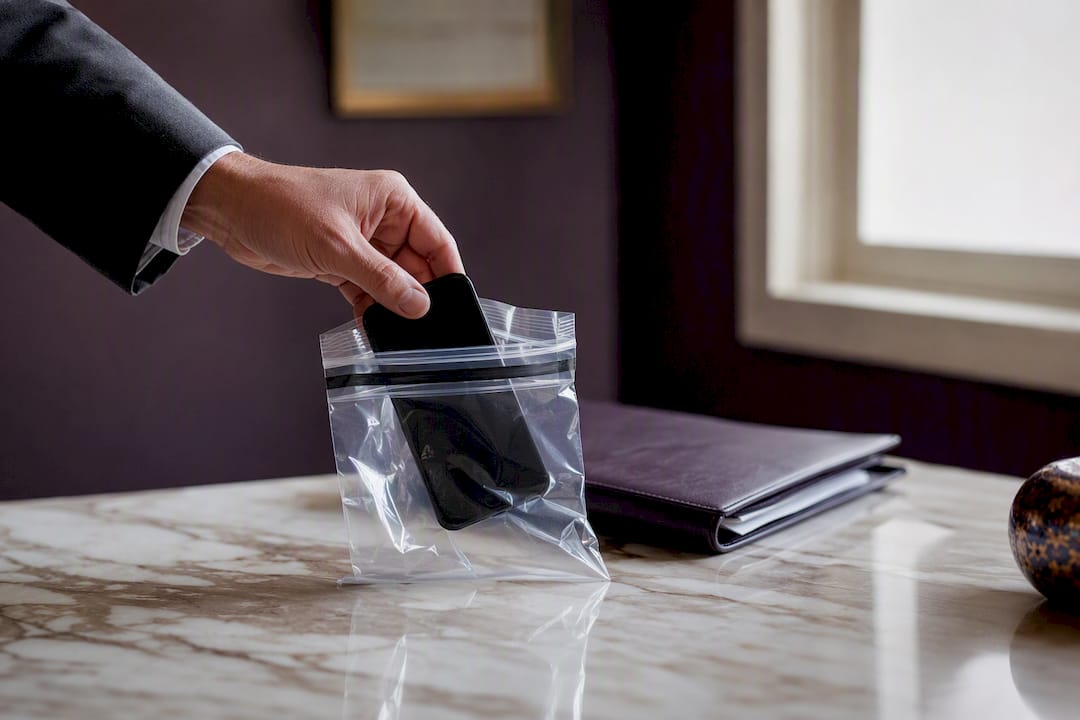
- Export and back up every digital record tied to the relationship and the incident. Screenshots with visible timestamps, full call logs, and social media messages should be saved in at least two places, one cloud and one offline copy, since accounts get deleted or locked.
- Photograph the physical scene. Document the location, any injuries or absence of injuries, torn clothing, or anything else relevant, and locate nearby security or doorbell cameras before footage gets overwritten.
- Get the actual paperwork and read it closely. If a TRO, DVRO, or EPO has been served, note every deadline and restriction. Comply exactly, then get the document to your attorney immediately so the response gets filed on time.
Pro Tip: Set a recurring daily reminder to back up your phone during this period. Cloud sync settings change, storage fills up, and a lot of critical text threads get overwritten by the accuser deleting their own account before your attorney can subpoena the records.
Digital evidence decays faster than people expect. A deleted Instagram account, a phone traded in for an upgrade, a call log that only stores 90 days of history: all of it can vanish before your case reaches a courtroom. Treat the first 48 hours as an evidence-preservation sprint, not just a legal formality.
Why Do False Domestic Violence Allegations Happen?
False accusations rarely come out of nowhere. Certain situations produce them predictably enough that defense attorneys watch for the pattern:
- Custody disputes, where a DVRO becomes a fast track to sole custody or a favorable parenting plan before a family court judge has heard both sides.
- Divorce leverage, where an accusation pressures a spouse into a faster settlement or forces them out of the marital home.
- Retaliation after infidelity, a breakup, or an argument over finances.
- Immigration or financial motives, including situations where a party in a strained noncitizen relationship believes an allegation could support a claim like U nonimmigrant status.
Credibility cracks show up in specific places: statements that shift between the 911 call, the police report, and the DVRO declaration; an allegation that surfaces right after a custody filing or a request for spousal support; or a complete absence of corroborating evidence, no photos, no messages, no witnesses, from an incident the accuser describes as violent. California's Evidence Code allows the defense to introduce motive and pattern evidence, including prior inconsistent statements and the timing of legal filings, when it's directly relevant to credibility rather than offered as generic character attack.
How Do You Challenge a False Domestic Violence Accusation?
Building a defense means attacking the allegation from every angle it's vulnerable: the timeline, the witnesses, and the process that generated the evidence in the first place.
Documentary contradictions carry enormous weight because they're objective. Cell phone GPS data placing you somewhere other than the alleged scene, call logs showing no contact during the claimed altercation, or a text sent by the accuser minutes after the "assault" that reads nothing like someone in distress. Building a minute-by-minute timeline from these records often does more to dismantle a false claim than any argument about character.
Witness development matters just as much. Neighbors who heard nothing unusual, a doorbell camera that captured a calm exchange instead of a violent one, or a third party present who tells a different story than the accuser: all of it corroborates your version when the accuser's account stands alone.
Procedural motions are where an experienced defense attorney earns their fee:
- A Pitchess motion lets the defense request confidential personnel records of the arresting officer when there's reason to believe bias, dishonesty, or excessive force shaped the police report. If the officer's account is the backbone of the prosecution's case, this motion can expose a pattern that undermines it.
- A Penal Code 1538.5 suppression motion challenges evidence obtained through an illegal search or seizure, keeping improperly gathered material out of trial entirely.
- Hearsay objections and Confrontation Clause challenges come into play when an accuser refuses to testify. Under the Crawford line of cases, prosecutors often cannot simply read the accuser's prior statement into the record if you never had the chance to cross-examine them, a principle rooted in the constitutional right to confront witnesses.
Pro Tip: If the accuser stops cooperating or recants, don't assume the case disappears. Prosecutors can still push forward using body camera footage or the original 911 call. Your attorney needs to move quickly to challenge admissibility rather than waiting for the case to fall apart on its own.
On the civil side, a restraining order isn't permanent the moment it's issued. Your attorney can move to modify or dissolve a DVRO by presenting contradicting evidence at the noticed hearing, and a well-documented case can result in the order being narrowed or lifted entirely rather than renewed for years.
What Happens in Court After a Domestic Violence Arrest?
The criminal case and the restraining order move on separate, overlapping tracks, and confusing the two costs people real time.
On the restraining order side, a judge can issue a temporary restraining order the same day, based only on the accuser's declaration. That order typically holds until a full DVRO hearing, usually scheduled within about three weeks, where both sides present evidence and the judge decides whether to extend the order, sometimes for up to five years.
On the criminal side, an arrest leads to arraignment, where charges are formally read and you enter a plea. From there, a felony case proceeds to a preliminary hearing, where a judge decides if there's enough evidence to move forward, and eventually to trial if no resolution is reached earlier. Misdemeanor cases skip the preliminary hearing and move more directly toward pretrial negotiations or trial.
Short-term restrictions hit fast regardless of which track you're on. Firearm surrender happens within 24 hours of a protective order. Custody arrangements often get frozen or altered on a temporary basis pending the DVRO hearing, sometimes before your attorney has even reviewed the file. Each procedural milestone, arraignment, the DVRO hearing, the preliminary hearing, opens a new decision point: negotiate, file motions to suppress or dismiss, or proceed toward trial. Every one of those decisions changes depending on what evidence your attorney has preserved and how strong the contradictions in the accuser's account turn out to be.
What Defense Strategies Actually Work in California?
The right defense depends heavily on what the evidence shows, and a good attorney will pursue more than one angle at once.
- Self-defense or mutual combat applies when evidence shows you responded to an initial aggression rather than initiating it. This defense needs supporting evidence like injuries consistent with defending yourself, witness accounts, or a documented history of the accuser's aggression.
- Pre-filing intervention means your attorney contacts the district attorney's office before charges are ever formally filed, presenting exculpatory evidence early enough to prevent the case from being charged at all. This window closes fast, sometimes within days of an arrest.
- Diversion programs, where available, let qualifying defendants complete counseling or education programs in exchange for a dismissal, avoiding a conviction on your record entirely. Not every DV charge qualifies, and eligibility depends heavily on the specific facts and your criminal history.
- Coordinating with family court matters just as much as the criminal defense itself. A criminal attorney and family law counsel need to communicate directly, because a misstep in the criminal case, like a bad plea, can permanently shape a custody outcome, and vice versa.
Rubin Law, P.C.: A Courtroom-First Approach to False Allegations
Rubin Law, P.C. builds its domestic violence defense practice around frequent courtroom appearances, which means familiarity with how specific Los Angeles County judges and prosecutors actually handle DV cases, not just how the statute reads on paper. That local knowledge shapes which motions get filed, when, and in front of whom.
In the first 72 hours of a new case, the firm typically works through the same core checklist:
- Launch an independent evidence review, comparing the police report against available digital and physical evidence.
- Identify preservation priorities before texts, footage, or call logs disappear.
- Evaluate grounds for a Pitchess motion or a 1538.5 suppression motion early, since some evidentiary challenges lose strength the longer they wait.
- Map the pretrial calendar to flag opportunities for pre-filing intervention before the DA's office commits to charges.
The firm's use of constitutional challenges and diversion advocacy reflects a broader philosophy: fight to keep the case from ever becoming a conviction, not just to manage the fallout after one.
Can You Sue Someone for Falsely Accusing You?
Legal remedies against a false accuser exist, but they're harder to pursue than most people assume, and the payoff isn't guaranteed. Penal Code 148.5 technically criminalizes filing a false police report, but district attorneys rarely bring these charges even when the underlying DV case falls apart, largely because proving the accuser knew their statement was false, rather than mistaken or exaggerated, is a high bar.
Perjury charges apply if the accuser lied under oath during a DVRO hearing or in a sworn declaration, but again, prosecutors treat these charges cautiously given the policy emphasis on encouraging DV reporting.
Civil options tend to be more realistic than criminal ones. Malicious prosecution and defamation lawsuits are available if you can show the accuser knowingly fabricated the claim and it caused you demonstrable harm, financial loss, job termination, reputational damage. These cases require solid documentation built during the original defense, which is one more reason evidence preservation from day one matters even beyond the immediate criminal case.
Judges can also impose sanctions against an accuser found to have filed a DVRO request in bad faith, including covering your attorney's fees for defending against it. These sanctions are more commonly granted than criminal false-reporting charges, since the standard of proof in family court is lower and judges have direct authority over the proceedings in front of them.
How Character Witnesses and Expert Testimony Help Your Defense
Character evidence in a domestic violence case works differently than people expect. California law restricts blanket "he's a good person" testimony, but it does allow specific, relevant evidence that directly contradicts the accusation.
Character references carry the most weight when they speak to specific, relevant traits: a colleague who can testify to your demeanor under stress, a family member who witnessed the actual relationship dynamic, or a former partner who can speak to a pattern (or lack of one) if it's legally relevant and admissible. Generic praise from friends rarely moves a judge or jury; specific, corroborated observations do.
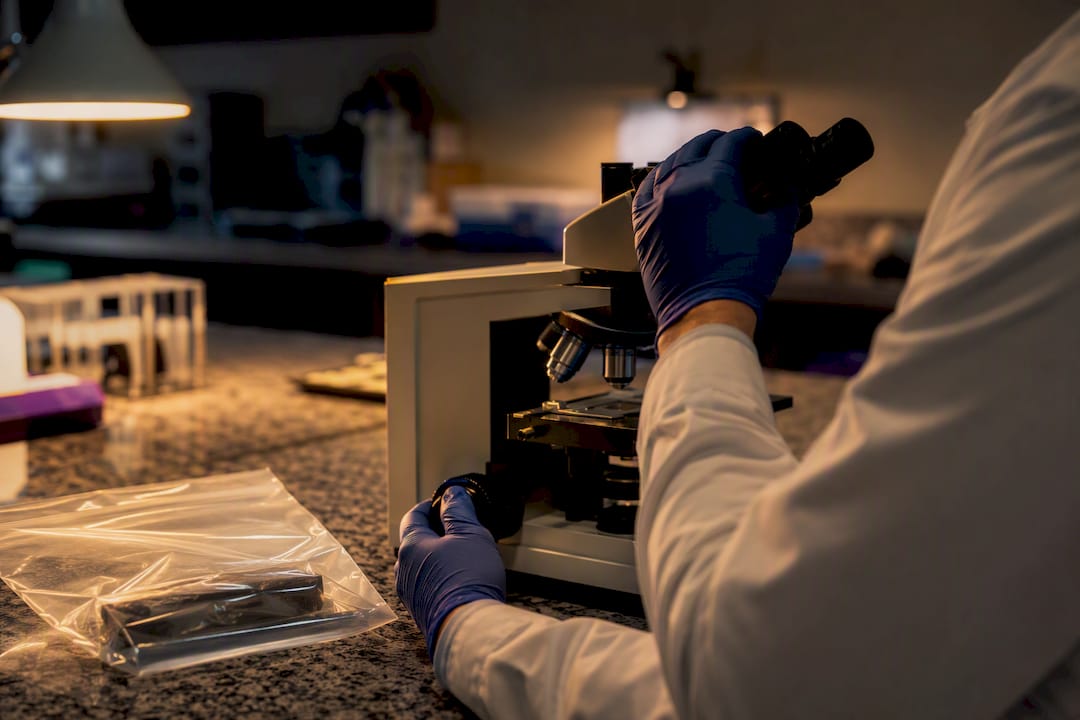
Expert testimony adds a different layer entirely. A forensic digital analyst can authenticate text message metadata or GPS records that the prosecution disputes. A medical expert can testify that an alleged injury is inconsistent with the described mechanism, or that documented injuries don't match the accuser's timeline. In cases involving conflicting psychological claims, a qualified forensic psychologist can address whether the accuser's described trauma response aligns with the facts presented.
Timing matters here. Character witnesses and experts need to be identified and prepared well before trial, not scrambled together the week of a hearing. Your attorney needs their statements, credentials, and availability locked down early enough to survive cross-examination and any pretrial challenges to their qualifications.
How Do False Allegations Affect Immigration Status?
For noncitizens, a false domestic violence accusation carries stakes far beyond the criminal case itself. Even an arrest without a conviction can trigger immigration consequences, complicate a pending visa or green card application, or surface during naturalization review.
The intersection cuts both ways. Some accusers pursuing U nonimmigrant status protections for victims of qualifying crimes may have an incentive to frame a dispute as domestic violence specifically because it opens a path to that status. That doesn't mean every claim tied to immigration status is false, but it's a documented pattern defense attorneys watch for when the timing of an accusation lines up suspiciously with an immigration filing.
If you're a noncitizen facing DV charges, your criminal defense attorney needs to coordinate directly with immigration counsel from the outset. A plea that looks reasonable from a purely criminal standpoint, like a plea to a lesser included offense, can still trigger deportation proceedings depending on how the charge is classified under federal immigration law. This is not a corner to cut with a generalist attorney unfamiliar with the immigration consequences of specific California statutes.
Protecting Your Privacy While the Case Is Pending
A domestic violence accusation exposes an enormous amount of your personal life to court scrutiny, and protecting what you can matters just as much as fighting the underlying charge.
Court records in criminal cases are generally public, but your attorney can request that sensitive materials, medical records, financial documents, communications with minor children, be filed under seal or reviewed in camera rather than entered into the open record. Ask specifically about sealing motions if the evidence involves anything you wouldn't want searchable by future employers or landlords.
Social media requires immediate discipline. Set every account to private, stop posting entirely about the case or the accuser, and resist the urge to vent, defend yourself publicly, or respond to mutual friends asking questions. Prosecutors and opposing counsel routinely mine social media for anything that can be framed as evidence of anger, obsession, or violation of a no-contact order, even a "like" on a photo.
Be equally careful with who you tell. Every person you discuss the case with outside of privileged communication with your attorney is someone who can be subpoenaed to testify about what you said.
Rebuilding After a False Accusation: Employment and Reputation
Even when a case gets dismissed or you're acquitted at trial, the accusation itself can linger in ways that outlast the courtroom. Arrest records, unless sealed or expunged, can surface in background checks for years. Employers, licensing boards, and landlords running routine screenings may see the arrest before they see the outcome.
Look into record sealing or expungement the moment your case resolves favorably, rather than waiting. California allows relief in many circumstances following a dismissal or acquittal, and getting the process started early limits how long the arrest stays visible to third parties running background checks.
Professional licensing can be its own separate battle. Certain licensed professions, healthcare, education, law, require self-reporting of arrests or charges regardless of outcome, and some licensing boards open independent reviews that move on a completely different timeline than the criminal case. If your profession is licensed, loop in your attorney on any reporting obligations immediately rather than guessing at what's required.
Reputational recovery tends to be slower and less linear than legal recovery. Direct, unemotional communication with employers or close colleagues, when appropriate, tends to work better than silence or over-explanation. Time and a clean resolution do most of the real repair work, but a documented, favorable case outcome, dismissal, acquittal, or diversion completion, gives you something concrete to point to when the subject comes up.
A Final Word From Jake
If you take one thing from this article, let it be this: the accusation itself is not the verdict, but the clock is already running the moment you're arrested or served. Every hour you wait to retain counsel is an hour of evidence you can't get back. Resist the instinct to explain yourself to the accuser, to police, or on social media. Silence and preparation protect you far better than any justification ever will.
— Jake
How Rubin Law, P.C. Can Help You Fight Back
Rubin Law, P.C. is the option built specifically for what you're facing right now: a courtroom-tested defense practice in Los Angeles that handles DV arrests, restraining order responses, Pitchess motions, and pre-filing intervention as its core work, not a side practice bolted onto a general criminal calendar.
A confidential consultation is the fastest way to find out where your case actually stands. Bring anything you already have: the police report, any DVRO or EPO paperwork you've been served, screenshots or exports of relevant texts, and a written timeline of events while your memory is fresh. From there, the firm reviews your exposure, identifies immediate preservation priorities, and flags whether pre-filing intervention is still possible before charges are formally filed.
If you're facing a domestic battery or corporal injury charge, start with the firm's Los Angeles domestic violence defense page to see how PC 273.5 and PC 243(e)(1) cases are handled. If charges haven't been filed yet, the prefile intervention page explains how early engagement with the DA's office can prevent a filing altogether. Call now to schedule a confidential consult before the evidence window closes.
Sources
For deeper background, the DOJ Office on Violence Against Women explains the federal policy context behind aggressive DV enforcement. Cornell Law's overview of the right to confront witnesses covers how hearsay and testimonial evidence intersect with recanting accusers. The National Library of Medicine's research on DV reporting offers cautious context on prevalence estimates, and Rubin Law's own PC 148.5 false reporting page details the statute governing false police reports directly.
This article is general information, not a substitute for advice from a qualified lawyer. Consult a qualified legal professional about your own circumstances before acting on anything here.
- Cornell Law — Right to confront witnesses
- U.S. Department of Justice — Office on Violence Against Women
- USCIS — U nonimmigrant status for victims of criminal activity