The strongest defenses to a PC 288 charge are lack of sexual intent (including accidental or innocent physical contact), mistaken identity or false accusation, evidentiary challenges to how a child's forensic interview was conducted, constitutional suppression of statements or digital evidence, and rebutting any claim of force or duress under PC 288(b). Penalties include potentially lengthy prison terms, possible One Strike enhancements, and lifetime PC 290 registration, so outcomes turn heavily on the facts, the forensic record, and the prosecution's ability to prove every element beyond a reasonable doubt. Anyone under investigation should contact a defense attorney before speaking with detectives.
TL;DR:
- Lack of sexual intent and mistaken identity are the most common defenses, but their success often hinges on the context, witnesses, and digital evidence.
- Forensic interview quality is critical, and deviations from standardized protocols can be used to challenge the reliability of child testimony.
- Evidence of force or duress must be proven with clear signs of threats, injury, or coercion; a calm or ordinary setting undermines a force or menace claim.
- Suppression motions on constitutional grounds can exclude key digital or testimonial evidence if officers mishandled the investigation or interrogation.
- Early, thorough evidence preservation and legal consultation are essential to mount effective defenses and avoid damaging statements or evidence.
Table of Contents
- Understanding PC 288 Defenses: What Prosecutors Must Prove First
- The Main Categories of PC 288 Legal Strategies
- How Defense Attorneys Challenge Forensic Interviews
- Defending Against Force, Menace, or Fear Under PC 288(b)
- Constitutional Motions: Suppressing Statements and Digital Evidence
- Mitigation, Diversion, and Plea Strategy
- If You're Under Investigation: A Preservation Checklist
- How Rubin Law Approaches PC 288 Defenses in Los Angeles
- PC 288 vs. Related California Sex-Offense Statutes
- How Prosecutors Build PC 288 Cases, and How the Defense Pushes Back
- The Role of Expert Testimony in a PC 288 Defense
- Prior Convictions Change the Sentencing Math Significantly
- Statute of Limitations Rules for PC 288 Charges
- Why Early, Evidence-Focused Defense Work Matters Most
- Talk to Rubin Law About Your PC 288 Case
- Sources
- FAQ
Understanding PC 288 Defenses: What Prosecutors Must Prove First
Every defense strategy starts with the same question: what does the prosecution actually have to prove? Penal Code §288 splits into several subdivisions, and the one charged determines both the elements at trial and the exposure at sentencing. Under PC 288(a), the prosecution must show the defendant committed a willful lewd or lascivious act on a child under 14, and did so with the specific intent to arouse, appeal to, or gratify sexual desire. That intent element is the fulcrum of most cases, and it is frequently proven through circumstantial evidence rather than direct admission, according to research on child molestation cases published by California State University.
PC 288(b)(1) and 288(b)(2) apply when the same lewd act is committed by force, violence, duress, menace, or fear of injury, and they carry substantially harsher sentencing ranges than a standard 288(a) charge. PC 288(c)(1) covers lewd acts against victims age 14 or 15 when the defendant is at least 10 years older, a distinct category with its own intent and age-gap requirements.
Sentencing ranges under 288(a) generally run from three to eight years in state prison, while 288(b) convictions expose a defendant to five, eight, or ten years, and cases involving multiple victims or aggravating circumstances can trigger One Strike enhancements that push sentences toward 15 years to life. Nearly every conviction also triggers mandatory sex-offender registration under PC 290, a lifetime obligation that follows a person through housing applications, employment screening, and travel restrictions long after any prison term ends.
Courts have also weighed in on how testimony and evidentiary standards apply in these prosecutions. People v. Jones is one of the appellate decisions that shapes how judges evaluate the reliability and sufficiency of testimony in sexual-offense trials, and it comes up repeatedly when defense counsel argues that a single uncorroborated account should not carry a conviction on its own.
The Main Categories of PC 288 Legal Strategies
Not every PC 288 case fits the same mold, and the right defense depends entirely on what actually happened, who is making the allegation, and what physical or digital evidence exists. Below are the principal defensive theories that recur across California PC 288 cases.
- Lack of sexual intent. Physical contact between an adult and a child happens constantly in ordinary life, bathing a toddler, applying medication, comforting a child after a fall, and none of it is criminal without the specific intent element PC 288(a) requires. Defense counsel builds this theory around context: was the touching brief, was it consistent with a partaking role, did witnesses observe nothing unusual, and does the accuser's own account describe conduct that maps onto an innocent explanation rather than a sexual one.
- Mistaken identity and alibi. In cases involving extended families, daycare settings, or multiple adults present in a household, the wrong person sometimes gets named. Phone records, time-stamped photos, employment logs, and third-party witness statements can place the accused somewhere else entirely, or establish that another adult had access during the relevant window.
- False accusation. Custody battles, contentious divorces, and coached statements from a manipulative co-parent or relative are an unfortunate but documented source of false PC 288 reports. Investigators and defense experts look for inconsistent timelines, statements that shifted after repeated questioning, and a motive trail, such as a pending custody hearing or a financial dispute, that predates the accusation.
- Limits on consent and age belief. California law does not allow a defendant to argue he or she reasonably believed the victim was 14 or older; age under 14 is a strict element under PC 288(a), and a mistaken belief about age is not a legal defense, a point legal analysis of PC 288(a) penalties and defenses makes clear. Consent from a minor is also legally meaningless under this statute. Defense strategy has to work around this reality rather than lean on it, focusing instead on intent, identity, or the reliability of the accusation itself.
Every one of these theories depends on evidence gathered early, before memories fade and before digital records get overwritten or deleted by service providers.
How Defense Attorneys Challenge Forensic Interviews
Child forensic interviews are often the single most important piece of evidence in a PC 288 case, and they are also one of the most fragile. An interview conducted with leading questions, repeated suggestive prompts, or multiple sessions that allow a narrative to shift over time can produce statements that sound damning but do not hold up to scrutiny.
The gold standard for how these interviews should be conducted is the NICHD protocol, a structured interview method designed to minimize suggestion and maximize the child's own free-recall narrative. When an interviewer deviates from that structure, asking closed yes-or-no questions, introducing details the child never mentioned, or conducting the interview weeks or months after disclosure, the reliability of the resulting statement becomes a legitimate target for cross-examination.
Defense counsel typically brings in a forensic psychology expert to review recordings and transcripts of the original interview. That expert can testify about specific deviations from accepted protocol: how many times the child was interviewed, whether a parent or investigator was present and potentially influencing responses, and whether the child's account grew more detailed or changed in material ways across sessions. Statement drift, where a child's story becomes more elaborate each time it is repeated, is a well-documented red flag that experts are trained to spot and juries respond to when it is explained clearly.
Courts have also addressed how testimony credibility gets weighed at trial. In People v. Jones, the appellate court's reasoning on evidentiary and testimonial standards in sexual-offense cases informs how trial judges instruct juries on evaluating a child witness's account, particularly when that account is the primary basis for the charge.
Pro Tip: Request the raw recording of every forensic interview, not just a transcript, as early as possible. Tone, pauses, and an interviewer's off-camera prompts often reveal suggestibility that a written transcript strips out entirely.

Defending Against Force, Menace, or Fear Under PC 288(b)
A 288(b) charge changes the entire calculus of a case because it adds a force or duress element on top of everything PC 288(a) already requires, and it roughly doubles the potential prison exposure. Prosecutors must prove the lewd act was accompanied by force, violence, duress, menace, or fear of immediate and unlawful bodily injury, not merely that an authority relationship existed between the adult and the child.
People v. Soto is the controlling appellate authority on how California courts interpret force, menace, and fear in this context, and it makes clear that duress requires more than a power imbalance alone; there has to be a showing that the child's will was actually overcome through implied or direct threat. That distinction gives defense counsel real room to work. If the alleged victim never described feeling threatened, if there is no evidence of physical restraint or injury, and if the interaction occurred in a setting inconsistent with coercion, the force element becomes difficult for the prosecution to sustain.
Medical records showing no signs of physical trauma, witness accounts describing a calm or ordinary household environment, and the absence of any documented threat in the child's own statements all work against a duress theory. Prosecutors sometimes lean on an inherent authority dynamic, a parent, coach, or older relative, as a substitute for actual proof of menace, and that theory is exactly the kind of argument People v. Soto gives defense counsel grounds to push back on. Where the force element falls apart, a case can sometimes be renegotiated down to a standard 288(a) charge, with meaningfully lower sentencing exposure.
Constitutional Motions: Suppressing Statements and Digital Evidence
Some of the most effective PC 288 defenses never touch the underlying allegation at all. They attack how the evidence was gathered.
Miranda violations are common in these investigations because detectives often approach a suspect informally, at home or at work, before making clear the person is in custody and facing serious charges. If law enforcement conducted what amounted to a custodial interrogation without properly advising the suspect of the right to remain silent and the right to counsel, any resulting statements can be suppressed and kept out of trial entirely.
Search and seizure issues come up just as often, particularly with phones, cloud accounts, and computers. Warrants for digital devices have to specify what officers are looking for and where; a warrant issued for text messages does not automatically authorize a search of photos, browser history, or cloud-stored files from years earlier. When investigators exceed the scope of what a judge actually authorized, a suppression motion can strip out evidence the prosecution was counting on.
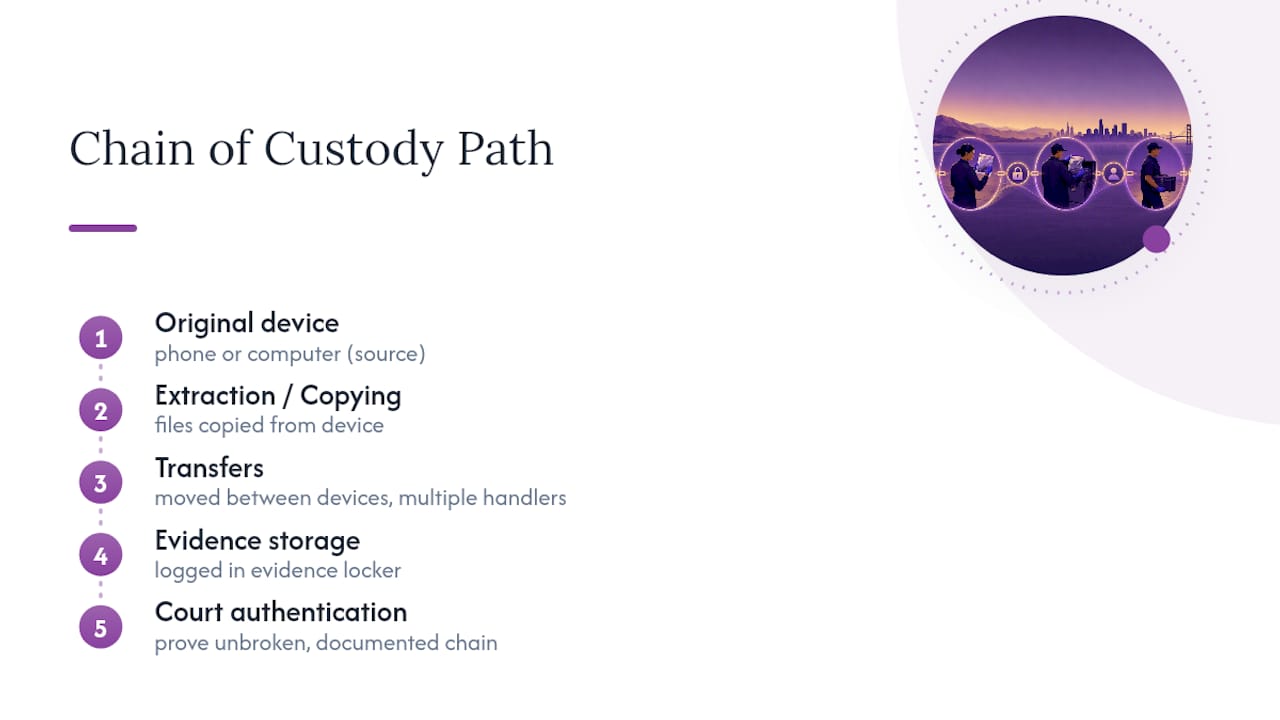
Authentication and chain-of-custody problems round out this category. Digital files get copied, transferred between devices, and handled by multiple people during an investigation, and each handoff is a potential point of failure. If the prosecution cannot establish an unbroken, documented chain showing exactly how a file moved from the original device to the evidence locker, defense counsel can move to exclude it, and losing a key piece of digital evidence sometimes forces a case toward dismissal or a significantly reduced plea offer.
Mitigation, Diversion, and Plea Strategy
Not every PC 288 case is winnable at trial, and not every case should go to trial. Where the evidence is genuinely strong, the smarter path is often reducing exposure rather than gambling on an outright acquittal.
Diversion and treatment-based programs exist in California, but availability for sex-offense-adjacent charges is narrow and depends heavily on the specific subdivision charged, the defendant's history, and the judge assigned to the case. It is not a guaranteed option, and counsel needs to evaluate eligibility early rather than assume it applies.
Plea negotiation leverage usually comes directly from the weaknesses already built into the case: a shaky forensic interview, a pending suppression motion, or a force allegation that will not survive a Soto analysis all give defense counsel real bargaining position to push for a reduced charge or a different statute altogether. Prosecutors know an unreliable child interview or a doomed suppression fight in front of a skeptical judge, and that recognition shapes what they are willing to offer.
Sentencing advocacy matters even after a plea. Evidence of rehabilitation, stable employment, community ties, and completed counseling can influence a judge's discretion within the applicable range, and a well-prepared mitigation package, character letters, treatment records, a clean record aside from the current charge, can be the difference between the low end and the high end of a sentencing triad.
If You're Under Investigation: A Preservation Checklist
The decisions made in the first 48 hours after learning of an investigation often determine how the entire case unfolds. Move on these steps immediately.
- Say nothing to police without a lawyer present. Invoke the right to remain silent clearly and ask for an attorney; anything said informally, even something that feels like an innocent explanation, can be twisted into evidence of intent.
- Back up your devices before doing anything else. Preserve phones, laptops, and cloud accounts exactly as they are; do not delete messages, photos, or apps, since that can look like evidence destruction even when nothing incriminating exists.
- Write down who conducted any interview and when. If a child was interviewed by police, a social worker, or a school counselor, note dates, names, and locations while your memory is fresh; this becomes critical for a later forensic-interview challenge.
- Gather your own alibi and calendar records. Pull up phone location data, work schedules, receipts, and text messages that establish where you were during the alleged timeframe.
- List potential witnesses now. Names and contact information for anyone who was present or nearby fade fast; write them down before people move, change numbers, or forget.
- Contact defense counsel before any further contact with investigators. A prefile intervention at this stage can sometimes prevent formal charges from being filed at all.
How Rubin Law Approaches PC 288 Defenses in Los Angeles
Rubin Law, P.C. built its practice around frequent courtroom appearances across Los Angeles County, which means direct, ongoing familiarity with how specific judges and prosecutors handle sex-offense filings, suppression motions, and diversion requests. That local courtroom experience shapes strategy from the first phone call: knowing which judges scrutinize forensic-interview protocol closely, and which prosecutors are willing to negotiate when a force allegation is weak, changes how a case gets built.
At intake, the defense counsel reviews the specific subdivision charged, the forensic-interview record, and any digital or physical evidence law enforcement collected, then maps out where constitutional challenges or expert review are likely to matter most. The approach leans on constitutional suppression motions and, where the facts support it, diversion or pre-file intervention strategies aimed at resolving matters before they escalate to formal charges. Clients can expect a factual review paired with a concrete plan, not a generic promise.
PC 288 vs. Related California Sex-Offense Statutes
PC 288 covers lewd or lascivious acts, meaning touching done with sexual intent, but it does not require penetration or the kind of contact charged under other statutes. Understanding where the lines fall matters because charging decisions often hinge on subtle factual distinctions.
PC 289 covers forcible acts of sexual penetration, a materially different and often more severely punished category of conduct than the lewd-touching conduct at the core of PC 288. PC 269, aggravated sexual assault of a child, applies to specific enumerated acts, including certain PC 288 conduct committed with force, against a victim under 14 by someone at least seven years older, and it carries a 15-years-to-life sentence, among the harshest in the entire criminal code.
The word "molestation" gets used loosely in news coverage and everyday conversation, but it is not a precise legal term. Depending on the facts, conduct described colloquially as molestation might be charged under PC 288, PC 289, PC 269, or even PC 288.5 for ongoing abuse over time. That distinction matters for defense strategy because each statute has its own elements, its own intent requirements, and its own sentencing structure, and confusing them, even informally, can lead to a misunderstanding of what the prosecution actually has to prove.
How Prosecutors Build PC 288 Cases, and How the Defense Pushes Back
Prosecutors typically build a PC 288 case around three pillars: the child's forensic interview, any physical or medical evidence, and corroborating witness or digital evidence. Understanding that structure is the first step to dismantling it.
The forensic interview usually anchors the entire case, since physical evidence is often absent or inconclusive in lewd-act allegations. That is exactly why interview-protocol challenges, covered earlier, carry so much weight; undermine the interview's reliability and the prosecution's central pillar weakens considerably.
Prosecutors also lean on a "child witnesses don't lie about this" framing with juries, and California courts have held that a child's testimony alone, if the jury finds it credible, can be legally sufficient to convict without independent corroboration, a point emphasized in legal analysis of PC 288(a) defenses. The defense counters this not by attacking the child directly but by exposing the process: suggestive questioning, external motives behind the accusation, and inconsistencies that surface when the full interview record, not just the final summary, gets examined.
Digital evidence, texts, photos, browsing history, is increasingly central to modern filings. Prosecutors present it as corroboration; defense counsel scrutinizes how it was obtained, whether the search warrant's scope was respected, and whether the chain of custody holds up, tying directly back to the suppression strategies discussed above.
The Role of Expert Testimony in a PC 288 Defense
Expert witnesses often carry more weight in PC 288 trials than in almost any other category of criminal case, precisely because so much of the evidence is testimonial rather than physical.
Forensic psychologists review interview recordings for protocol deviations and can explain to a jury, in plain terms, why leading questions or repeated interviews distort a child's account without anyone intending harm. Their testimony translates technical interview-science concepts into something a lay jury can actually evaluate.
Psychological evaluations of the defendant sometimes come into play as well, particularly in cases where the defense wants to present evidence about the absence of any pattern consistent with the alleged conduct, or where sentencing mitigation calls for a documented treatment and risk assessment. Digital forensics experts serve a parallel role on the evidentiary side, testifying about metadata, device access logs, and whether files were altered or transferred in ways that undercut the prosecution's timeline. A well-chosen expert, retained early enough to review original recordings and raw data rather than summaries, frequently becomes the single most persuasive voice at trial.
Prior Convictions Change the Sentencing Math Significantly
A prior conviction, particularly for another sex offense, dramatically raises the stakes on a new PC 288 charge and reshapes defense strategy from the ground up.
California's sentencing enhancements and One Strike provisions apply more aggressively to repeat offenders, and a prior conviction can eliminate probation eligibility entirely, push a case toward the higher end of a sentencing triad, or trigger consecutive rather than concurrent sentencing if multiple counts are charged. Prosecutors also use a documented prior as a credibility tool with juries, framing the current allegation as part of a pattern even when the two incidents share little in common factually.
For defense counsel, a client's criminal history changes the risk calculation around going to trial versus negotiating. A strong suppression motion or forensic-interview challenge becomes even more valuable when the alternative, a conviction with a prior sex-offense enhancement attached, carries such severe consequences. In these cases, mitigation and sentencing advocacy often deserve as much attention as the trial strategy itself, since a prior conviction rarely disappears from the equation entirely, even with a strong defense.
Statute of Limitations Rules for PC 288 Charges
California treats child sex-offense cases differently from most other crimes when it comes to filing deadlines, and the rules have shifted over time as the legislature extended reporting windows.
Under current California law, prosecution for many PC 288 offenses can be initiated within a set number of years after the victim turns 18, rather than being measured strictly from the date of the alleged offense, reflecting the reality that child victims often do not disclose abuse until adulthood. Certain aggravated categories carry no statute of limitations at all. Because these rules have been amended multiple times and can depend on when the alleged conduct occurred relative to legislative changes, the applicable deadline in any specific case requires a careful look at the exact charge and the dates involved, not a general rule of thumb.
This is one area where guessing costs real leverage. A charge filed outside the applicable window can sometimes be dismissed outright, but only if defense counsel catches the timing issue and raises it properly.
Why Early, Evidence-Focused Defense Work Matters Most
The biggest mistake people make in PC 288 investigations is treating the first conversation with police as a chance to clear their name. It almost never works that way. Investigators are trained to extract statements that sound reasonable in the moment but read very differently once they're typed into a police report and read back in a courtroom months later.
What actually protects someone is preservation and speed: locking down phone data before an app update overwrites it, identifying every person who touched a forensic interview before memories fade, and getting an expert to review recordings while they're still fresh evidence rather than a stale afterthought. Waiting even a few weeks can mean the difference between a suppression motion that has real teeth and one built on evidence that's already gone.
If you're under investigation, do not destroy anything, do not talk your way through it with detectives, and do not assume time is on your side. Call a lawyer first.
— Jake
Talk to Rubin Law About Your PC 288 Case
The defense practice is built around the kind of courtroom presence that comes from showing up in Los Angeles County criminal courts week after week, not from occasional appearances. That regular presence provides real insight into how local prosecutors evaluate weak forensic interviews and shaky force allegations, shaping a sharper, more targeted strategy from the very first meeting rather than a generic playbook.

A confidential consultation with Rubin Law starts with a factual review: what evidence exists, what the forensic-interview record looks like, and whether constitutional issues, like an improper search or a Miranda violation, are already on the table. Bring any paperwork you've received, notes on dates and names involved, and a list of questions. Everything discussed stays confidential, and the firm uses that first meeting to map out an actual investigation and defense plan. Visit the criminal defense practice page or the sex crimes defense page to schedule a consultation before you speak with investigators again.
Sources
For the statute itself, consult the California Legislative Information text of Penal Code §288. Key appellate rulings referenced above include People v. Jones on testimonial standards and People v. Soto on force and duress. For professional referral resources, see the Alameda County Bar Association.
This article is general information, not a substitute for advice from a qualified lawyer. Consult a qualified legal professional about your own circumstances before acting on anything here.
FAQ
What Is the Main Defense to a PC 288 Charge?
There is no single defense that fits every case; the strongest theory depends on the facts, but lack of sexual intent, mistaken identity, and challenges to forensic-interview reliability are the most commonly successful PC 288 defense strategies.
Can I Argue I Believed the Child Was Older?
No. California law treats age under 14 as a strict element under PC 288(a), and a mistaken belief about the victim's age is not a legal defense, according to legal analysis of PC 288(a).
Does a Child's Testimony Alone Prove a PC 288 Case?
Yes, California courts have held that a child's credible testimony alone can legally support a conviction without independent corroboration, which is why challenging the forensic interview behind that testimony is so central to defense strategy.
What Makes PC 288(b) Different From a Standard PC 288(a) Charge?
PC 288(b) requires proof of force, violence, duress, menace, or fear in addition to everything PC 288(a) already requires, and it carries substantially higher sentencing exposure, as clarified in People v. Soto.
How Does Rubin Law Handle PC 288 Investigations?
Rubin Law, P.C. reviews the forensic-interview record and any digital or constitutional issues at intake, drawing on frequent Los Angeles County courtroom experience to shape early suppression, negotiation, or prefile-intervention strategy.
Is There a Deadline to File PC 288 Charges?
California generally allows prosecution within a set number of years after the victim turns 18 for many PC 288 offenses, though certain aggravated categories carry no statute of limitations, so the exact deadline depends on the specific charge and dates involved.