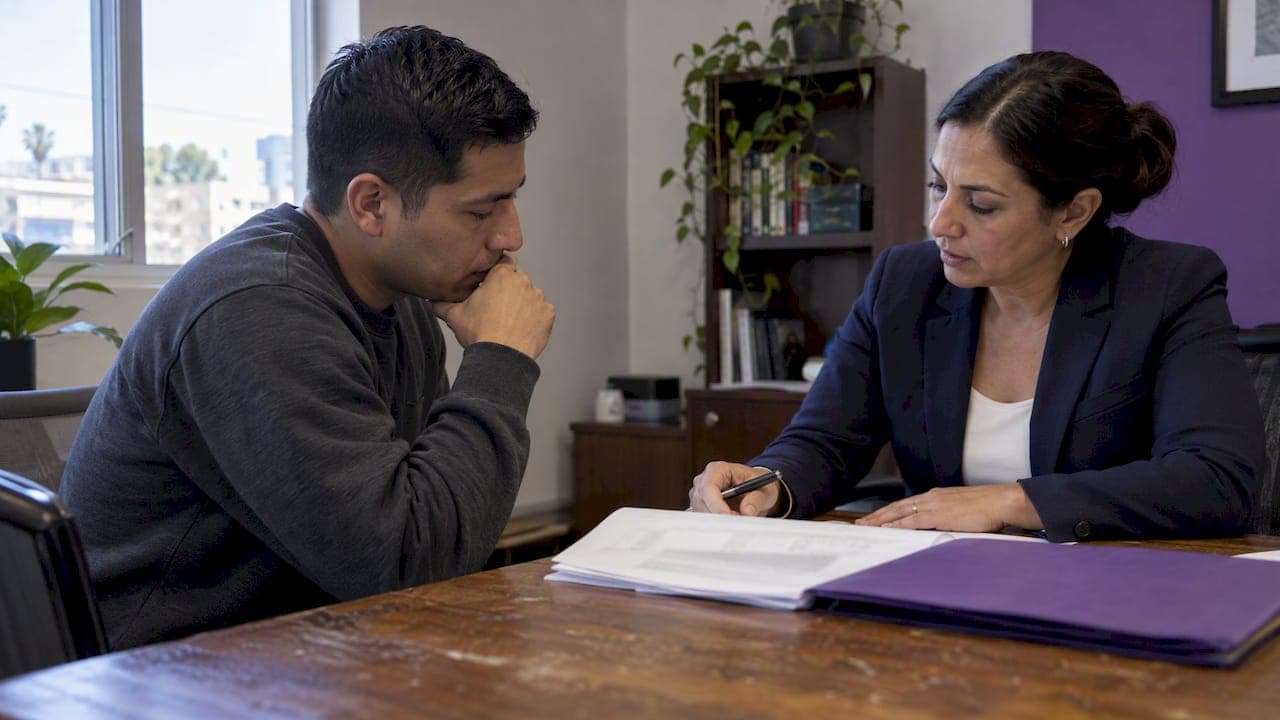
Accepting a plea in California puts a conviction on your record, triggers sentencing exposure including jail time, fines, probation and restitution, and can carry lasting collateral consequences for licensing, housing, gun rights and, for noncitizens, deportation. These outcomes are often permanent and hard to undo. Before signing anything, talk to an experienced California criminal defense attorney who can evaluate the deal against your specific circumstances.
TL;DR:
- Plea deals can lead to permanent collateral consequences like licensing loss, immigration deportation, and future sentencing enhancements, even if the sentence is reduced.
- Defense counsel must provide specific, individualized advice about immigration risks, relevant prior convictions, and possible alternatives before a plea is accepted.
- Unpaid restitution and fines can extend beyond release, and they can be collected by agencies like the California Franchise Tax Board, impacting long-term financial stability.
- A plea-based conviction is equally visible on background checks as a trial conviction and can influence employment, licensing, housing, and immigration status for years.
- Challenging a plea later requires evidence of inadequate advice or procedural errors, making record preservation and full disclosure to counsel vital.
Table of Contents
- Types of Plea Agreements and How They Shape Your Sentence
- What Happens at Sentencing, With Restitution and Probation
- Immigration Consequences: Padilla, California Advisals and 'Meaningful Understanding'
- Collateral Consequences That Outlast the Sentence
- Counsel Duties and Legal Paths to Challenge a Plea
- Deciding Factors and a Checklist Before You Sign
- How Rubin Law, P.C. Approaches Plea Offers and Record Preservation
- Long-Term Effects on Background Checks and Disclosure
- Effect on Future Charges, Enhancements and Repeat-Offender Status
- Psychological and Social Toll on Defendants and Families
- Why the Pressure to Plead Fast Is the Real Risk
- Talk to Us Before You Sign Anything
- FAQ
- Sources
Types of Plea Agreements and How They Shape Your Sentence
A guilty plea and a no contest plea lead to the same conviction and sentence in California criminal court, even though a no contest plea cannot be used against you in a related civil case. Beyond that choice, the structure of the deal itself determines how much exposure you actually face.
- Charge bargaining means pleading to a lesser or different offense than originally filed, often trading a felony for a misdemeanor.
- Sentence bargaining means pleading to the original charge in exchange for an agreed, usually reduced, sentence recommendation.
- Diversion or deferred entry of judgment lets some defendants, particularly in drug or mental health cases, avoid a conviction entirely if they complete program requirements.
Prior convictions, sentencing enhancements and California's three strikes law change this math substantially. A charge that looks minor on its face can trigger years of additional custody once an enhancement or strike prior attaches, which is why the plea bargaining process in California needs to be evaluated against your full record, not just the current charge.
What Happens at Sentencing, With Restitution and Probation
Once a judge accepts a plea, the terms negotiated become the terms read into the record at the sentencing hearing. The court imposes the agreed sentence or, in open pleas, decides within a statutory range, and that sentence can include county jail, state prison, fines, probation conditions or some combination.
- Victim restitution orders require payment for documented losses tied to the crime, separate from any restitution fine imposed as punishment.
- Restitution fines and unpaid balances can follow you well past release; according to CDCR guidance on restitution responsibilities, unpaid amounts can be referred to the California Franchise Tax Board for collection.
- Probation keeps you out of custody under supervision with conditions, while a violation can send you back to court facing the original custody exposure.
Nearly all convictions in the United States come from guilty pleas rather than trials, and research on plea bargaining and mass incarceration ties this pattern to how prosecutorial leverage and mandatory sentencing structures push defendants toward accepting deals. A conviction entered through a plea appears on background checks the same way a trial conviction does, which matters well beyond the courtroom.
Immigration Consequences: Padilla, California Advisals and 'Meaningful Understanding'
For noncitizen defendants, a plea can matter more for immigration status than for the sentence itself. The U.S. Supreme Court's decision in Padilla v. Kentucky established that defense counsel must advise a client when a conviction carries a clear risk of deportation, a duty Cornell Law's overview of plea bargaining ties directly to the Sixth Amendment right to counsel.
California has built on that duty with its own statutes. Penal Code §1016.2, along with Penal Code §1016.3 and §1016.5, requires courts and defense counsel to take specific steps to advise defendants about immigration consequences before a plea is entered. Recent California Supreme Court authority has pushed this further, holding that a generic advisement checked off on a plea form does not establish that a defendant actually understood what they were giving up. Courts now look for evidence the defendant had a meaningful, individualized understanding of the immigration stakes, not just a boilerplate warning.
Certain convictions carry outsized immigration risk:
- Aggravated felonies under federal immigration law, which can include some drug, theft and violent offenses regardless of how the state classifies them.
- Crimes involving moral turpitude, which can trigger removal or bar future relief even for lawful permanent residents.
- Domestic violence and firearm-related convictions, which carry specific deportation grounds under federal law.
Pro Tip: Ask your attorney to arrange a joint consultation with immigration counsel before you sign anything, and insist that the specific plea language be put in writing so it can be reviewed for immigration safety.
Preserving the record at the time of the plea, including what you were told and by whom, can matter enormously if you ever need to challenge the conviction later.
Collateral Consequences That Outlast the Sentence
Beyond jail time and fines, a California conviction triggers civil and administrative consequences that often matter more to daily life than the criminal sentence itself.
- Professional licensing boards, from nursing to real estate to contracting, can suspend, deny or revoke a license based on a conviction, and each board sets its own standard for what counts as disqualifying.
- Public and subsidized housing eligibility, certain public benefits and firearm ownership rights can all be affected, with federal firearms law imposing its own separate restrictions on top of California's rules.
- Sex offense convictions can trigger mandatory registration under California law, a consequence that operates independently of the criminal sentence.
Many of these effects survive even after expungement under Penal Code §1203.4, because expungement relieves many penalties of a conviction but does not erase it for licensing boards, immigration authorities or certain background check purposes. Checking directly with the relevant licensing agency or benefits office is often the only way to know whether a specific consequence applies to your situation.
Counsel Duties and Legal Paths to Challenge a Plea
California law places real obligations on defense counsel before a plea is entered, and falling short of those obligations can open the door to relief later. Courts assessing whether a defendant had a meaningful understanding of a plea's consequences look at what was actually explained, not just what was signed.
- Grounds for challenging a plea include procedural defects at the plea hearing, ineffective assistance of counsel, and a documented lack of informed consent about immigration or other collateral consequences.
- A motion to vacate under Penal Code §1473.7 is one of the main paths for immigration-related plea challenges, though the San Francisco Criminal Lawyer Blog's analysis of meaningful understanding notes that a judge's generic advisement does not substitute for individualized advice from counsel.
- Relief is fact-specific and procedurally demanding, so what gets documented at the time of the plea often decides whether a later challenge succeeds.
Pro Tip: Have your attorney state on the record, at the plea hearing itself, exactly what immigration or collateral consequences were discussed with you, since that record can become critical evidence years later.
Deciding Factors and a Checklist Before You Sign
Before accepting any plea, work through the full picture with your attorney rather than just the headline offer.
- Compare realistic trial exposure, including worst-case sentencing, against what the plea actually offers.
- Confirm your immigration status and whether the plea language can be adjusted to avoid an aggravated-felony or moral-turpitude designation.
- Total the restitution, fines and probation conditions attached to the deal, not just the custody time.
- Ask for the exact plea language in writing, and ask directly whether an immigration-safe alternative charge exists.
- If the offer does not reflect your actual exposure or defenses, discuss motions, further negotiation or trial preparation instead of signing.
How Rubin Law, P.C. Approaches Plea Offers and Record Preservation
We built our criminal defense practice around frequent courtroom appearances across drug crimes, DUI charges, domestic violence and sex offenses, which gives us a working knowledge of how specific judges and prosecutors in our courts actually handle plea negotiations. This insight helps us anticipate prosecutorial tactics. We pursue constitutional challenges and diversion programs when appropriate, aiming to reduce or dismiss charges before a plea becomes necessary. When a plea is the right move, we focus on preserving the record at every step to allow for possible relief later.
Long-Term Effects on Background Checks and Disclosure
A plea-based conviction shows up on standard background checks the same way a trial conviction does, and it stays there unless you pursue expungement or another form of relief. Employers running checks through consumer reporting agencies will typically see the conviction, and many job, housing and licensing applications ask directly whether you have ever been convicted of a crime, not just whether you went to trial.
Answering those disclosure questions honestly matters, because misrepresenting a conviction on an application can itself become grounds for termination or denial later, independent of the original offense. Some applications distinguish between convictions and pleas that were later dismissed through diversion, so the exact outcome of your case, not just the arrest, determines what you are required to disclose going forward.
Expungement under Penal Code §1203.4 can change how a conviction appears in many contexts, allowing you in most cases to state that the case was dismissed rather than that you were convicted. It does not erase the record for every purpose, though, and licensing boards, immigration authorities and certain government positions may still see the underlying conviction. Knowing which doors expungement actually closes, and which it does not, should factor into the plea decision itself, not just into post-conviction cleanup.

Effect on Future Charges, Enhancements and Repeat-Offender Status
A plea entered today becomes part of your record that prosecutors and courts will use against you in any future case. A prior conviction, even one resolved through a plea rather than a trial, can support a sentencing enhancement, elevate a future misdemeanor to a felony, or trigger California's three strikes law if the prior qualifies as a strike offense.
This is one of the most consequential, and most overlooked, parts of accepting a plea. The deal that looks manageable today can become the aggravating factor that doubles or triples exposure on an unrelated charge years later. Prosecutors routinely use certified records of prior convictions, including those resolved by plea, to prove enhancement allegations, and the defendant's only real opportunity to contest the underlying conviction at that point is narrow and procedurally difficult.
Because of this, the type of plea matters as much as whether you plead at all. A charge bargain that avoids a strike-eligible offense, or that keeps a conviction out of a category that triggers mandatory enhancements, can be worth more over the long run than a slightly shorter sentence on a charge that carries future risk. This is exactly the kind of tradeoff that belongs in the plea negotiation itself, discussed explicitly with counsel rather than discovered after the fact.
Psychological and Social Toll on Defendants and Families
The consequences of a plea are not only legal. Accepting a deal under pressure, often with little time to consult family or fully process the decision, leaves many defendants carrying lasting anxiety, shame or regret, independent of whether the plea was the objectively sound choice.
Families absorb much of this strain as well. A conviction can mean lost income during incarceration or probation, strained relationships, and children navigating a parent's absence or a household's financial disruption from fines and restitution. For noncitizen defendants, the stress compounds further: a pending plea can mean living with the uncertainty of possible separation from family through deportation, often for months or years while immigration consequences play out separately from the criminal case.
Experimental research on plea bargaining and collateral consequences found that when defendants are clearly informed about the collateral consequences attached to a plea, they accept pleas at lower rates, suggesting that many people take deals without fully grasping what they are agreeing to. That gap between what a plea promises and what it actually costs is where much of the psychological toll takes root, and it is a strong argument for slowing down and getting full information before signing.

Why the Pressure to Plead Fast Is the Real Risk
The plea system exists because trials are expensive and slow for everyone involved, prosecutors and courts included, and that pressure does not disappear just because a case is complicated. Most defendants feel rushed, and that rush is often where the worst outcomes happen, not because the deal itself was bad on paper, but because nobody had time to check it against the defendant's actual record, immigration status or future exposure.
Individualized advice is not a formality. Two people facing the identical charge can need completely different plea strategies once you factor in a prior conviction, a visa status or a licensing requirement, and a generic read of the plea form will never catch that. Informed decisions take more time than most courtrooms want to give you, which is exactly why you should take that time anyway: consult immigration counsel if you are not a citizen, and make sure the specific advisals you received are documented before you sign.
— Jake
Talk to Us Before You Sign Anything
We evaluate plea offers against your full record, including immigration status, prior convictions and licensing exposure, before you commit to anything. Our team negotiates plea language aimed at avoiding unnecessary enhancements and, when a conviction already exists, pursues post-conviction remedies like PC 1473.7 motions to vacate for immigration-related errors.

If you are facing charges anywhere in Los Angeles County, reach out through our criminal defense page to set up a consultation before you respond to any plea offer.
This article is general information, not a substitute for advice from a qualified lawyer. Consult a qualified legal professional about your own circumstances before acting on anything here.
FAQ
What is the downside of plea bargains?
The main downside is that a plea locks in a conviction and sentence quickly, often before a defendant fully understands collateral consequences like licensing loss, immigration risk or future sentencing enhancements. Research on collateral consequences found that defendants who are clearly informed of these effects accept pleas at lower rates, suggesting many people plead without grasping the full cost.
Can a judge overrule a plea bargain?
A California judge is not required to accept the sentence terms a prosecutor and defense negotiate and can reject a plea agreement if it seems inappropriate for the case. If the judge rejects the deal, the defendant typically has the right to withdraw the plea and either renegotiate or proceed toward trial.
How long after a plea deal do you get sentenced?
Sentencing can happen immediately after the plea in minor cases, but it is more commonly scheduled weeks later to allow for a probation report or other preparation. The exact timeline depends on the charge, the court's calendar and whether the judge orders any evaluation before sentencing.
Is it better to go to trial or take a plea deal?
There is no universal answer. It depends on the strength of the evidence, the realistic sentencing exposure at trial versus the plea offer, immigration consequences for noncitizens and whether the plea language avoids future enhancement risk, all factors that should be weighed with defense counsel case by case.
Sources
- California Penal Code §1016.2
- Plea Bargaining and Collateral Consequences: An Experimental Analysis — Vanderbilt Law Review
- Plea bargaining and mass incarceration — PubMed Central