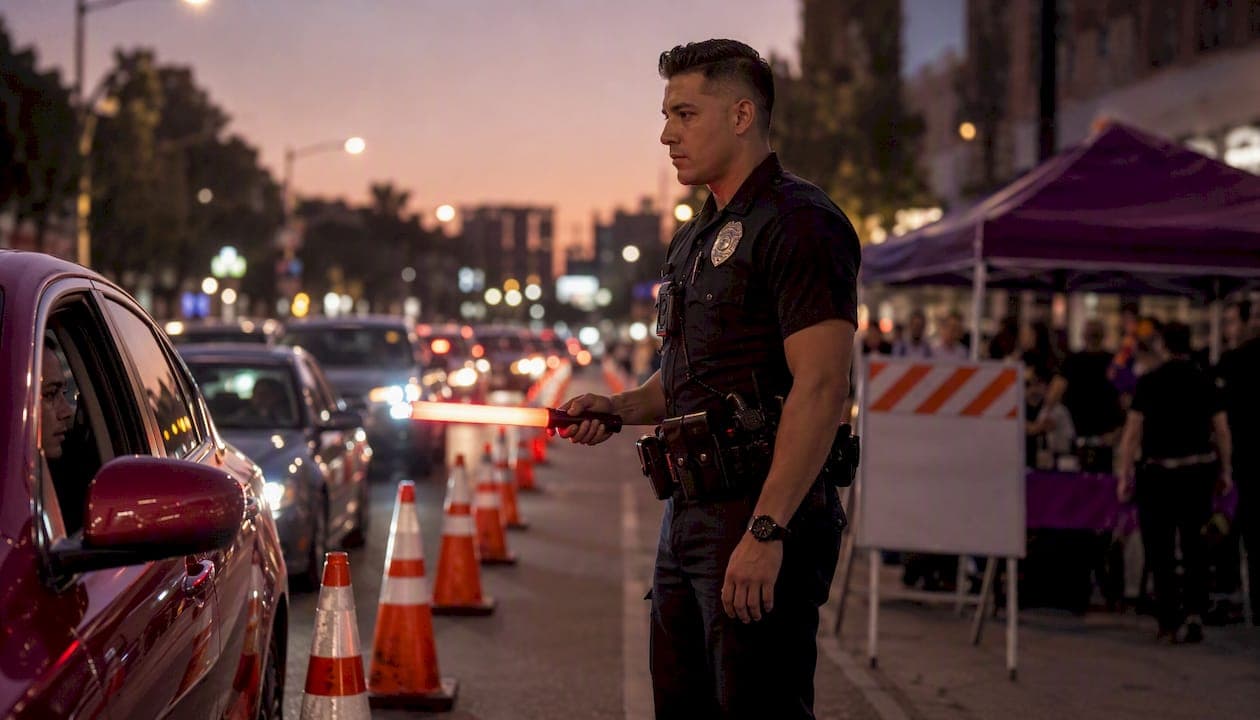
Los Angeles DUI checkpoints are legal under both federal and California precedent, but they operate as brief administrative screenings, not full probable-cause traffic stops. The U.S. Supreme Court's Michigan Dept. of State Police v. Sitz and California's People v. Banks established the constitutional framework: officers may stop every vehicle or use a systematic interval, ask a few questions, and observe for signs of impairment. If they detect slurred speech, the odor of alcohol or marijuana, or glassy eyes, they pull the driver aside for field sobriety tests or chemical testing.
What you must do at the scene:
- Provide your driver's license, registration, and proof of insurance. These are required.
- Refuse voluntary field sobriety tests politely. You have that right.
- Stay silent beyond required documents. Do not admit to drinking.
- Preserve evidence: note the officer's badge number, the checkpoint location, and the time. Photograph the scene if safe.
- Call a Los Angeles DUI attorney immediately. The 10-day DMV window starts at arrest.
"Refusing a breath or blood test after arrest triggers California's implied-consent law, which means an automatic DMV license suspension — separate from any criminal charge. That administrative clock starts the moment you are arrested, not when you are convicted." — FindLaw, DUI Checkpoints
Table of Contents
- What deadlines apply after a Los Angeles DUI arrest?
- Where and when do LA sobriety checkpoints typically run?
- How are checkpoint locations publicly announced?
- What penalties follow a DUI conviction in Los Angeles?
- What are your rights at a checkpoint stop?
- Key Takeaways
- What checkpoint cases actually look like from the defense side
- Rubin Law, P.C. defends checkpoint arrests across Los Angeles
- Authoritative sources on DUI checkpoints in California
What deadlines apply after a Los Angeles DUI arrest?
The most urgent deadline is the 10-day rule: after a DUI arrest, you have 10 days to request a DMV Administrative Per Se (APS) hearing or your license is automatically suspended. Missing it waives your right to contest the suspension administratively.
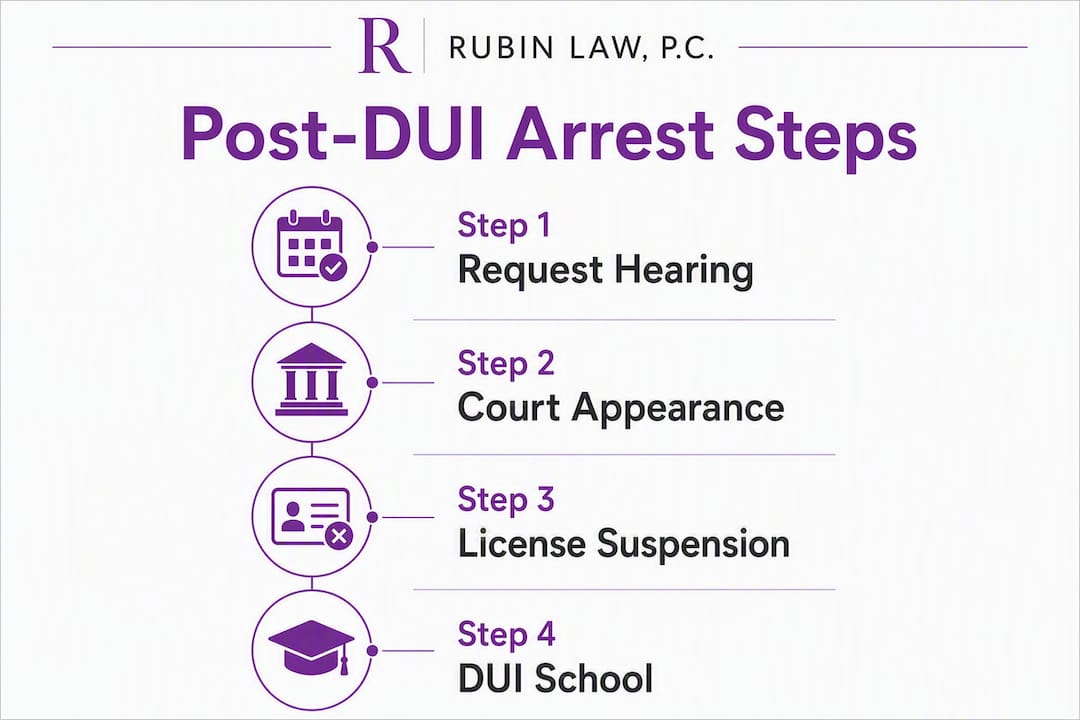
For criminal charges under VC §23152, a misdemeanor DUI carries a one-year statute of limitations; a felony DUI carries three years. Arraignment typically happens within 48 hours of arrest for in-custody defendants.
Where and when do LA sobriety checkpoints typically run?
The LAPD announces checkpoints by division across the city, targeting areas with documented histories of impaired-driving crashes. Expect Friday and Saturday nights between 9 PM and 3 AM, though holiday weekends see expanded operations. Locations shift based on operational needs, so a published address is not guaranteed.
NHTSA research on a Los Angeles study found alcohol-related crashes dropped during the week following DUI enforcement, which is exactly why LAPD runs them repeatedly rather than as one-off events.
How are checkpoint locations publicly announced?
California law, shaped by People v. Banks, treats advance publicity as a best practice that strengthens a checkpoint's constitutional validity. LAPD posts checkpoint notices through press releases, its official website, and local outlets like Patch. Scheduled locations are subject to change for operational reasons, which matters for defense: if the actual checkpoint location deviated from the approved plan, that procedural defect is worth examining.
What penalties follow a DUI conviction in Los Angeles?
A first-offense misdemeanor DUI under California DUI law typically carries fines, a license suspension, DUI school, and possible jail time. Penalties escalate sharply with prior convictions, a BAC above 0.15%, or an accident involving injury. A fourth offense within 10 years is a felony. Civil exposure is separate: if your arrest followed a collision, an injured party may pursue a DUI accident injury claim against you regardless of the criminal outcome.
What are your rights at a checkpoint stop?
Officers follow systematic stopping procedures at checkpoints, meaning every car or a set interval. You must stop and hand over your license, registration, and insurance. You may legally refuse voluntary field sobriety tests. What you cannot refuse without administrative consequences is a chemical test after arrest: California's implied-consent law makes refusal grounds for an automatic suspension, and that refusal can also be used against you at trial.
Confirmation bias is a real risk: officers may read normal nervousness as impairment. Keep your hands visible, speak minimally, and do not volunteer information.
Key Takeaways
A checkpoint arrest in Los Angeles triggers two parallel tracks — criminal court and the DMV — and the 10-day window to request an APS hearing is the single most time-sensitive deadline you face.
| Point | Details |
|---|---|
| 10-day DMV deadline | Request an APS hearing within 10 days of arrest or lose your right to contest the license suspension. |
| Required vs. refusable | You must provide license, registration, and insurance; you may refuse voluntary field sobriety tests. |
| Chemical test refusal | Refusing breath or blood testing after arrest triggers an automatic DMV suspension under implied-consent law. |
| Evidence to preserve | Note officer badge numbers, checkpoint location, time, and any dashcam footage before it overwrites. |
| Call Rubin Law, P.C. | Contact a Los Angeles DUI attorney immediately — before speaking to prosecutors or the DMV. |
What checkpoint cases actually look like from the defense side
Checkpoint cases in Los Angeles tend to hinge on procedure more than BAC. The first questions I ask are whether the checkpoint had a written supervisor-approved plan, whether officers followed the systematic stopping pattern, and whether the chemical test chain of custody is clean. Courts applying People v. Banks give officers latitude, but that latitude has edges. A checkpoint that deviated from its approved location, used inconsistent stopping intervals, or lacked proper signage has real vulnerabilities.

Officer confirmation bias is the other pressure point. Bodycam and dashcam footage often tells a different story than the arrest report — a driver who was nervous but not impaired, or whose "glassy eyes" were from allergies, not alcohol. Pulling that footage early, before it is overwritten, is one of the first things we do.
Rubin Law, P.C. defends checkpoint arrests across Los Angeles

A checkpoint arrest moves fast on two fronts simultaneously: the DMV suspension clock and the criminal case. Rubin Law, P.C. handles both. The firm's Los Angeles DUI defense practice covers DMV APS hearing representation within the 10-day window, bail and arraignment preparation, constitutional challenges to checkpoint procedure, and negotiation for diversion or reduced charges where the facts support it.
Local presence matters here. Rubin Law attorneys appear regularly in Los Angeles courtrooms and know the prosecutors and judges handling DUI cases across the city's divisions. That familiarity shapes strategy from day one.
To get started, call Rubin Law, P.C. Have your police report number, the arresting agency, and the arrest time and location ready. The sooner counsel is involved, the more options remain open.
Authoritative sources on DUI checkpoints in California
| Source | What it covers |
|---|---|
| People v. Banks, Justia | California constitutional standard for checkpoint validity; balance-of-interests test |
| NHTSA Publicized Sobriety Checkpoints | Deterrence rationale; why publicity and repeat enforcement are policy goals |
| FindLaw: DUI Checkpoints | Driver rights, implied-consent consequences, and what happens at the scene |
| LAPD Checkpoint Announcements (WestsideToday) | Local scheduling, division-level notices, and location-change caveats |
| Prevention First: Sobriety Checkpoints | Operational best-practice guidelines officers should follow |
Items to preserve for your attorney: the arresting officer's name and badge number, the checkpoint's exact address and time, any dashcam or bodycam footage, witness contact information, and your copy of the DS-367 form (the DMV suspension notice). The DMV APS hearing request must be made within 10 days of arrest.
This article provides general legal information, not legal advice. Confirm current rules and deadlines with a qualified California criminal defense attorney.