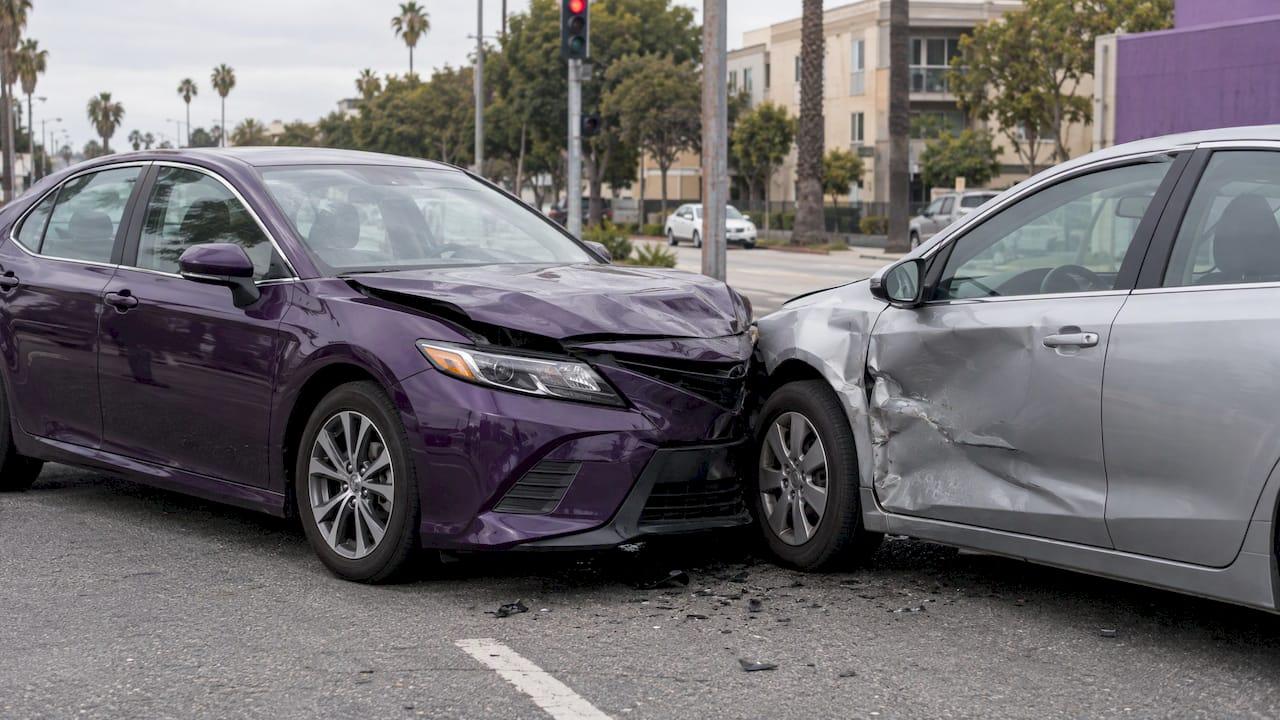
A DUI after a crash in California is treated far more seriously than a DUI stop. If anyone other than you was hurt, prosecutors can file under Vehicle Code §23153, a charge that can be a felony and carries up to three years in state prison. Your license is also at risk through a separate DMV process with a 10-day deadline. The first days decide a great deal, and we handle DUI defense and DMV hearings for people in Los Angeles County, so you do not face both tracks alone.
TL;DR
- A crash alone does not make a DUI a felony. Injury to someone other than the driver is what moves the charge to Vehicle Code §23153, which can be filed as a misdemeanor or a felony.
- A first-offense DUI with injury can bring up to three years in state prison, or a five-day county jail minimum if probation is granted (Committee on Revision of the Penal Code, March 2026).
- The DMV case is separate from the criminal case, and you have 10 days from receiving the suspension order to request a hearing.
- Police can arrest without a warrant after a crash, and a charge can also follow later once blood results or witness statements come in.
- What you say, sign and file in the first days shapes the case. Get a defense attorney involved before you give any statement.
Table of Contents
- What counts as a DUI with an accident in California
- What happens at the scene and in the days after
- Misdemeanor or felony: how injury changes the charge
- Your license: the 10-day deadline
- The crash report you may still owe the DMV
- What to do if you are accused of DUI after a crash
- Defenses that matter in an accident-based DUI
- How we approach these cases
- Our view from the courtroom
- FAQ
- Sources
What counts as a DUI with an accident in California
California has no single offense called "DUI with accident." The law cares about what happened, not about the crash itself. Two statutes do most of the work.
Vehicle Code §23152 is the ordinary DUI: driving while impaired, or with a blood alcohol concentration (BAC) of 0.08% or more. No one has to be hurt. Vehicle Code §23153 is the more serious version. It applies when a driver under the influence also commits an unlawful act or neglects a legal duty while driving, and that conduct proximately causes bodily injury to someone other than the driver. "Proximately causes" means the injury has to be a direct, foreseeable result of the driving, not just something that happened at the same time.

That is why a crash alone is not the full legal test. Prosecutors have to connect the impairment, an unlawful act or neglected duty (speeding, running a light, drifting out of a lane), and an injury. Each link is something a defense can examine.
Section 23153 has several versions. Subsections cover alcohol impairment, a prohibited BAC, drug impairment, combined alcohol and drug impairment, commercial drivers and certain passengers-for-hire drivers. If a crash involved only property damage, the case usually proceeds as a standard §23152 DUI. If you want the injury charge in more detail, see our page on DUI causing injury under VC §23153.
Does it matter who caused the accident?
Yes, but not the way most people assume. Being hit by another driver does not erase a DUI arrest if officers believe you were impaired. It does matter for the §23153 injury charge, because the prosecution must show your driving, and not only your impairment, caused the injury. A sober driver who ran a red light and hit you changes that picture. Fault is rarely clear at the scene, and reconstruction of the crash is often a central part of the defense.
What happens at the scene and in the days after
After a crash, officers do not need a warrant to arrest you for DUI. The California Highway Patrol's DUI policy, citing Vehicle Code §40300.5, says officers may arrest without a warrant on reasonable cause after a traffic crash, along with several other situations, such as when immediate apprehension is necessary or evidence could be concealed.
The usual sequence looks like this:
- Scene. Officers look for signs of impairment, ask questions and may request field sobriety tests or a breath sample.
- Chemical test. Breath or blood is taken. Under §23153(b), a test result of 0.08% or higher within three hours of driving creates a rebuttable presumption that your BAC was at that level while driving. Rebuttable means your side can present evidence to challenge it. The statute sets separate 0.04% thresholds for commercial drivers and certain passenger-for-hire drivers.
- Hospital. If you are hurt, blood may be drawn there. Medical treatment, timing and consent all affect how that evidence can be used.
- Release or arrest. You may be booked, or released and told that a decision on charges will come later.
- Charging decision. Prosecutors decide what to file once lab results, witness statements and the injury records are in.
This is why a driver can be charged days or weeks after a crash, particularly when blood results or medical records are pending. If you were taken to a hospital and nobody arrested you, that is not a sign the matter is over. For the limits on how long prosecutors have to file, ask your attorney about your specific charge, because the deadline depends on whether the offense is charged as a misdemeanor or a felony.
Evidence worth examining early
Evidence in a crash case is time-sensitive: vehicle data, scene photos, surveillance video and blood samples can all disappear or degrade. Our approach centers on constitutional challenges, including whether the stop, the detention, the arrest and the blood draw were lawful. Our page on DUI evidence in California walks through breath, blood and field sobriety evidence, and the page on signs a DUI case is weak explains what we look for.
Misdemeanor or felony: how injury changes the charge
DUI causing injury under §23153 is what California calls a "wobbler": an offense the prosecutor can file as either a misdemeanor or a felony. The Committee on Revision of the Penal Code's March 2026 overview lists a first DUI-with-injury violation as a wobbler with up to three years in state prison and a five-day county jail minimum if probation is imposed.
The overview gives the same three-year prison ceiling for first and second DUI-with-injury offenses. Several things influence which way a wobbler goes:
- How serious the injury was
- Your prior record, including earlier DUIs
- Whether your BAC was high or you drove in a reckless way
- Whether anyone else was in the car, such as a child
- Your conduct after the crash
A wobbler also does not stay fixed. Defense work often aims to have a felony filing reduced to a misdemeanor, or the charge reduced to a lesser DUI, before or during the case. Our page Is a DUI a felony in California? covers the difference in more depth.
Repeat offenses and the most serious outcomes
The penalties grow with a record. Under Vehicle Code §23566, a DUI injury conviction within 10 years of two or more specified prior convictions carries two, three or four years in state prison and a fine of $1,015 to $5,000. The same section designates the person a habitual traffic offender for three years after conviction.
When a crash causes a death, the charges can move beyond §23153. California's AB 1087, chaptered October 1, 2025, states that gross vehicular manslaughter while intoxicated is punishable by four, six or 10 years in state prison, and that qualifying prior convictions can lead to a term of 15 years to life. The DMV reports that the same law lengthens probation to three to five years for a person granted probation after an intoxicated vehicular manslaughter conviction. A death case calls for a defense attorney from the first hour.
Your license: the 10-day deadline
Most people do not realize that a DUI arrest starts two cases. One is the criminal case in court. The other is an administrative case at the DMV about your driving privilege. The DMV states that this administrative action is independent of the criminal court penalties, so one can move forward while the other is pending, and the outcome of one does not decide the other.
The key date: the DMV says you have the right to request an administrative hearing within 10 days of receiving the suspension or revocation order. That hearing deals with your driving privileges and the circumstances of the arrest, not criminal guilt. If the 10 days pass without a request, the suspension can take effect without anyone testing the arrest.
The DMV hearing is also a practical opportunity. Officers can be questioned about the stop, the timing of the test and the paperwork, and what is said there can matter later in the criminal case. Handling the hearing is part of the DMV work we do, and our guide Save Your License in 10 Days explains how the two common DUI charges affect that hearing. If you drive a commercial vehicle, read the 10-day deadline to save your CDL, since the stakes for your job are higher.
Also keep in mind that California has extended the ignition interlock device (IID) pilot program for specified DUI offenders. The DMV notes that AB 366 extends it to January 1, 2033. An IID is a breath-testing device wired to the ignition. Whether one applies to you depends on your charge and record, so confirm it against your own order.

The crash report you may still owe the DMV
There is one more deadline people miss because it has nothing to do with the arrest. The DMV's SR-1 form states that a crash report is due within 10 days for a crash on a California street, highway or private property involving injury, death or property damage over $1,000, regardless of fault. The same form states that the SR-1 is separate from reports to law enforcement, an insurer or the CHP, and those reports do not satisfy the SR-1 requirement.
Because an SR-1 asks you to describe the crash, talk with your attorney before you fill in the narrative of a crash that is also the subject of a DUI charge. Missing the filing is its own problem, so do not let it slide. If the vehicle was totaled, the documents you keep also matter for what comes next, and this guide on California salvage title paperwork explains the receipts that prevent DMV delays.
What to do if you are accused of DUI after a crash
A plain sequence works best. It is the routine we would walk a friend through.
- Write down the dates. Note the arrest date and the date you received any DMV suspension notice. Your 10 days for the DMV hearing request run from receipt of the order.
- Say little. You can give your name and basic information. Do not describe how much you drank, where you were going or who was at fault, to officers, insurers or the other driver.
- Contact a criminal defense attorney right away. Early involvement lets your lawyer preserve video, vehicle data and medical records before they disappear, and request the DMV hearing on time.
- Collect your paperwork. Keep the citation, the DMV notice, the tow and hospital records, photos of the scene and the other driver's information.
- Handle the SR-1 deliberately. File it on time, with your attorney's input on what it says.
- Do not contact the injured person about the case. Let insurers and attorneys communicate.
- Follow every release condition. Missing a court date or violating a condition creates a new problem, including a warrant.
If you were injured, take care of your health first. A hospital visit is not an admission of anything, and your lawyer can sort out what the records mean later.
Defenses that matter in an accident-based DUI
No two cases are alike, but the following are the common places a defense looks.
| Issue | What the defense examines |
|---|---|
| The stop or contact | Whether officers had lawful grounds to detain you, or whether you were questioned while hurt or in shock |
| Impairment | Field sobriety tests after a crash, where injury, adrenaline or the car's airbag can mimic signs of impairment |
| Chemical test | Timing against the three-hour presumption, sample handling, lab procedure, hospital draws |
| Causation | Whether your driving, not another driver's, caused the injury |
| Injury | Whether the injury meets the legal definition and how it is documented |
| Prior record | Whether earlier convictions actually qualify as priors for enhanced penalties |
Outcomes can also include diversion or alternative sentencing in some cases, and pre-file intervention, where the defense speaks with prosecutors before charges are filed. Whether any of this is available depends on the facts, your record and the court, so it is worth raising at the first consultation. Our overview of California DUI penalties and the first-offense guide show what ordinary DUI sentences look like and where defense work changes them. If the crash also involved someone leaving the scene, read our page on DUI hit and run in California.
How we approach these cases
Rubin Law, P.C. is a criminal defense firm in Los Angeles. We appear in Los Angeles County courts frequently, and that familiarity with local judges and prosecutorial strategy is how we anticipate what the other side will do. You get direct attorney attention and a strategy built for your facts, including constitutional challenges to the stop, the arrest and the evidence, and diversion programs where they fit.
If you have been arrested after a crash, or you know a charge may be coming, the most useful step is a conversation about your particular facts. Learn about our DUI defense and DMV hearing services, or contact us through the Rubin Law site.
We do not publish prices for these services. Fees are billed hourly or as a fixed-fee retainer, and we can explain how that applies to your case when we speak.
Our view from the courtroom
A DUI with an accident feels like one disaster, but it is really two fast-moving cases: the criminal charge and the license. Most people lose ground in the first week, not because the facts are bad, but because the 10-day DMV window passes, or they explain themselves to an officer or an insurer before anyone has looked at the evidence.
What we try to do is slow the case down on our terms. We look at whether the stop was lawful, whether the blood draw was properly done, and whether the prosecution can actually connect impairment to the injury. Because we are in Los Angeles County courtrooms often, we know how these cases tend to be charged, and that lets us talk to prosecutors early about reducing a wobbler to a misdemeanor or about diversion, instead of reacting once a felony is filed.
If you are in this position, call before you give a statement and before the deadline passes. That call is the most valuable step in the whole case.
Jake
FAQ
What happens if someone gets a DUI in California?
They face a criminal case in court and a separate DMV case over their license. A first offense without injury is usually a misdemeanor. With injury to another person, the charge can be a felony, with up to three years in state prison for a first offense under the March 2026 Penal Code committee overview.
Can a DUI be removed from my DMV record in California?
A DMV hearing can challenge a suspension before it takes effect, and you must request it within 10 days of receiving the order. What stays on your record afterward depends on the result of both cases. A criminal defense attorney can tell you what applies to your specific history.
How bad is a misdemeanor DUI in California?
It is serious. A misdemeanor still carries jail exposure, fines, probation, license consequences and a conviction on your record that counts as a prior if you are charged again. After a crash with injury, the right goal is often to keep the charge at the misdemeanor level or reduce it further.
Can I be charged with DUI days after an accident?
Yes. Officers can arrest at the scene, but prosecutors can also file charges once lab results, medical records and witness statements are available. A lack of arrest at the scene does not mean you will not be charged, so speak with a defense attorney promptly.
Sources
- CHP: Driving Under the Influence Policy and Procedures (February 2025)
- California Vehicle Code §23153
- California Vehicle Code §23153, subsections
- Committee on Revision of the Penal Code: DUI overview (March 2026)
- California Vehicle Code §23566
- California AB 1087 bill text
- California DMV: new laws in 2026
- California DMV: DUI guidance for adult drivers
- California DMV: SR 1 crash report form