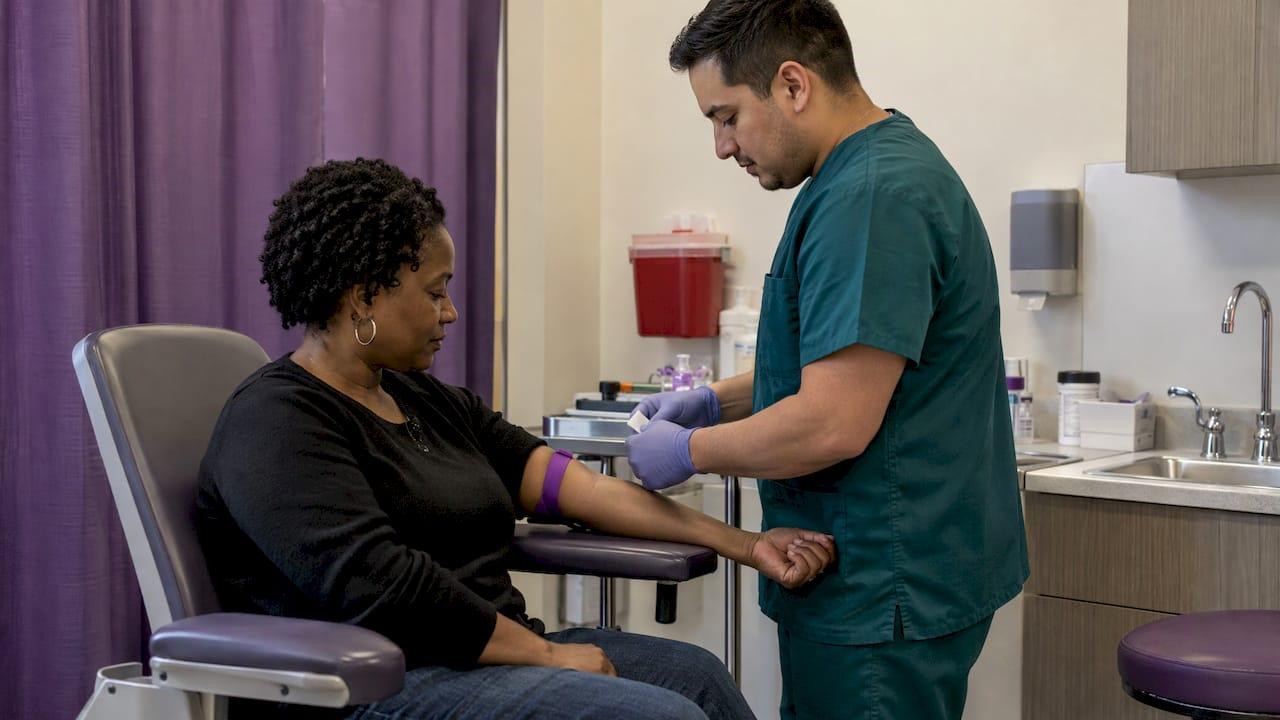
Yes, California police can get a warrant to draw your blood, and in a DUI case they usually must have one, your consent, or a genuine emergency before they take it. A judge signs the warrant on a showing of probable cause. A warrant does not end the matter. How the warrant was obtained and how the draw was carried out can both be challenged in court.
This guide explains how the process works, what the law says about forced draws, and where defense attorneys find weaknesses. It also covers geofence warrants, a different kind of warrant that people often search for alongside this one.
TL;DR
- Under the Fourth Amendment, police generally need a warrant, your voluntary consent, or a true emergency before taking blood. Natural alcohol dissipation alone is not an automatic emergency.
- California's implied consent law does not give police a free pass to take blood. CHP's own policy directs officers to seek a warrant when a compelled draw is needed.
- If you choose blood over breath, courts have held no warrant is needed. If you refuse, expect a warrant request and civil penalties, but not criminal punishment for the refusal alone.
- A blood draw can be challenged on the warrant itself, on consent, and on the way the draw was performed.
- If you were arrested, talk to a criminal defense attorney quickly. Deadlines for the DMV start running right away.
Table of Contents
- Can police get a warrant to take your blood in California?
- Implied consent and what it does and does not allow
- When can police draw blood without a warrant?
- What happens if you refuse a blood test
- How a warrant blood draw must be carried out
- Challenging a blood draw in court
- Perspective
- Geofence warrants in California
- How we can help
- Related rights you should know
- FAQ
- Sources
Can police get a warrant to take your blood in California?
They can. California law lists DUI blood draws among the grounds for which a judge may issue a search warrant (Penal Code section 1524). The CHP's chemical test policy tells officers to seek a warrant when a DUI arrestee refuses testing or cannot consent because of an injury (CHP Highway Patrol Manual, revised July 2026).
The reason is constitutional. A blood draw pushes a needle through the skin, and the U.S. Supreme Court treats that as a search of your body. In Schmerber v. California, the Court upheld a warrantless draw only because of the specific facts of that case: probable cause, an arrest, evidence disappearing quickly, no time to get a warrant, and a medically reasonable procedure.
What the officer has to show a judge
The officer writes an affidavit. It describes why there is probable cause that you drove under the influence: driving pattern, odor, speech, eyes, performance on roadside exercises, any collision, and your refusal or inability to consent. A judge reviews it, sometimes by phone or electronically late at night, and signs the warrant if it meets the standard.

The affidavit is where many cases start to wobble. Statements that were boilerplate, facts that conflict with the body camera footage, or observations that were never made can all undermine probable cause. If you are weighing how strong the officer's stated basis was, our guide to signs that a DUI case is weak lays out what attorneys look for.
Implied consent and what it does and does not allow
California drivers are treated as having agreed to chemical testing. Vehicle Code section 23612 says a person lawfully arrested for certain DUI offenses is deemed to consent to a test, which the officer directs when there is reasonable cause to believe you drove under the influence.
Implied consent is a statute. It is not a substitute for a warrant when the Fourth Amendment applies. Three decisions show the limits:
- Birchfield v. North Dakota (2016). The U.S. Supreme Court held that a breath test can be taken as a search incident to a lawful DUI arrest. A blood test is more intrusive and ordinarily needs a warrant, consent, or exigent circumstances. The Court also held that motorists cannot be criminally punished just for refusing a blood test, though civil penalties and evidence of refusal can still apply (opinion).
- People v. Arredondo (2016). A California appeals court held that implied consent alone could not justify a warrantless blood draw from an unconscious suspect. The evidence still came in because the officers reasonably relied on the statute, under the good-faith exception (opinion).
- People v. Ling (2017). The court held that a DUI blood draw needs a warrant or a proved exception, and the prosecution had failed to establish voluntary consent (opinion).
For a broader walk through the statute, see our article on implied consent in California.
When can police draw blood without a warrant?
There are two main routes, and both are narrower than most people think.
Consent, including choosing blood over breath
In People v. Gutierrez (2018), a California court held that no warrant is needed when a lawfully arrested suspect is given a genuine choice between breath and blood and freely chooses blood. The same decision separated that situation from one in which the person is not given a real choice or is compelled to submit. In that second case, the same exception does not apply.
What this means for you: if an officer offers breath or blood and you pick blood, you have probably supplied the consent that makes a warrant unnecessary. Whether the choice was truly free is often the issue in a motion to suppress. An officer who says you have no option, or who suggests the test is mandatory in a way the law does not support, creates a problem for the prosecution.
Exigent circumstances
Police sometimes argue there was no time to get a warrant. After Missouri v. McNeely, California courts do not accept a blanket rule that alcohol leaving the bloodstream is always an emergency. In People v. Rossetti (2014), the court applied McNeely and required a case-by-case look at all the circumstances. The prosecution has to show a compelling need and not enough time to secure a warrant.
Typical facts that matter: how long the officer waited, whether a judge was reachable, whether other officers were available to start the paperwork, a serious crash, and a hospital transport. Delay that could have been used to request a warrant weakens an emergency claim.
What happens if you refuse a blood test
Refusal triggers separate consequences. Under Vehicle Code 23612, the officer must tell you that failing to submit to testing results in a one-year administrative license suspension by the DMV, with longer revocation if you have a prior within 10 years. That is a civil, DMV-side penalty, and it runs on a short timeline separate from your criminal case.
Under Birchfield, a refusal of a blood test cannot by itself be charged as a crime. But the officer can go to a judge for a warrant, and a refusal can be used as evidence in some contexts. Our pages on refusing a breathalyzer test in California and breath test refusal cover the breath side, which has different rules.
Practical points if you are stopped:
- Stay calm and do not physically resist. Resisting adds charges and does not stop a lawful warrant from being executed.
- If officers present a warrant, ask to see it, and note the time, the judge's name and who draws the blood. You can state clearly that you do not consent, so that your position is on the record.
- Do not argue the law roadside. Preserve your challenges for court.
- Contact a lawyer immediately, and do not wait on the DMV deadline.
How a warrant blood draw must be carried out
Even with a valid warrant, the draw has to be reasonable. Schmerber requires that blood be taken in a reasonable manner by appropriate medical personnel and warned that its ruling did not approve more substantial intrusions or draws under different conditions (opinion).
In People v. Fish (2018), the court cited California's statutory rules on who may draw blood. Authorized people include physicians, nurses, qualified laboratory personnel, certified phlebotomy technicians and certified paramedics acting at an officer's request. The draw also has to be done in a medically approved way.
Questions we look at in warrant draws:
- Was the person who drew the blood actually authorized and qualified?
- Was the site cleaned with a non-alcohol swab, and was the collection tube handled properly?
- Was the amount of force used reasonable, or did it go past what the warrant and the Constitution allow?
- Was the sample labeled, stored and sent to the lab with an intact chain of custody?
Lab handling matters as much as the draw. Our write-up of DUI blood test records explains why a result a hair above 0.08% can look different once the testing records are reviewed.
Challenging a blood draw in court
The main tool is a motion to suppress under Penal Code section 1538.5. If a judge agrees the blood was obtained unlawfully, the result can be excluded, and in many DUI cases that changes everything.
Three lines of attack
| Challenge | What the defense argues | Example from the case law |
|---|---|---|
| No warrant, no valid exception | Police took blood without a warrant, consent or real emergency | The Ling court required suppression when the prosecution could not prove consent |
| Defective warrant | The affidavit did not establish probable cause or contained errors | Courts presume warrants valid, so the defense must point to specific flaws |
| Improper execution | The draw was not performed in a medically reasonable manner or by authorized personnel | Fish held the manner of execution can be challenged under section 1538.5 |
Be realistic about burdens. Fish explained that a warrant is presumed valid and that, where the facts about how it was executed are within the defendant's knowledge, the defendant may have to prove the defect. California also presumes officials perform their duties regularly unless there is contrary evidence. That is why details gathered early, such as who drew the blood, how many attempts, any medical complications, and video, can make or break a motion.
Good faith can save the prosecution's evidence
Success is not guaranteed even when a court finds a flaw. Arredondo shows that the good-faith exception can preserve evidence when officers reasonably relied on a statute or warrant. Whether the warrant was constitutionally valid and whether the evidence is excluded are separate questions. A skilled defense frames the facts to show police conduct that was not objectively reasonable.
Perspective
Most people think that once police have a warrant, the fight is over. In our experience, that is where careful defense work begins. We read the affidavit line by line, compare it with the reports and video, and look at who drew the blood, when, and under what conditions.
We appear in Los Angeles County courtrooms often, and that familiarity with local judges and how prosecutors build DUI cases helps us anticipate what will be argued and where a constitutional challenge is worth making. Our approach is to press search and seizure issues hard and to pursue diversion or reduced outcomes where the facts support them.
If you are facing a blood draw case, do not assume the number on the lab report is the end of the story. The warrant, the draw and the lab work are three separate places to look.
Jake
Geofence warrants in California
People searching this topic often also look for geofence warrants. These are a different tool altogether. A geofence warrant is a reverse search: police name an area and time window, and a provider returns records of devices there, usually in steps that narrow and then identify users. People v. Meza (2023) described that process.
Here is what California and federal courts have said:
- California's Electronic Communications Privacy Act requires a warrant to compel device location information from a provider, and lets people move to suppress evidence taken in violation (Meza).
- Meza found the warrant there supported by probable cause but a violation of the Fourth Amendment's particularity requirement, because officers had unchecked discretion to widen the area and request identifying information. The convictions were still affirmed under the good-faith exception (court of appeal opinion).
- In 2024 the Fifth Circuit held in United States v. Smith that the geofence warrants in that case were unconstitutional, comparing them to general warrants.
- In 2022 a San Francisco trial court suppressed evidence from a geofence warrant that covered too large an area and lacked judicial review at each step, as reported by the Electronic Frontier Foundation. That ruling did not hold all geofence warrants invalid.
If your phone's location data was used in an investigation, the warrant's scope and the review steps are the first things to examine. Federal investigations raise further questions, which we handle as part of our federal crimes defense.
How we can help
If you were arrested for DUI in Los Angeles County, or you learn police have sought your blood or location data, early action preserves your options. We handle DUI defense, DMV hearings, constitutional search and seizure challenges, and diversion or alternative sentencing options where they fit the facts. We also represent clients under investigation before charges are filed.

Bring the arrest paperwork, any warrant you were shown, the DMV notice and anything you remember about the draw. You can reach us through our criminal defense page or rubinlawpc.com. Our fees are not published online, so ask about them at your consultation.
Related rights you should know
Blood draws are one piece of a DUI stop. What you say and do earlier counts too. Read about field sobriety tests, questions at a DUI checkpoint and consent searches so you can protect yourself at each step. If you want to know what the penalties look like, our page on the most common DUI sentence is a good start.
FAQ
Can cops get a warrant to take your blood?
Yes. California law authorizes judges to issue warrants for DUI blood draws, and CHP policy directs officers to seek one when a suspect refuses or cannot consent. The officer must show probable cause that you drove under the influence. Even then, the way the warrant was obtained and carried out can be challenged.
Can police force a blood draw in California?
Only in limited circumstances. They generally need a warrant, your voluntary consent, or a case-specific emergency. Under Rossetti, the natural loss of alcohol from your blood is not an automatic emergency. If a valid warrant exists, you should not physically resist, and you should raise objections through your attorney.
Do I need to give a blood sample if I am arrested for DUI?
California treats you as having consented to testing after a lawful DUI arrest, and refusing brings a DMV suspension of one year under the statute. Under Birchfield, you cannot be criminally punished for refusing a blood test alone. Because penalties and options differ for each situation, speak with a DUI lawyer promptly.
Can blood test results be thrown out?
Sometimes. Evidence can be suppressed if the draw was warrantless without a proven exception, as in Ling, or if the warrant or its execution was defective. Good-faith rules can keep evidence in, so the outcome depends on the facts.
Is a geofence warrant legal in California?
California law requires a warrant to compel location data from a provider. Courts have found some geofence warrants too broad, but rulings differ, and good faith has saved convictions. The specific warrant's scope matters.
Sources
- CHP Highway Patrol Manual, Chemical Tests and Implied Consent
- Schmerber v. California
- California Vehicle Code section 23612 (leginfo)
- California Vehicle Code section 23612 (text on refusal penalties)
- California Penal Code section 1524
- People v. Rossetti (2014)
- People v. Ling (2017)
- Birchfield v. North Dakota (2016)
- People v. Gutierrez (2018)
- People v. Arredondo (2016)
- People v. Fish (2018)
- People v. Meza (2023)
- People v. Meza, court of appeal opinion
- United States v. Smith (5th Cir. 2024)
- EFF report on the San Francisco geofence ruling