Blood tests can measure ethanol with real precision when every step goes right, but "right" rarely happens by default. A cracked seal, a warm patrol car, a nurse who swabs with the wrong antiseptic, a lab tech who skips a duplicate run. Any one of those can shift the number that determines whether you're charged, convicted, or walk away. If you're facing a DUI charge right now, the working assumption should be that the blood result is a starting point for scrutiny, not the final word.
TL;DR:
- Blood test accuracy can be compromised by sample contamination, improper handling, or lab errors that may not be evident on the report.
- Blood draws require warrants or consent and must be performed by qualified personnel to be legally valid under the Fourth Amendment.
- Blood test results often lack measurement uncertainty ranges, making it difficult to determine how close a result is to the legal limit.
- The timing of the blood draw relative to the driving event affects the BAC reading, especially if absorption was still ongoing when tested.
- Defenses should request comprehensive lab documentation and consider independent toxicology review to challenge the reliability of a DUI blood result.
Table of Contents
- What "DUI Blood Test Accuracy" Actually Means in a Lab
- Constitutional Limits on How Blood Can Legally Be Drawn
- How Test Accuracy Shapes Your Case Outcome
- What Your Lawyer Should Demand and Test For
- Why Turnaround Time on Blood Results Matters
- Timing of the Draw vs. Timing of the Drive
- Medical Conditions, Medications, and Tolerance Can Skew the Number
- Blood Tests vs. Breath and Urine Tests: Which Is More Reliable?
- What the Error Rates Actually Look Like
- Biological and Analytical Bias You Should Know About
- Why Early, Aggressive Scientific Review Changes Outcomes
- Get a Forensic Review of Your Blood Test Results
- Sources
What "DUI Blood Test Accuracy" Actually Means in a Lab
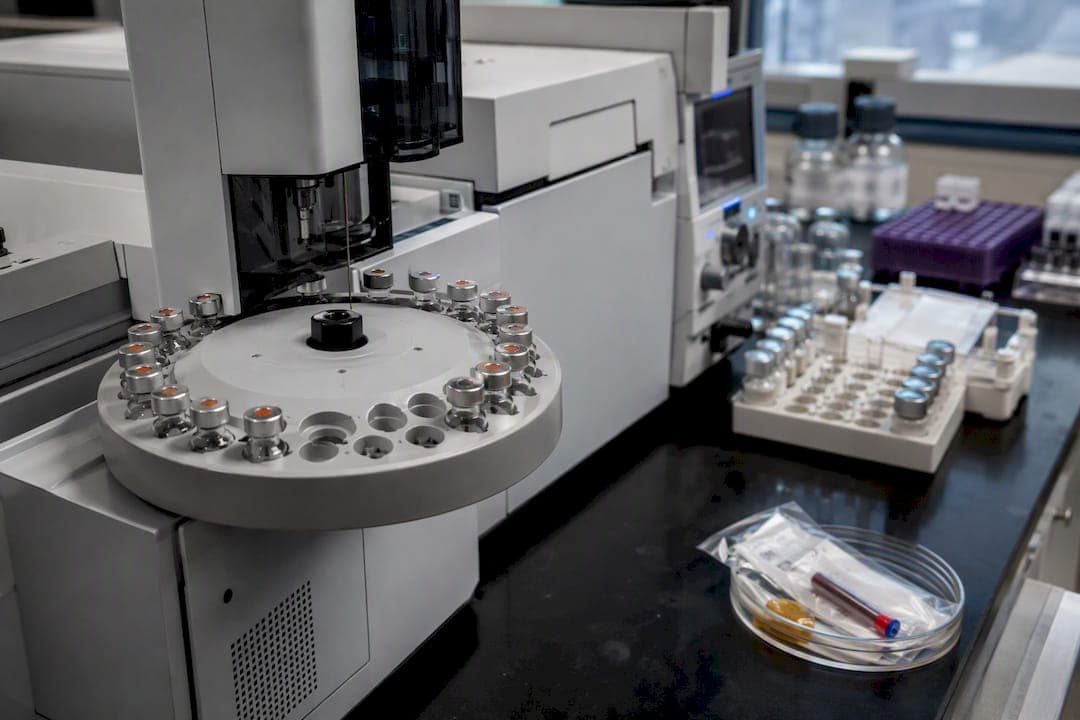
Forensic labs measure blood alcohol using headspace gas chromatography, most often paired with a flame ionization detector (GC-FID) or, in more rigorous labs, a mass spectrometer (GC-MS) for confirmation. Whole blood is the preferred sample because ethanol distributes into body water fairly predictably, making it more forensically defensible than urine or saliva.
"Accuracy" and "precision" aren't the same thing, and labs often blur the two. Accuracy means the reported number reflects the true concentration in your blood at the moment of the draw. Precision means the instrument produces consistent results when you run the same sample repeatedly. A lab can have excellent precision and still report an inaccurate number if the sample itself was compromised before it ever reached the machine.
Two more concepts matter for anyone reading their own report:
- Method validation: labs must document that their GC method reliably distinguishes ethanol from other volatile compounds, including ones the body produces during decomposition or fermentation.
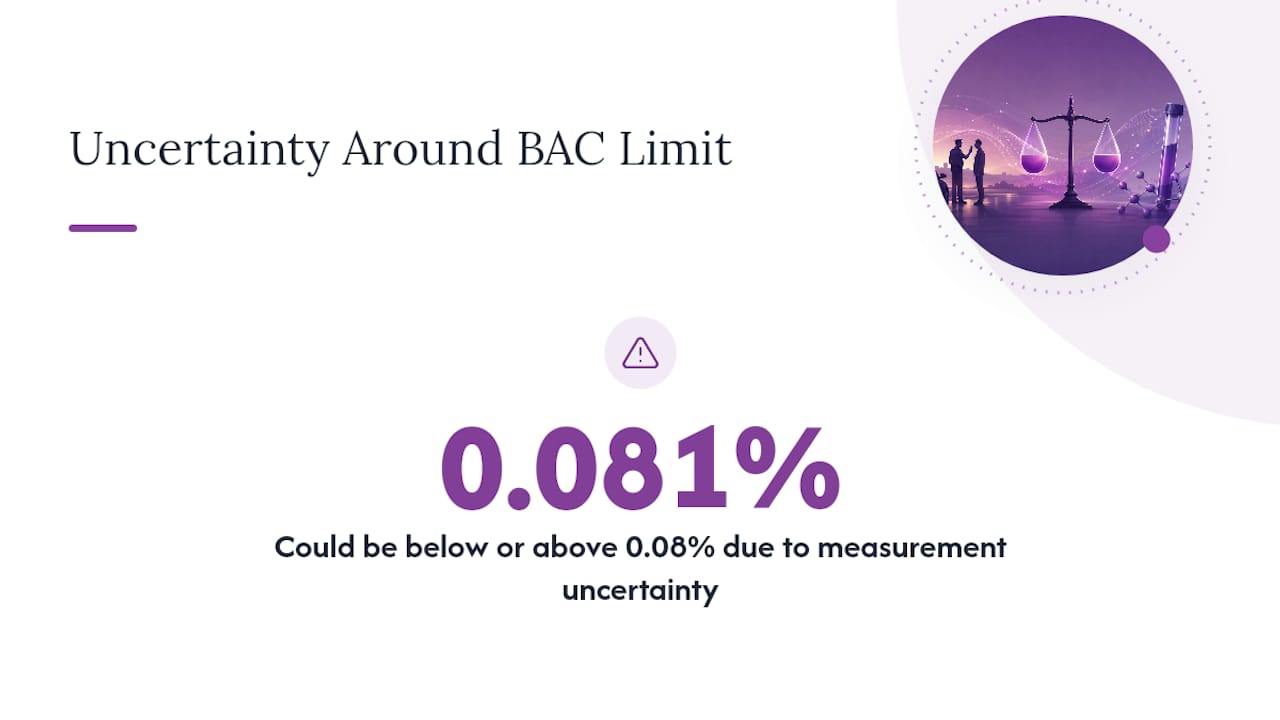
- Measurement uncertainty: every BAC result carries a margin of error, but most lab reports hand you a single number with no uncertainty range attached, which hides how close a "0.081" might actually be to 0.078 or 0.084.
- Traceability: instruments need calibration against certified reference standards, logged and dated, so a defense team can verify the machine was working correctly on the day your sample ran.
That last gap, measurement uncertainty left off the report, is one of the more consequential gaps in how blood evidence gets presented in court.
Constitutional Limits on How Blood Can Legally Be Drawn
Not every blood draw is legally valid, even if the lab work behind it is flawless. The Fourth Amendment treats blood draws as searches, and courts have drawn a sharp constitutional line between breath and blood testing.
- Warrant requirements. Under Missouri v. McNeely, police generally need a warrant for a nonconsensual blood draw; the natural dissipation of alcohol in the bloodstream isn't automatically an emergency that excuses skipping one.
- Breath vs. blood consent rules. Birchfield v. North Dakota held that warrantless breath tests can be required incident to arrest, but blood draws demand either a warrant or actual consent, since blood tests are more invasive.
- Unqualified personnel. Many states require blood to be drawn by a licensed phlebotomist, nurse, or physician. A draw performed outside those rules can become grounds for exclusion regardless of what the number shows.
Whether any of this gets your result suppressed depends heavily on your state's statutes and the specific facts of your stop, so this isn't a do-it-yourself analysis. Reviewing the DUI evidence rules that apply to your case with an attorney early is what turns a procedural defect into an actual legal remedy instead of a missed opportunity.
How Test Accuracy Shapes Your Case Outcome
A successful challenge to blood evidence does one of two things, and they're not the same. Suppression means the result is thrown out entirely and the prosecution can't use it. Undermining credibility means the number stays in evidence, but a jury hears reasons to doubt it.
The second path matters most when your result sits close to the legal limit. A reading of 0.081% with an unstated uncertainty range could realistically represent a true value under 0.08%. That gap is where a forensic toxicologist earns their fee, and where a strong scientific challenge routinely becomes leverage for a reduced charge, a wet reckless, or an outright dismissal rather than a trial gamble.
What Your Lawyer Should Demand and Test For
Challenging a blood result starts with paper, not a courtroom speech. The records reveal whether the science behind your number can withstand scrutiny.
- Full lab report package, including chromatograms, calibration logs, quality-control run results, and analyst training and certification records.
- Chain-of-custody documentation covering every hand-off from the draw site to final analysis.
- The split sample. Labs typically retain a second vial from your draw. Requesting independent testing on it quickly matters, because fermentation risk and sample degradation only get worse with time.
- Instrument maintenance and validation records, obtained by subpoena if the lab won't hand them over voluntarily, along with proof of the lab's accreditation status.
- An independent forensic toxicologist's review of measurement uncertainty, potential fermentation, and co-eluting compounds the original analyst may have missed or dismissed.
Depending on what surfaces, the case for beating a DUI charge may include a suppression motion, a challenge to the analyst's qualifications, or an admissibility hearing over whether the method itself meets scientific reliability standards.
Pro Tip: Move on the split sample fast. Once a lab discards or degrades the retained vial, an independent second opinion becomes impossible, and that's often the single most persuasive piece of evidence your defense could have had.
Why Turnaround Time on Blood Results Matters
Blood results typically take anywhere from a few days to several weeks, longer when a screening result gets sent out for confirmatory GC-MS testing or when the lab has a backlog. That delay cuts both ways for you.
- The split sample's usable window shrinks the longer testing is deferred, so request retesting the moment you retain counsel.
- Administrative license hearings run on a much faster clock than the criminal case itself, and missing that separate deadline can cost you driving privileges before the criminal charge is even resolved.
Timing of the Draw vs. Timing of the Drive
The number on your lab report reflects your BAC at the moment blood left your arm, not your BAC while you were driving. Those two figures are often different, sometimes significantly.
Alcohol absorption continues for a period after your last drink, meaning BAC can still be rising during the interval between a traffic stop and an actual blood draw at a hospital or station. If you were pulled over shortly after finishing a drink and the draw happened some time later, your BAC may have been lower while driving and higher at the time of testing. This is the foundation of what's known as a rising-BAC defense, and it depends heavily on documented timestamps: time of the stop, time of the draw, and your own account of when you last consumed alcohol.
Alcohol can generally be detected in blood for up to about 12 hours after the last drink, but detection isn't the same as accurate reconstruction of BAC at driving time. Reconstructing that earlier number requires pharmacokinetic modeling, typically from a forensic toxicologist working backward using absorption and elimination rates specific to your body weight, sex, and drinking pattern. Prosecutors sometimes skip this step and simply present the draw-time number as if it applies to the moment you were behind the wheel. That's a modeling gap a defense expert can exploit, and it's covered in more depth in Rubin Law's breakdown of rising blood alcohol defenses.
Medical Conditions, Medications, and Tolerance Can Skew the Number
Not every elevated BAC reading reflects straightforward alcohol consumption, and not every low tolerance level translates into a predictable legal outcome.
Certain medical conditions alter how ethanol behaves in the body. Diabetics with poorly controlled blood sugar can produce elevated acetone and other ketones that, in some older or poorly validated GC methods, risk co-eluting with ethanol and inflating the apparent alcohol reading. Gastroesophageal reflux disease (GERD) and other conditions that bring stomach contents into contact with the esophagus can theoretically introduce mouth alcohol contamination in breath testing, though this is less relevant to blood draws specifically. Certain medications, particularly those metabolized through pathways that interact with alcohol dehydrogenase, can also shift how quickly ethanol clears the bloodstream.
Tolerance is a separate issue entirely, and it cuts against defendants more than it helps them. A person with high tolerance may show minimal outward impairment at a BAC that would visibly intoxicate someone else, but the law in every state sets DUI thresholds by blood concentration, not by outward sobriety. Feeling fine at 0.09% doesn't change what the number means legally. Where tolerance does matter is in how it interacts with field sobriety performance and officer observations, since a defendant who passes field sobriety tests despite an elevated BAC creates an inconsistency prosecutors have to explain.
Blood Tests vs. Breath and Urine Tests: Which Is More Reliable?
Blood testing is generally considered the forensic standard because it measures ethanol directly in the sample that matters, rather than inferring it from breath vapor or urine concentration. That said, "more reliable" comes with real asterisks.
Breath tests estimate BAC using a partition ratio, essentially assuming a fixed relationship between alcohol in breath and alcohol in blood. That ratio varies between individuals and can be thrown off by body temperature, breathing patterns, and mouth alcohol contamination. Breath testing also happens roadside, often minutes after a stop, with far less chain-of-custody paperwork than blood testing generates. Refusing a breath test carries its own administrative consequences that are separate from, and sometimes harsher than, the underlying DUI charge.
Urine tests are the least forensically favored of the three. They reflect alcohol concentration in urine that accumulated in the bladder over an unknown period, not a real-time measurement, which makes timing reconstruction far less precise than with blood.
Blood testing's real advantage is the depth of the paper trail: draw records, storage logs, chain-of-custody documentation, and instrument calibration logs all exist and can be requested. That same paper trail is exactly what creates the opportunities to challenge it. Blood tests are more scientifically rigorous in theory but also more procedurally complex in practice, which means more places for something to go wrong on the way to your case file.
What the Error Rates Actually Look Like
No forensic test produces a perfect number every time, and blood alcohol testing is no exception. Reputable labs report a measurement uncertainty range around their result, reflecting instrument variability, calibration limits, and analyst-to-analyst differences in technique. The trouble is that most lab reports handed to prosecutors and defendants show only the point estimate, stripped of that uncertainty band entirely.
That omission matters most at the margins. A result reported as 0.08% with an unstated uncertainty of even a few hundredths could plausibly represent a true value on either side of the legal limit. Courts in some jurisdictions have started requiring labs to disclose uncertainty figures precisely because a bare number without context can misrepresent how confident the lab actually is in its own result. If your case hinges on a result close to the threshold, asking whether the lab's uncertainty range was calculated and disclosed is one of the more direct questions your defense can raise.
Biological and Analytical Bias You Should Know About
Bias in blood testing comes from two different directions: what your body was doing before the draw, and what the lab did after.
Biological bias includes hemoconcentration from prolonged tourniquet use, which artificially concentrates the blood sample and inflates the reading. It also includes postmortem-style redistribution effects in samples that sit too long before analysis, and metabolic byproducts from conditions like ketoacidosis that some instruments struggle to distinguish from ethanol.
Analytical bias comes from the lab side: instrument drift between calibration checks, carryover contamination from a prior high-concentration sample run through the same equipment, and human error in pipetting or dilution during sample preparation. Labs that run dual-column gas chromatography or GC-MS confirmation catch far more of these errors than labs still relying on older single-column methods, which is part of why the instrumentation a lab actually used is one of the first things a defense toxicologist wants to know.
Why Early, Aggressive Scientific Review Changes Outcomes
Rubin Law treats a blood result as a claim to test, not a fact to accept. Frequent courtroom appearances mean we know which judges and prosecutors actually scrutinize lab paperwork, and we bring in forensic toxicologists early rather than after a plea deadline has passed. If you've been charged, preserve any paperwork from the draw, contact counsel immediately, and request the full lab file before evidence, or your window for split-sample testing, disappears.
— Jake
Get a Forensic Review of Your Blood Test Results
There are other paths people try first, reading forum threads, asking a public defender to flag the obvious issues, hoping the number gets challenged on its own. None of that replaces having a lawyer who has actually sat across from the same prosecutors and reviewed the same lab's paperwork before. Rubin Law offers direct access to forensic toxicologists who know how to read a chromatogram, not just the summary line, and we move on evidence preservation and split-sample testing immediately, before storage delays or lab discard policies close that window.
If you're facing a DUI charge in Los Angeles County, the fastest way to know whether your blood result holds up is to have it reviewed before the case moves further. Schedule a consultation through Rubin Law's DUI defense page and get a straight answer on what your lab report actually shows, and what it might be hiding.
This article is general information, not a substitute for advice from a qualified lawyer. Consult a qualified legal professional about your own circumstances before acting on anything here.
Sources
Every hand that touches your sample between the needle and the courtroom is a chance for something to go sideways. Defense attorneys and forensic reviewers tend to work through the same sequence of questions, because the failure points repeat case after case.
- Blood alcohol level - MedlinePlus Laboratory Test
- Preanalytical variables and forensic defensibility in blood alcohol testing (PMC)
- Should I take a blood test or a breathalyzer test if I am asked? - FindLaw
Pro Tip: Ask your attorney for the raw chromatogram, not just the summary report. A trained toxicologist can often spot fermentation artifacts or co-eluting compounds on the chromatogram that never show up in the one-line "BAC: 0.09" result the prosecution hands over.