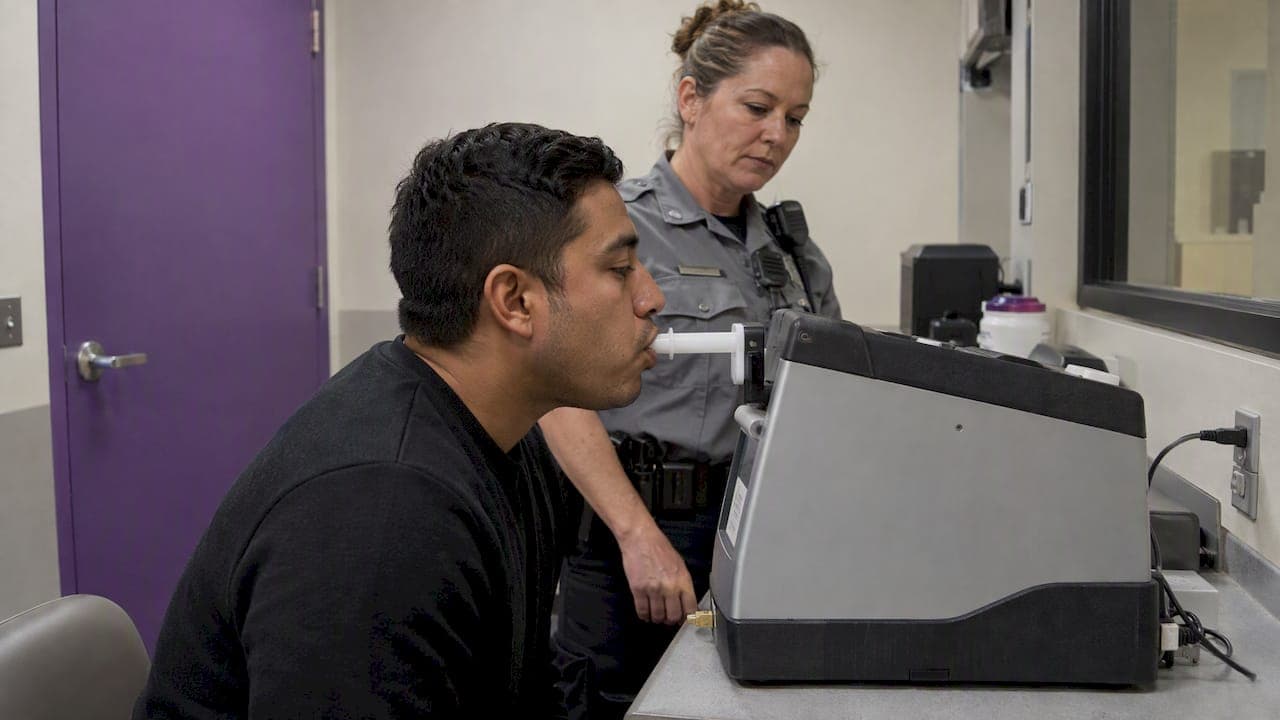
In California, implied consent means that by driving, you have already agreed to a chemical test if you are lawfully arrested for DUI. Under Vehicle Code § 23612, a driver is deemed to consent to testing after a lawful arrest for an alleged violation of § 23140, 23152, or 23153. Refusing does not make the case go away. It adds a separate license penalty, and the clock to fight it is short.
TL;DR
- Implied consent applies only after a lawful DUI arrest, not at a traffic stop or during roadside field tests.
- Covered tests are breath or blood. Urine applies only when those are unavailable or a medical exemption exists.
- Refusal means a DMV suspension or revocation of one year for a first offense, two years for a second within 10 years, and three years for a third or later.
- You have 10 days from the notice to request a DMV hearing, and asking for one does not pause the action.
- Police generally need a warrant for a blood draw you do not agree to, which can change the case.
Table of Contents
- What implied consent means in California
- Which tests are covered, and when
- What happens if you refuse
- The 10-day DMV deadline
- Can police force a blood draw without a warrant?
- Are implied consent laws unconstitutional?
- What to do after a DUI arrest
- Promo: Help with a DUI arrest in Los Angeles
- Perspective
- FAQ
- Sources
What implied consent means in California
Implied consent is not a signature you remember giving. It is a condition of driving on public roads. The statute says a person who drives a motor vehicle is deemed to have consented to a chemical test of blood or breath to determine alcohol content, or of blood to determine drug content, if lawfully arrested for a DUI offense. The California Highway Patrol's chemical test policy repeats that the law is tied to a lawful arrest under CVC 23140, 23152, or 23153.
Two points surprise people.
First, the officer does not need to have watched you drive at the moment of arrest. In Troppman v. Valverde, the California Supreme Court confirmed that implied consent applies to people who drive on public roads and does not strictly require proof of actual driving right before the arrest.
Second, the word "lawful" matters. If the stop or the arrest was not legally justified, the foundation for the test can be attacked. That is where a defense often starts.
Which tests are covered, and when
The law distinguishes between alcohol and drug cases, and between tests at different stages.
| Situation | Test covered |
|---|---|
| Alcohol DUI arrest | Breath or blood. Urine only if breath and blood are unavailable or a medical exemption applies |
| Drug-related DUI arrest | Blood, or urine if blood is unavailable |
| Under 21 with BAC of 0.01% or more | Covered under CHP policy (CVC 23136 or 23140) |
| On DUI probation with BAC of 0.01% or more | Covered under CHP policy (CVC 23154) |
The test must be incidental to a lawful arrest and requested by an officer with reasonable cause to believe you violated one of those sections (Vehicle Code § 23612). The under-21 and probation rules come from the CHP policy manual.
Roadside tests are a different thing
The handheld breath device and the balance and eye exercises you are asked to do beside the car are not the post-arrest test that implied consent covers. Our guide to field sobriety tests in California explains what you can and cannot decline at that stage. The practical rule: the roadside stage and the station stage carry different consequences, so do not assume that what applies to one applies to the other.
What happens if you refuse
Refusing or failing to complete a required test triggers an administrative penalty from the DMV, separate from anything a criminal court does. According to the California DMV, a first refusal brings a one-year suspension, a second within 10 years a two-year revocation, and a third or later a three-year revocation.

Those periods are the baseline. A refusal can also be used as evidence in the criminal case, and it can bring added consequences at sentencing if you are convicted. Refusal also tends to leave the prosecution with less direct scientific evidence, which is why some drivers consider it, but the trade is a guaranteed license loss. We walk through that trade-off in can I refuse a breathalyzer test in CA and in breath test refusal in California.
If you drive a commercial vehicle, the stakes are higher still. See commercial DUI in California and the 10-day deadline.
The 10-day DMV deadline
This is the step people miss. You may demand a hearing within 10 days after receiving notice of the DMV action, and requesting one does not stay the department's action (Vehicle Code § 14100). The DMV's administrative hearings page states the same 10-day window.
At the hearing, the issues under Vehicle Code § 13557 are:
- Did the officer have reasonable cause to believe you were driving under the influence?
- Was there a lawful arrest?
- Did you refuse or fail to complete a test after being warned of the consequences?
Each element is a place to challenge the DMV's case. Missing the deadline usually forfeits that chance. Read what to know about the DUI DMV hearing before the day arrives.
Can police force a blood draw without a warrant?
Generally no. After Birchfield v. North Dakota, breath tests may be taken without a warrant as a search incident to arrest, but blood tests may not, because blood draws are more invasive. A Fourth Amendment summary from the American Bar Association puts it the same way and adds that a consent search must be voluntary under the totality of the circumstances.
There is a wrinkle. California courts have held that when a suspect freely and voluntarily picks a blood test after being offered the choice under CVC 23612, the draw can be justified without a warrant as a search incident to arrest. That reasoning appears in the Gutierrez v. California appendix filed with the U.S. Supreme Court. Whether your choice was truly voluntary, and whether you were told accurate information, are fact questions.
California appellate decisions also show that where no exigency exists, the prosecution must justify a warrantless draw, as noted in the First District Appellate Project's opinion summaries. Our overview of DUI evidence in California covers how breath, blood and field tests are challenged.

Are implied consent laws unconstitutional?
Not as a blanket matter. Courts have drawn a line instead: the law operates differently for breath and blood, and a test taken without a valid warrant, valid consent or a recognized exception can be suppressed. The question in your case is rarely "is the statute valid?" It is "did the officer follow it, and was this particular test lawful?"
What to do after a DUI arrest
- Stay calm and polite. Do not argue the law with the officer.
- Ask questions about the test being requested and whether you may choose.
- Write down or remember everything: the reason for the stop, what you were told, and when.
- Keep the DMV notice. Count 10 days from the day you received it.
- Speak with a criminal defense lawyer immediately, before the deadline runs.
Promo: Help with a DUI arrest in Los Angeles
If you were arrested for DUI in Los Angeles County, we handle both the court case and the DMV hearing. Our DUI and DMV hearing defense starts with the stop, the arrest and the test itself.
We do not publish prices. Fees are set in a consultation and depend on the case.
Perspective
Most drivers first hear the words "implied consent" in the back of a patrol car, when they are tired, scared and have no time to think. That is why we treat the first days after an arrest as the most important part of the case.
We appear in Los Angeles County courtrooms often, and we know how local prosecutors build DUI cases. We look at whether the stop was lawful, whether the arrest was lawful, whether you were given accurate admonitions and whether a blood draw met constitutional requirements. We also protect your license by requesting the DMV hearing in time.
You get direct attention from your attorney, not a hand-off. The law is strict, but it has limits, and the limits are where we work.
Jake
FAQ
Does implied consent apply at a traffic stop?
No. It applies after a lawful arrest for a DUI offense. At the roadside you are generally being asked to take voluntary field tests or a preliminary screening, which are treated differently.
What is the penalty for refusing a breath or blood test in California?
The DMV imposes a one-year suspension for a first refusal, a two-year revocation for a second within 10 years, and a three-year revocation for a third or later, per the DMV. This is separate from the criminal case.
How long do I have to ask for a DMV hearing?
You have 10 days from receiving the notice. Requesting the hearing does not stop the suspension on its own, so act quickly and get advice.
Can I choose between a breath and a blood test?
In many alcohol cases you may choose breath or blood. Urine is an option only if those are unavailable or a medical exemption applies. Drug-related arrests focus on blood, with urine as the fallback.
Sources
- California Vehicle Code § 23612
- California Vehicle Code § 14100
- California Vehicle Code § 13557
- CHP chemical tests and implied consent policy
- Troppman v. Valverde
- California DMV: Driving Under the Influence
- California DMV: Administrative Hearings
- Gutierrez v. California appendix
- American Bar Association: Caselaw Corner, Summer 2025
- First District Appellate Project: Recent Opinions