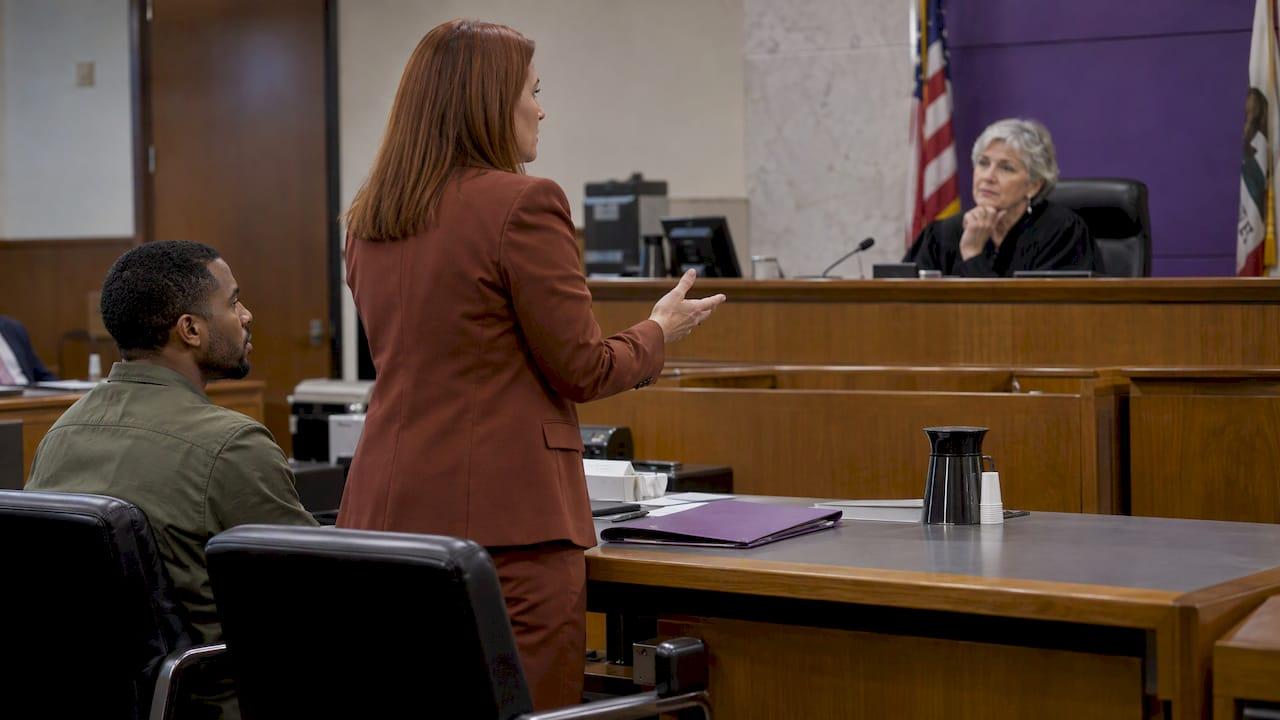
In California, the right to a speedy trial is a set of hard clocks. A misdemeanor trial must generally start within 30 days of arraignment if you are in custody, or 45 days if you are out. A felony trial must start within 60 days of arraignment on the charging document, unless you waive time. Those clocks only protect you if someone watches them, and one signature at the wrong moment can switch them off. A defense attorney who is in the Los Angeles courts regularly, as ours is, treats the speedy trial clock as a strategy decision from the first court date, not a footnote.
TL;DR
- Your speedy trial right comes from the Sixth Amendment, Article I, Section 15 of the California Constitution and Penal Code § 1382, which sets the day counts.
- Misdemeanors: 30 days in custody, 45 days out of custody. Felonies: a preliminary hearing within 10 court days of arraignment, and trial within 60 days of arraignment on the information.
- Waiving time is the most common way the clock stops. Decide it with a lawyer, never at the counter or on a form in a hurry.
- A missed deadline without a valid waiver or good cause can lead to dismissal. Long pre-charge delays are handled under a separate motion.
- Federal cases run on a different clock: 70 days under the Speedy Trial Act.
Table of Contents
- Where the right comes from
- When the clock starts: arrest, arraignment and the 48-hour rule
- The California deadlines, side by side
- Waiving time: the decision that stops the clock
- What happens if the deadline is missed
- Federal cases run on a different clock
- Why the clock matters most in the cases that scare people
- If you have been arrested or charged
- FAQ
- Sources
Where the right comes from
There are three layers, and people often mix them up.
The first is the Sixth Amendment, which gives every criminal defendant the right to a speedy and public trial. It applies only between formal charges and conviction. It does not cover delay in bringing charges or in sentencing, according to the Constitution Annotated.
The second is the California Constitution. Article I, Section 15 guarantees a defendant a speedy public trial, the right to counsel, the right to be present and the right to confront witnesses.
The third is statute. Penal Code § 1382 turns the general promise into day counts. This is the layer that matters most in an ordinary Los Angeles case, because it gives you a calendar, not a balancing test.
When the clock starts: arrest, arraignment and the 48-hour rule
The arraignment is the first court date, where the judge tells you the charges and your rights, including the right to a speedy trial, and appoints counsel if you need it. The judge then sets your next dates. That is a pretrial conference for a misdemeanor or a preliminary hearing for a felony, per the California Courts self-help guide.
How soon must that first appearance happen? Under Penal Code § 825, a person arrested must be brought before a magistrate without unnecessary delay and in any event within 48 hours of arrest, excluding Sundays and holidays. If that period ends while the court is in session, the arraignment can happen at any point in that session.
The practical point: the speedy trial day counts mostly run from arraignment or plea, not from the arrest itself. So the first hearing sets the timetable for everything after it. Our guide to the 48-hour arraignment and 60-day trial clock walks through the sequence, and the arraignment process in Los Angeles covers what to do in those first hours.
The California deadlines, side by side
| Stage | Deadline | Source |
|---|---|---|
| Misdemeanor or infraction, in custody | 30 days from arraignment or plea, whichever is later | Pen. Code § 1382 |
| Misdemeanor or infraction, out of custody | 45 days | Pen. Code § 1382 |
| Misdemeanor after a mistrial or new trial | 30 days | Pen. Code § 1382 |
| Felony preliminary hearing | 10 court days from arraignment or plea | Pen. Code § 859b |
| Felony trial | 60 days from arraignment on the indictment or information | Pen. Code § 1382 |
Two details trip people up.
First, a felony case has two stages. The 60-day trial count starts after the arraignment on the information (the formal felony charging document filed after the preliminary hearing, or after a grand jury indictment), not after the first court date. The earlier clock is the preliminary hearing clock. If it is delayed or waived, the hearing must still occur within 60 days, per the court self-help guide. Our overview of the California preliminary hearing explains why that hearing matters to the defense.
Second, custody changes the felony clock. Under § 859b, if you are held in custody for 10 or more court days and the hearing is set beyond 10 court days, the magistrate must dismiss the complaint unless you personally waive within that time or the prosecution shows good cause. The same section requires dismissal if the preliminary examination is set or continued more than 60 days from arraignment or plea, unless you personally waive within 60 days.

A worked example
Say a person is arrested on a Friday for a felony drug sales charge and is held in custody. After arraignment, the court sets the preliminary hearing. If nobody waives time and the hearing is set 14 court days out, the in-custody clock has been exceeded. The defense can ask for dismissal of the complaint unless the prosecution shows good cause. That is the kind of date arithmetic that is easy to miss at a crowded arraignment calendar. It is also the arithmetic that can change leverage in a negotiation. The facts of a real case, such as holidays, amended charges and prior waivers, change the count, so the real answer comes from a lawyer reading your docket.
Waiving time: the decision that stops the clock
Under § 1382, a defendant can enter a general waiver of the 60-day felony or the 30/45-day misdemeanor requirement. That lets the court set or continue trial without a dismissal risk. A defendant can also request or consent to a specific trial date beyond the period. In that case trial must take place on that date or within 10 days of it. If you later withdraw a general waiver, a new 60-day felony or 30-day misdemeanor clock starts from the withdrawal.
The California Courts guide tells defendants to get a lawyer's advice before waiving time. If you do not waive, the court must set dates that meet the 30, 45 or 60-day deadlines.
Why would anyone waive? Often for good reasons:
- The defense needs time to get police reports, body camera footage, lab results or a toxicology report.
- A diversion or treatment program is on the table, and the case needs to stay open while you complete it. PC 1000 drug diversion is one example.
- A pre-filing negotiation is underway and a prosecutor is reconsidering the charge.
Why refuse to waive? Because the prosecution often depends on witnesses, lab analysts or officers who are hard to line up on a tight schedule. A short clock puts pressure on the side that bears the burden of proof. In a DUI, for example, delays in blood analysis can matter. Our page on DUI evidence explains what the prosecution has to assemble.
Two cautions apply. A waiver given at one arraignment does not necessarily carry over to a later one. In Garcia v. The People (2020), the Court of Appeal held that for an in-custody defendant arraigned on an amended complaint, § 859b required a preliminary hearing within 10 court days of that new arraignment, absent a personal waiver or good cause. The court ordered dismissal of the amended complaint when the hearing was late. That matters if prosecutors add counts after your first appearance.
Also, prosecutors and courts can obtain more time for good cause. A request to continue a trial date must comply with rule 4.113 and Penal Code § 1050's good-cause requirement, according to the California Rules of Court, Title 4, which also says courts should actively manage trial calendars to minimize statutory dismissals. Good cause is a real standard, and it is argued in court.
What happens if the deadline is missed
A missed date does not free anyone automatically. The defense has to raise it, usually by motion, before the trial starts. If the deadline passed without a valid waiver or good cause, the court can dismiss the case. Dismissal is not always the end, though. Penal Code § 1387 limits the effect of some dismissals, and for some felonies the prosecution can refile once. That is why the timing of the motion and the type of charge matter.
The statutory clock is one route. The other is the constitutional one, which also covers delays before charges are filed in some situations.
The Serna motion for delay before charges
A Serna motion asks the court to dismiss for failure to prosecute in a timely way. In People v. Aguilar (1998), the Court of Appeal, quoting Serna v. Superior Court, said a pretrial writ is the preferred method because an appeal is not an adequate remedy. It also said prejudice is presumed, though rebuttable, for a delay of over a year in a misdemeanor case, and that the court weighs the prejudice from delay against any justification. Delays that law enforcement truly needs do not violate the right unless the prosecution acts unreasonably.
This is the motion for the person who learns of a charge months after an alleged offense, such as a drug case waiting on lab results or an old allegation that suddenly gets filed. Our guide to the statute of limitations in California covers the separate outer time limits on filing charges.
The constitutional balancing test
When the constitutional right itself is the argument, courts use the four-factor test from Barker v. Wingo (1972): the length of delay, the reason for it, whether you asserted your right, and prejudice to you. Prejudice includes oppressive pretrial jail time, anxiety and a weakened defense. No single factor decides the case. The remedy, if the right is violated, is dismissal. Deliberate delay meant to hamper the defense weighs heavily against the government, while a missing witness can justify a delay.
The lesson from the test is practical: assert the right on the record. A defendant who stays silent for a year and then complains has a weaker claim. Delay is one way a trial goes wrong. Another is impermissible questions put to witnesses in front of a jury, and a trial lawyer watches for both.
Federal cases run on a different clock
If you are under federal investigation or charged in federal court, the California day counts do not apply. Under the Speedy Trial Act, as described in the Central District of California's plan, trial on a not-guilty plea must start within 70 days of the filing of the information or indictment or your first appearance before a judicial officer, whichever is later. Trial generally may not start earlier than 30 days after first appearance unless you consent in writing. A detained person held solely awaiting trial must be tried within 90 days of the start of continuous detention, excluding certain delay periods.
Those exclusions are significant. Complex fraud, money laundering and trafficking cases commonly carry pretrial motions and continuances that stop the count. The pre-charge phase of a federal investigation has no speedy trial protection at all, because the Sixth Amendment right begins only when formal charges start.

Why the clock matters most in the cases that scare people
For the people we represent, the deadline question looks different by charge.
- Drug charges. Lab results and search warrants drive the timeline. A search challenge and a short clock can combine to put pressure on a case. See our page on whether drug possession charges can be dismissed.
- DUI. The DMV case runs on its own track from the criminal case, and a criminal trial date does not stop it. Our firm handles DMV hearings as well as the court case.
- Domestic violence. Arrests often come with protective orders and a quick first appearance. Time spent waiting can be hard on a person who is out of their home. See PC 243(e)(1) and the first 48 hours.
- Sex offenses. People often want discretion and a quiet resolution. A pre-filing approach, where available, can happen before any clock starts.
- Federal exposure. The earlier a lawyer is involved, the more options exist before an indictment.
What we tell clients about the clock
Most people hear "speedy trial" and picture a right they will simply be given. In practice it is a right you manage. Every continuance has a price, and every waiver is a decision someone should explain before it is signed.
Our approach is built on being in the courtroom often. That means knowing how the judges in Los Angeles County run their calendars and how prosecutors tend to handle their cases, so we can anticipate where a deadline will be contested. We use constitutional challenges, including search and seizure motions, and we pursue diversion and alternative sentencing programs where they can reduce or dismiss charges. Sometimes that means waiving time to protect a diversion. Sometimes it means refusing to waive because the prosecution is not ready.
You get direct attention from your attorney, and a strategy shaped to your facts, not a template. The sooner we see the case, the more of those choices are still open.
Jake
If you have been arrested or charged
The time to deal with speedy trial rights is before the first waiver form is put in front of you. Rubin Law, P.C. defends clients in Los Angeles County against drug, DUI, domestic violence, sex crime, violent crime and federal charges, with courtroom advocacy, constitutional challenges, pre-file intervention and diversion work. Bring your charging papers and any court dates to the first conversation so we can count the days with you. See the full range of criminal defense services or start at rubinlawpc.com.
If the case is at the arraignment stage, our guide on what happens at an arraignment in California shows what the judge will ask you and what to be ready for.
FAQ
What is the time limit for arraignment in California?
A person arrested must be brought before a magistrate without unnecessary delay, and within 48 hours of arrest, excluding Sundays and holidays, under Penal Code § 825. If the 48 hours end while the court is in session, the arraignment can take place during that session.
How many days does the prosecution have to take a felony to trial?
Under Penal Code § 1382, 60 days from arraignment on the indictment or information. Before that, a preliminary hearing is due within 10 court days of arraignment or plea unless time is waived or good cause is found. A general waiver or a request for a later date can extend the felony timeline.
Can I lose my speedy trial right by agreeing to a continuance?
Yes, in the sense that consenting to a later trial date or entering a general waiver lets the court set dates beyond the usual deadlines. Withdrawing a general waiver starts a new 60-day felony or 30-day misdemeanor clock. Talk to your attorney before you agree to anything.
Does a speedy trial violation mean my case is dismissed?
It can. A missed statutory deadline without a waiver or good cause can support dismissal, and a constitutional violation under Barker v. Wingo leads to dismissal. But the defense has to raise it, and some dismissals still allow refiling under Penal Code § 1387.
Sources
- The arraignment, California Courts Self-Help Guide
- California Constitution, Article I, Section 15
- California Penal Code § 1382
- California Penal Code § 859b
- California Penal Code § 825
- Garcia v. The People (2020)
- California Rules of Court, Title 4
- People v. Aguilar (1998)
- Barker v. Wingo, 407 U.S. 514 (1972)
- Constitution Annotated: Right to a Speedy and Public Trial
- Speedy Trial Act Plan, Central District of California