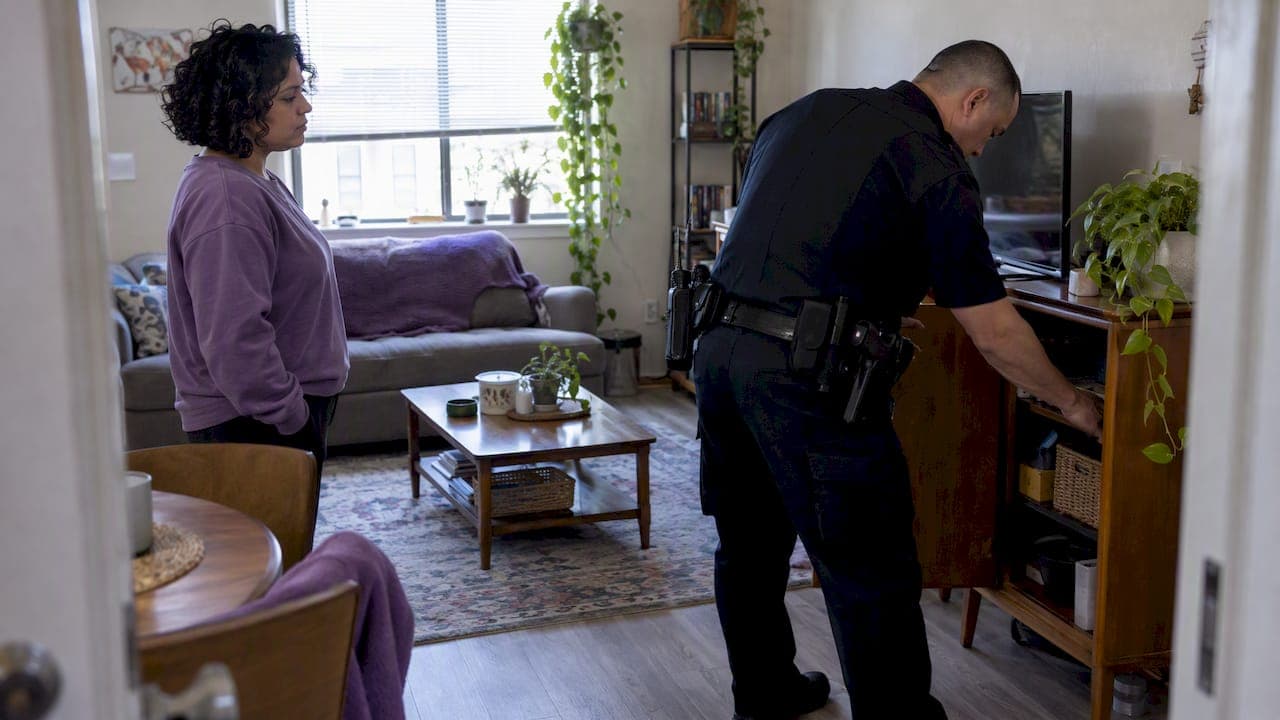
"Parole search" in California means two different things. For some people it is a records lookup: finding out whether someone is in state custody or on supervision. For others it is a police search of a person on parole, without a warrant and often without a reason. This guide covers both, and spends the most time on the second, because that is where a mistake can cost someone their freedom.
The short version: California parolees can be searched at any hour, with or without a warrant and with or without cause. That power has limits. An officer cannot use it to cover an unlawful stop, and a search that is arbitrary or harassing can be challenged in court.
TL;DR
- Every California state parolee is subject to search or seizure by a parole or peace officer, with or without a warrant and with or without cause, under Penal Code 3067.
- The U.S. Supreme Court upheld that rule in Samson v. California, but the California Supreme Court held in People v. McWilliams that an unlawful stop is not rescued by learning about a parole condition afterward.
- To look up a person in state custody, use CDCR's official CIRIS search tool. Third-party "parole search" sites are not official records.
- If a search leads to charges or a parole violation petition, you have the right to counsel, and what happens in the first days often shapes the case.
Table of Contents
- What a parole search is, and why it is so broad
- Where the limits are
- What happens to the evidence
- Perspective from our defense practice
- When a parole search leads to a violation
- How to look up a person in state custody or on parole
- Is there still parole in California?
- What to do if you are searched
- How Rubin Law can help
- After the case: ending or clearing the record
- FAQ
- Sources
What a parole search is, and why it is so broad
Most people think of a search as needing a warrant or probable cause. Parole is different. Before release from state prison, a person agrees in writing to a search condition. CDCR's statutory parole requirements page describes it as an implied consent to be searched with or without a warrant and with or without cause.
The statute itself says any parolee may be searched by a parole officer or other peace officer at any time of the day or night. The same condition applies to people on postrelease community supervision, which is the county-level supervision most people leaving prison after a non-serious, non-violent offense now serve.
The Supreme Court accepted this in 2006. In Samson, the Court found that parolees have a sharply reduced expectation of privacy and that the state has a strong interest in supervising a population with high reoffending rates. The opinion cited figures of 60 to 70 percent. You can read the full opinion at Cornell's Legal Information Institute.
So the baseline is simple: if the officer knows you are on parole with a valid search condition, a warrantless search is usually lawful. The real fights happen at the edges.
Where the limits are
A broad rule is not an unlimited one. Four limits come up again and again in California cases.
The officer has to know about the condition
The search condition justifies a search only if the officer knows about it before searching. An officer who searches first and discovers the parole status afterward cannot use the condition to justify what already happened. Whether the officer knew, and how, is often a question of fact that a defense lawyer should test in the police reports and body camera footage.
An unlawful stop taints what follows
This is the most practical limit for many people. In People v. McWilliams (2023), a police officer unlawfully detained a bystander who had no apparent connection to a report of suspicious activity. The officer then ran a records check, learned the man was on parole with a search condition, and searched him. The California Supreme Court held that the discovery of the parole condition did not cure the illegal detention, so the evidence could not be saved.
The lesson: the question is not only "was this person on parole?" It is also "was the contact that started everything legal?" If the stop was unlawful, evidence from it can be suppressed.
The search cannot be arbitrary or harassing
California courts have long said a parole search must be tied to a legitimate supervision purpose, not used to harass or to punish. A search done at random hours, repeatedly, or purely to annoy a parolee is open to challenge. These claims are fact-heavy. They depend on timing, who was present, what the officer said, and what the officer was actually looking for.
Scope matters
A parole search covers the parolee, the parolee's property, and areas the parolee controls. It becomes harder to defend when officers go into places that belong to someone else, such as a roommate's locked room or a family member's belongings. If you live with a parolee, you still have privacy rights over what is yours.
What happens to the evidence
In California, a defendant challenges an unlawful search through a motion to suppress. Our firm has written about the timeline and mechanics in stopping an illegal search under PC 1538.5 and about how to preserve evidence after an unlawful police search. If the search was a consent search rather than a parole search, the analysis differs, and we explain why in what to do within 48 hours of a consent search.
In practice, a suppression motion in a parole case usually turns on a short list of questions:
- Why did the officer first contact the person?
- Did the officer know about the parole status before searching?
- What did the officer say the purpose of the search was?
- Was the search within the scope of the condition?
- Is there video, dispatch audio or a written report that conflicts with the officer's account?
If the answer to the first question is weak, the rest may not matter.
Perspective from our defense practice
We spend much of our time in Los Angeles County courtrooms, and parole search cases have a pattern. The officer's report often reads as though the parole condition made everything simple. It rarely does. The first paragraph of a report usually describes the contact, and that is where we start.
We look at why the officer approached, what was known at that moment, and whether the search followed the contact or the contact was built around the search. We also check who owned the area searched, because shared homes and vehicles create real problems for the prosecution.

The common mistake we see is the client who assumes the case is hopeless because of the condition. Parole status makes the search easier for police to justify. It does not make every search lawful. Constitutional challenges are one of the main tools we use, and a client who tells us everything early gives us time to use them.
The second mistake is talking. A parolee who answers questions at the scene, or later with a parole agent, can create evidence that the search itself did not. Say you want a lawyer, and then say nothing else.
— Jake
When a parole search leads to a violation
A search does not only risk new criminal charges. It can also lead to a petition to revoke parole, even if prosecutors never file a new case.
Since 2011 realignment, these cases are handled in superior court rather than before the Board of Parole Hearings. The Judicial Council's parole revocation proceedings FAQ explains that the process is adversarial, the parolee is entitled to counsel, and the standard of proof is a preponderance of the evidence. That is a lower bar than the "beyond a reasonable doubt" standard in a criminal trial.
The same FAQ lays out the sanctions a court may impose: a return to supervision with modified conditions, or confinement in county jail for up to 180 days per revocation, with credit of four days for every two days of actual custody under Penal Code sections 3000.08 and 4019. Credits can change the real time served, so the calendar math should be checked by a lawyer rather than guessed.
A lower standard of proof does not remove the search issue. If the evidence came from an unlawful search, suppression arguments may still matter, and the facts that support a violation can be contested. Do not assume you must accept whatever the parole agent proposes.

How to look up a person in state custody or on parole
If your search is the records kind, start with official sources.
CIRIS, the official CDCR search
CDCR's California Incarcerated Records and Information Search (CIRIS) is the online tool for finding people in CDCR custody. Its results include name, CDCR number, age, current location, commitment counties, admission date, and Board of Parole Hearings dates and outcomes. CDCR announced the tool, which replaced the older inmate locator, in its Week in Review of November 9, 2023.
The easiest search is by CDCR number. If you only have a name, expect several matches and check age and county to narrow them.
What the public tools do not tell you
CIRIS is built to locate people in custody and give limited information. It does not give you a parolee's address, daily schedule, conditions or contact history with an agent. If you are looking for the date someone absconded or the details of their supervision, a public search will not provide that. The parole office does not generally hand that out to the public.
If you are trying to find a person in federal custody, that is a separate system run by the Bureau of Prisons, not CDCR.
Be careful with third-party sites
Many sites advertise a free "California parole search." They are often aggregators that repackage public data, may be out of date, and can mix up people with similar names. Treat them as leads at best. Never act on one of them, for example by confronting someone or making a decision about a job or tenant, without checking the official record.
Is there still parole in California?
Yes, but not for everyone. According to a 2026 analysis from the Prison Policy Initiative, California has moved since 1977 toward a system where discretionary parole release is limited mainly to groups such as people serving life sentences or youth offenders. Most others are released to a fixed period of supervision rather than earning release through a parole board.
That matters for searches because the type of supervision determines who may search you and under which statute. State parole, postrelease community supervision, formal probation and informal probation each carry different conditions. Probation search terms come from a court order, and parole terms come from statute. If you are not sure which one applies to you, check your release paperwork or your court minute order, or ask a lawyer before an officer asks you.
What to do if you are searched
The following steps are general guidance, not advice for any one case.
- Stay calm and do not resist. Even an unlawful search must be challenged later in court, not on the street. Resisting can add new charges.
- Do not consent to anything beyond what the condition covers, and do not make statements. Ask to speak with a lawyer.
- Write down what happened as soon as you can. Note the time, the officers, where you were, what was said before the search, and who saw it.
- Do not skip a parole appointment or court date. A missed one can lead to a warrant and make things much worse.
- Call a criminal defense lawyer quickly. Video and dispatch recordings can be overwritten, and suppression motions have deadlines.
If the stop turned into an arrest, the next few days matter most. If you have a new charge, a violation petition and a search issue at the same time, one lawyer should coordinate all three, because what you say in one case can be used in another.
How Rubin Law can help
Rubin Law, P.C. is a Los Angeles criminal defense firm. Our work covers drug crimes, DUI, domestic violence, sex offenses, violent crimes, federal cases, probation violations and warrants, and a parole or probation search is often how those cases begin. We challenge searches on constitutional grounds, appear in court regularly, and give clients direct attention from the attorney handling the case.
If you or a family member was searched, arrested or has a violation petition pending, contact us through our site to talk through the facts. The earlier we see the reports, the more options we have. Our site does not publish fees, so ask about the fee arrangement in your first conversation.
If you are on federal supervised release instead, the rules differ. See our note on asking for the violation report first.
After the case: ending or clearing the record
Once a case is over, there may be ways to limit its long-term effects. Depending on the outcome, a probation modification or early termination under PC 1203.3 or an expungement under PC 1203.4 may be available. Our overview of how to seal or expunge a criminal record in California explains the basics. Eligibility depends on the offense and your supervision history, so confirm it for your own case.
FAQ
Can police search a parolee without a warrant in California?
Yes. Penal Code 3067 allows a parole officer or other peace officer to search a parolee at any time, with or without a warrant and with or without cause. The search must still be lawful in how it started and how it was carried out. Evidence from an unlawful stop can be suppressed, as the California Supreme Court held in McWilliams.
Can I look up whether someone is on parole in California?
CDCR's CIRIS tool lets you look up people in state custody and shows details such as CDCR number, location and Board of Parole Hearings dates. It is not a source for a parolee's address or supervision details. For anything beyond that, expect limited public access. Be wary of paid or free third-party sites that claim more.
How much jail time can you get for violating parole in California?
A court can impose up to 180 days in county jail per revocation, or return the person to supervision with modified conditions, according to the Judicial Council's FAQ on parole revocation. Credit of four days for every two days served may apply. A new criminal charge is a separate matter with its own penalties.
Do I have a right to a lawyer in a parole revocation case?
Yes. Since realignment, revocation proceedings take place in superior court, and parolees are entitled to counsel. The court decides based on a preponderance of the evidence. You should not treat the hearing as a formality.
Sources
- California Penal Code 3067
- CDCR Division of Adult Parole Operations: Statutory Parole Requirements
- Samson v. California, U.S. Supreme Court (2006)
- People v. McWilliams, California Supreme Court (2023)
- Judicial Council of California: Parole Revocation Proceedings FAQs
- CDCR California Incarcerated Records and Information Search (CIRIS)
- CDCR Week in Review, November 9, 2023
- Prison Policy Initiative: early release in states that eliminated discretionary parole