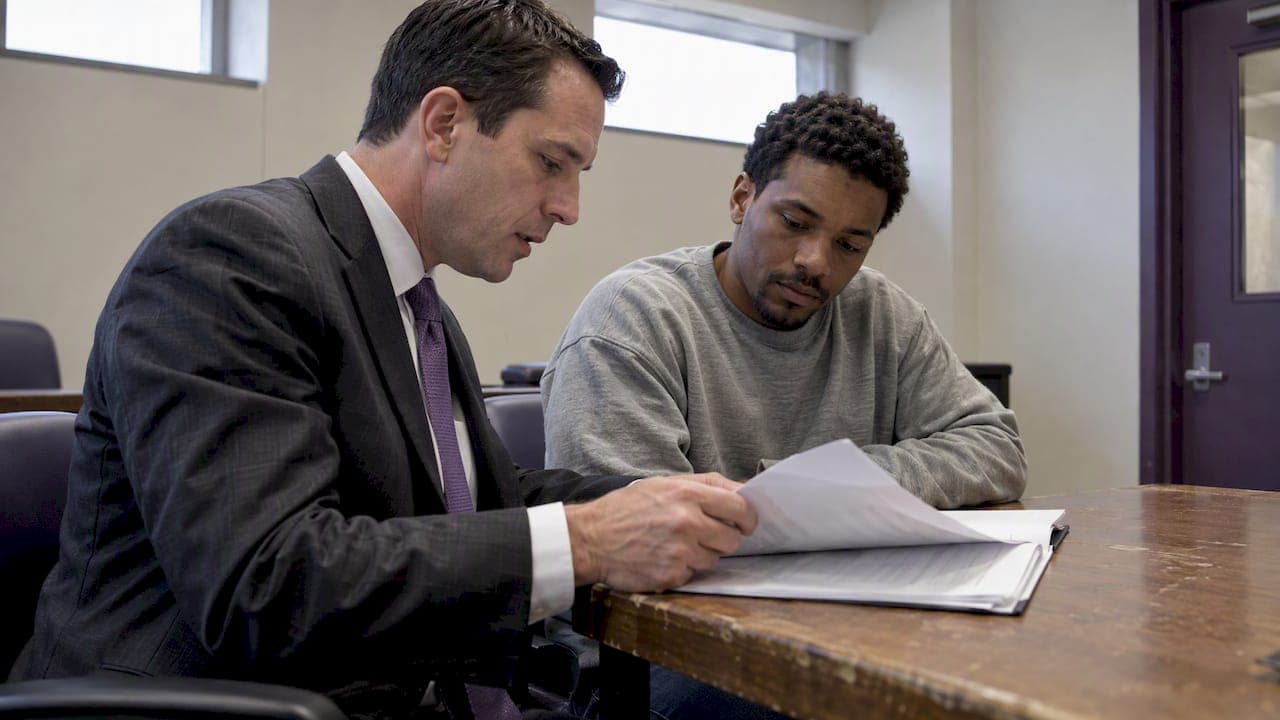
After an alleged federal supervised release violation, your probation officer reports it and the government files a petition to revoke. You will be called into court for an initial appearance, where detention is possible. The government must prove the violation by a preponderance of the evidence. Revocation is mandatory only for certain conduct under 18 U.S.C. § 3583(g). Call a defense lawyer immediately and ask for the Violation Report.
TL;DR:
- Waiving the preliminary hearing can leave you detained until the final hearing, since you must show you pose no flight risk or danger.
- Possessing drugs or a firearm, refusing required testing, or repeated positive tests can trigger mandatory revocation, though treatment may remain available in some drug cases.
- The prison cap depends on the class of your original offense; advisory ranges also reflect violation grade and criminal history, and judges may impose less.
- If new charges arise from the same events, coordinate both defense teams before speaking, because statements at revocation can be used in the separate prosecution.
Table of Contents
- What federal supervised release is and how it differs from probation
- Types and grades of violations: technical, substantive, and Grade A, B, or C
- The revocation process step by step
- Legal standards, sentencing ranges, and limits on imprisonment
- Your rights and the defense options that work
- What to do right now: a practical checklist
- How a violation can affect your future legal opportunities
- How procedures differ across districts and judges, including Los Angeles
- How a supervised release violation interacts with state and federal charges
- Consequences beyond prison: fines, restitution, and tighter conditions
- Our perspective: what judges respond to
- How we can help with federal revocation defense
- FAQ
- Sources
What federal supervised release is and how it differs from probation
Supervised release is a period of court-ordered supervision that begins after you finish a prison sentence. Congress authorized it in 18 U.S.C. § 3583, and its purpose is to help you rebuild a stable life outside prison. Probation, by contrast, is imposed instead of prison. That difference matters, because a supervised release violation is handled as a matter tied to your original sentence, with its own statutory limits on how much time a judge can add.
The Sentencing Commission's Chapter 7 commentary describes supervised release as rehabilitative in purpose and lays out graduated responses to violations, from continued supervision to revocation. Here is what that framework looks like in practice:
- Mandatory conditions apply to everyone, including not committing another crime and submitting to drug testing.
- Standard conditions cover routine matters such as reporting to your probation officer and getting permission before leaving the district.
- Discretionary conditions are tailored to you, such as treatment, employment requirements, or association restrictions.
- Your probation officer monitors compliance and reports noncompliance to the court.
The conditions you were given matter a great deal. A violation is measured against the exact terms in your judgment, not against general expectations of good behavior.
The numbers show how often supervision ends badly, and how often it does not. According to Sentencing Commission data, of 53,087 supervision cases closed in the 12 months ending September 30, 2025, 34% involved a revocation and 66% closed without one. Among cases that did end in revocation, technical violations accounted for 23%. An accusation is serious, but it is far from an automatic return to prison.

Types and grades of violations: technical, substantive, and Grade A, B, or C
The Sentencing Commission sorts violations into three grades. Where your alleged conduct lands on that scale is one of the strongest predictors of what the government will ask for. The Chapter 7 policy statements classify violations by seriousness and recommend responses by grade.
Technical violations break a rule of supervision without being a new crime. They typically fall into Grade C. Common examples include:
- Missing an appointment with your probation officer
- Traveling outside the district without permission
- Breaking a curfew
- Associating with someone you were told to avoid
- Failing to file a required report or update your address
Substantive violations involve new criminal conduct, and they are graded by how serious the conduct would be as a crime. Grade A covers the most serious conduct, such as violent offenses and drug trafficking. Grade B covers other felony-level conduct. Grade C covers less serious offenses and most technical violations. The same alleged conduct can be argued up or down the scale, so the grade itself is often contested.
Mandatory revocation categories sit outside this grading logic. Under § 3583(g), the court must revoke for certain conduct, including possessing a controlled substance, possessing a firearm, refusing to comply with required drug testing, and certain repeated positive drug tests. Even then, the statute allows the court to consider whether treatment is available and appropriate in certain drug-related situations.
Look at your own allegation and ask three questions. Is it a rule violation or a new offense? What grade does the government claim? Does it touch one of the mandatory triggers? Your lawyer's first job is to test each of those answers.
The revocation process step by step
Revocation moves in stages, and at each stage you make decisions that shape the next one. The governing framework is Federal Rule of Criminal Procedure 32.1, and courts follow bench scripts and forms that standardize the early steps.
- The petition. Your probation officer prepares a Violation Report describing the alleged conduct, and the government files a petition asking the court to revoke or modify your supervision. You are entitled to see what is alleged.
- The initial appearance. A sample federal initial appearance script shows how the judge tells you the allegations, explains your right to remain silent and your right to counsel, and appoints a lawyer if you cannot afford one. This hearing does not decide whether you violated anything. It is procedural.
- The preliminary hearing. A judge decides whether there is probable cause to believe you violated a condition. You can contest this stage or waive it.
- Release or detention. The court decides whether you stay out until the final hearing. Under 18 U.S.C. § 3143(a), the burden falls on you to show you are not a flight risk or danger.
- The final revocation hearing. The judge decides whether the government has proven the violation and, if so, what sentence follows. Some districts require disclosure of the Violation Report at least 48 hours beforehand, as in one district's local rule, so check the rules where your case sits.
Waiver is where defendants most often get hurt. The AO 466 waiver form lists the hearings you can give up, including identity, preliminary, and detention hearings. Waiving the preliminary hearing is common, but it often leads to detention until the final hearing because you then carry the burden on release.
Pro Tip: Never sign a waiver form at your first appearance without talking to a lawyer. If you want to stay out of custody, a release argument made early, with a verified address and a supportive family member in the courtroom, usually works better than a quiet waiver.
For more on how release arguments work, read our guide to what happens at a federal detention hearing.
Legal standards, sentencing ranges, and limits on imprisonment
Congress capped how much prison a judge can impose on revocation, and the cap depends on the class of your original offense. Under § 3583(e)(3), the maximum depends on the class of the original offense. The statute in effect for your original offense controls, so those caps apply to the term of imprisonment on this revocation, not to your sentence overall.
The Commission explains that revocation is mandatory for certain violations, while everything else calls for an individualized judicial assessment. In its annotated Chapter 7, it stresses that policy statements classify violations, recommend when to report and revoke, and suggest responses by grade. The Commission's supervised release primer adds that recommended imprisonment ranges follow § 7C1.5, which factors in your Criminal History Category.
Here is how these pieces fit together:
- The statutory cap is a ceiling. The judge cannot exceed it, but the judge also does not have to approach it.
- The policy statements are advisory. They guide the judge toward a range, and they still require reasoning specific to you.
- Mandatory revocation limits discretion. When § 3583(g) applies, the court must revoke, so the fight often moves to the length of the sentence and to whether treatment is an option.
- Criminal History Category matters. A higher category pushes the recommended range up for the same grade of violation.
A careful reading of these limits helps you evaluate any plea offer. If the government proposes a term near the cap for a technical violation, that is a red flag worth challenging. Our overview of how federal sentencing guidelines work in California explains how guideline ranges are built, and our piece on safety valve eligibility shows how original sentencing decisions can shape later exposure.
Your rights and the defense options that work
The government has to prove a violation by a preponderance of the evidence. That is a lower bar than proof beyond a reasonable doubt, which is why the fight usually centers on how reliable and admissible its evidence is, not on the standard itself. A drug test, a probation officer's recollection, or a third party's statement can each be tested.
You hold several rights from the first day:
- The right to counsel at every stage. It is stated in the script the judge reads and in local rules. If you cannot afford a lawyer, one is appointed.
- The right to remain silent. Anything you say to your probation officer or in court can be used against you.
- The right to notice and disclosure. You are entitled to know the allegations and to receive the Violation Report ahead of the hearing.
- The right to a preliminary hearing, which you can use to test probable cause.
Defense work tends to follow a few lines of attack:
- Challenge test results through lab records, chain of custody, and confirmation testing.
- Question whether the condition was clear and whether you actually knew about it.
- Raise procedural errors under Rule 32.1, such as defects in notice or timing.
- Offer alternatives to prison, including treatment, extended supervision, or modified conditions.
- Present documented compliance and mitigation so the judge has something concrete to weigh.
Allocution, your chance to speak before sentence is imposed, deserves its own attention. Circuits differ on whether a judge must invite it at a revocation hearing, as a recent Tenth Circuit opinion illustrates, so counsel should ask for it expressly and preserve the issue.
Pro Tip: Prepare what you will say with your lawyer and keep it short. A few honest sentences about what happened, what you have done since, and what you will do next beat a long speech.
What to do right now: a practical checklist
The days right after an accusation are when you can do the most to protect yourself. Work through these in order.
- Contact an experienced federal defense lawyer today, before you talk to your probation officer about the allegations.
- Ask for the Violation Report and any supporting materials. You need to know exactly what is claimed and on what evidence.
- Preserve everything. Keep text messages, emails, appointment records, pay stubs, and any testing paperwork.
- Document your compliance. Gather proof of treatment attendance, work, housing, and family support.
- Assemble a mitigation packet. Include treatment letters, employer statements, and character letters, with names and phone numbers for witnesses.
- Collect testing confirmations or lab reports, and talk with your lawyer about whether an expert review makes sense.
- Decide on release strategy with counsel. Weigh whether to seek a release hearing, and whether to litigate or waive the preliminary hearing.
Your lawyer will also help you decide how to frame the case. Some matters call for a factual challenge, such as a disputed test. Others call for mitigation, such as an honest slip followed by real progress. Often the strongest approach combines both.
Pro Tip: Keep a simple dated log of every contact with your probation officer and every treatment session from now on. A clean paper trail is persuasive evidence of compliance.
How a violation can affect your future legal opportunities
A revocation does not just cost time. It can leave a mark on your record that follows you into later efforts to rebuild.
A revocation is a documented judicial finding that you failed to meet supervision terms. That finding can weigh against you when you later seek relief such as a pardon, because decision makers look at your full compliance history. It can also complicate efforts to restore rights or clean up a record, since new conduct and supervision failures color how a reviewer sees you. If the violation involved a new offense, that new conviction carries its own separate consequences.
Federal and state benefits can also be affected, depending on the underlying offense and the new conduct. The specific rules vary by program and by the nature of the conviction, so ask your lawyer to map out which consequences apply to you.
Avoiding revocation, or limiting it to a short modification of conditions, is often worth more than the days it saves. Keeping a violation off the books or minimizing its scope protects your options years from now. If state record-clearing is part of your picture, our page on expungement in California explains how that process works for state matters.
How procedures differ across districts and judges, including Los Angeles
Federal law sets the baseline, but local practice shapes your day to day experience. Districts adopt their own local rules, and individual judges run revocation hearings differently.
The disclosure rule is one example. Some districts require that the Violation Report reach you at least 48 hours before the final hearing, as in one district's local rule, while others handle timing through standing orders or judge preferences. Courts also differ on how they schedule preliminary hearings, how they treat waivers, and how much they expect mitigation to be submitted in writing ahead of time.
If your case is in or near Los Angeles, the Central District of California's local rules and the specific judge's practices should guide your preparation. A lawyer who regularly appears before that bench knows how that judge handles continuances, treatment-based resolutions, and requests to modify conditions in place of revoking.
Do not assume the experience you heard about from a friend in another district applies to you. Ask your lawyer which judge you are assigned, how that judge has handled similar petitions, and what the local rules require on timing and disclosure.
How a supervised release violation interacts with state and federal charges
When one set of facts leads to both a supervised release petition and new charges, the two proceedings run on separate tracks. The revocation hearing is a federal proceeding about your supervision. A new criminal case, whether in state or federal court, is a separate prosecution with its own rules and a higher burden of proof.
That gap creates strategic tension. Because the revocation standard is a preponderance of the evidence, the government can sometimes revoke based on conduct that it might struggle to prove beyond a reasonable doubt in the new case. Anything you say at the revocation stage, including at allocution, could be used in the other case, so statements need to be coordinated carefully.
Timing is another issue. Sometimes the revocation is resolved first, and sometimes the court waits for the new case to move forward. Your lawyer can weigh whether to push for a quick resolution of one track or to sequence them in a way that protects your position in both. If a state case is involved, make sure the lawyers on each case are talking to each other.
Consequences beyond prison: fines, restitution, and tighter conditions
Prison is the headline risk, but judges have other tools. When revocation is not required, or when the court wants a middle path, the result can include a modification of your conditions instead of, or on top of, imprisonment.
Possible add-ons include:
- Additional or stricter conditions, such as home confinement, location monitoring, or more frequent testing
- Required treatment, including substance abuse or mental health programs
- Extended supervision, which lengthens the period you stay under the court's oversight
- Financial obligations, meaning that restitution or fines already ordered can remain due, and unpaid amounts can themselves be a compliance problem
These outcomes are often what a good defense is aiming for. A lawyer who steers the court toward a treatment-focused modification may spare you months in custody, and the Sentencing Commission's quick reference guide notes that conditions must not be a greater deprivation of liberty than reasonably necessary. That principle is a useful argument when the government asks for harsher terms than the facts justify.
Our perspective: what judges respond to
In our view, the single biggest mistake people make is waiting. Mitigation that is assembled early, documented, and specific carries far more weight than a hurried plea for mercy at the hearing. Judges respond to concrete evidence of progress: a steady job, verified treatment, a stable home, people who will show up and vouch for you.
There is a real trade-off in how you handle the case. Agreeing quickly to a resolution can secure release or cap your time, and for some people that is the right call. Litigating preserves your rights and can expose weaknesses in the government's proof, such as a test that cannot be confirmed or a procedural defect. The right choice depends on the strength of the evidence and the risk you face if the judge disagrees with you.
What we have learned is that a focused story beats a long one. Pick the two or three facts that show who you are now, back them with paper, and let the judge see someone worth giving a chance.
How we can help with federal revocation defense

If you are facing a supervised release petition, you do not have to sort it out alone. We offer federal crimes defense, and our courtroom experience in Los Angeles shapes how we handle release arguments, mitigation packages, and challenges to the government's evidence. Our team builds each case around you, starting with a close read of the Violation Report and the conditions you were actually given.
Retaining counsel early can change the outcome. It lets us press for release before waivers are signed, gather proof of your progress while it is fresh, and test the government's evidence while there is still time to do something about it. We also raise constitutional and procedural challenges where the facts support them.
To talk through your situation, request a case review through our criminal defense page. Bring your petition, your judgment, and any paperwork you have, and we will tell you where you stand and what to do next.
This article is general information, not a substitute for advice from a qualified lawyer. Consult a qualified legal professional about your own circumstances before acting on anything here.
FAQ
Is federal supervised release the same as probation?
No. Supervised release follows a prison sentence, while probation is imposed in place of prison. Both involve supervision and conditions, but revocation of supervised release is governed by 18 U.S.C. § 3583 and its own limits on imprisonment.
How much jail time can you get for violating supervised release?
It depends on the class of your original offense. Under § 3583(e)(3), the cap depends on the class of the original offense. Judges often impose far less than the cap, guided by Sentencing Commission policy statements.
Does every supervised release violation lead to revocation?
No. According to Sentencing Commission data, 66% of closed supervision cases in the period ending September 30, 2025 closed without revocation. Revocation is mandatory only for certain conduct under § 3583(g), and otherwise the court weighs your circumstances.
What standard of proof applies in a revocation hearing?
The government must prove the violation by a preponderance of the evidence, meaning it is more likely than not. That is lower than the standard in a criminal trial, so challenging the reliability and admissibility of the evidence is often the heart of the defense.
Should I waive my preliminary hearing?
Usually not without legal advice. Waiving it often leads to detention until the final hearing, because you then carry the burden of showing you should be released. A lawyer can tell you whether contesting probable cause or arguing for release is the better path in your case.