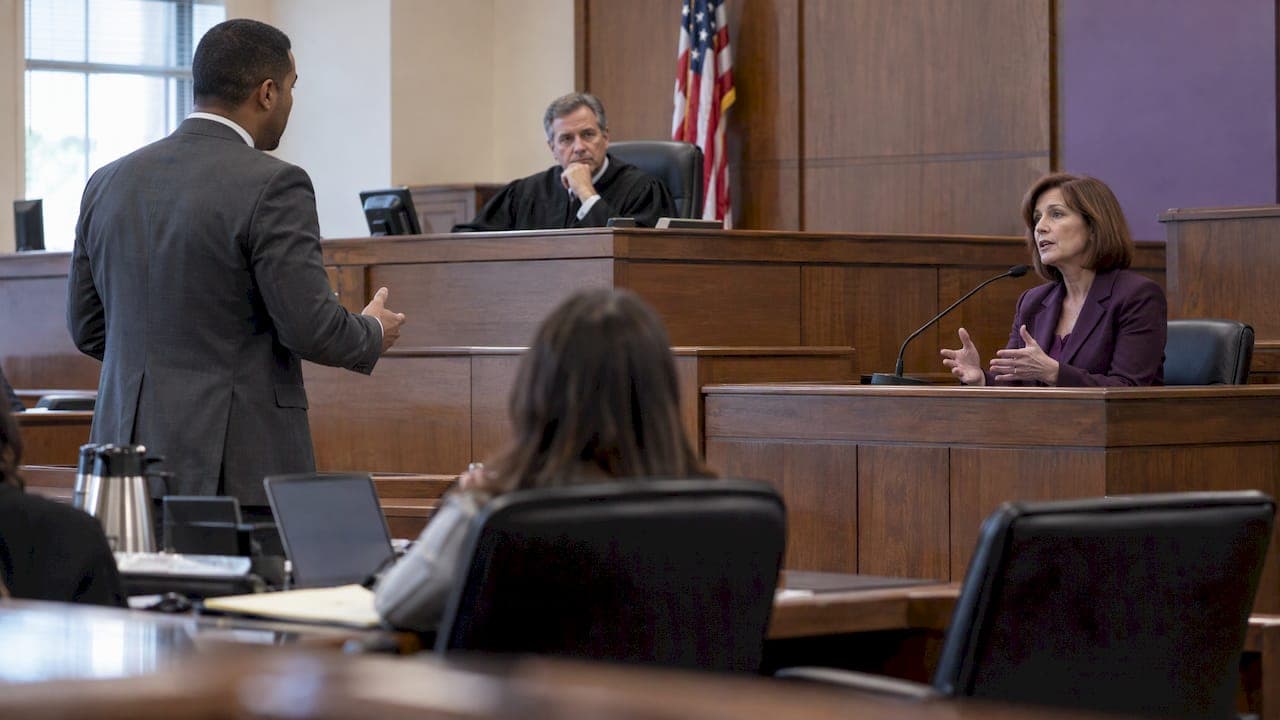
A federal Nebbia hearing is a court proceeding where a judge asks one question: where did the money or property behind this bail come from? If the answer is not documented and lawful, the court can refuse the collateral, and the defendant stays in custody. The fix is almost always paperwork: a clear paper trail, put in front of the judge early and organized by someone who knows what the prosecutor will attack.
This guide explains the legal authority behind the hearing, what the court can require, what happens when a source cannot be verified and how a Nebbia hold gets lifted. It is written for defendants and the families who are trying to post bail right now.
TL;DR
- A Nebbia hearing tests the source of the cash or property offered as bail or collateral, not whether the defendant is guilty.
- Federal law lets a judge inquire into the source of collateral on their own motion, and requires it when the government asks, under 18 U.S.C. § 3142(g)(4).
- Expect to prove ownership, value and lawful origin with bank records, tax returns, pay stubs, loan papers and sworn statements.
- If the court is not satisfied, the hold stays and the defendant remains in custody, so the first submission has to be complete.
- Start gathering records the day bail is discussed, and have a criminal defense lawyer package them.
Table of Contents
- What a Nebbia hearing is in federal court
- The legal authority behind the hearing
- What you have to show
- Documents courts may require
- What happens if the court cannot verify the source
- How a Nebbia hold gets lifted
- Perspective
- When to bring in a defense lawyer
- How we can help
- FAQ
- Sources
What a Nebbia hearing is in federal court
When a federal judge sets conditions of release, one of them can be that the money or property securing the defendant's appearance must first be shown to come from a legitimate source. That condition is a Nebbia requirement, often called a Nebbia hold. The hearing is where the defense proves the source and the government tests it.
The label comes from an old federal appeals court decision, but the practice today rests on statute and court rules. The reasoning is simple. Courts investigate the source of bail funds so a defendant does not treat forfeited bond money as just an acceptable cost of doing business for a criminal enterprise, a point made in United States v. Dussuyer. If the money came from the alleged offense, such as drug proceeds or fraud proceeds, losing it costs the defendant nothing real, so it does not reliably secure a return to court.
Two things are worth separating:
- The bail amount. The judge sets this through the ordinary release analysis.
- The Nebbia condition. This is a gate in front of the bail. It does not raise or lower the number. It decides whether the funds you want to use are acceptable.
Nebbia issues come up most often in cases with alleged proceeds: drug trafficking, fraud, money laundering and racketeering. Those are the allegations where the government is most likely to argue that cash or property is tainted. Federal practice also runs on detention hearings rather than a commercial bond market, so the source inquiry is folded into the larger question of whether any combination of conditions can assure release. Our guide to what happens at a federal detention hearing covers that larger picture.
The legal authority behind the hearing
The central statute is the Bail Reform Act. Under 18 U.S.C. § 3142(g)(4), a judicial officer may, on their own motion, or shall, on the government's motion, inquire into the source of property designated for potential forfeiture or offered as collateral to secure a bond. The same statute says the court must decline to accept the property as collateral if, because of its source, it will not reasonably assure the defendant's appearance.
That wording matters in practice. When the prosecutor requests the inquiry, the judge has no option to skip it. When the judge raises it alone, the judge has wide discretion over how much proof to demand.
Federal Rule of Criminal Procedure 46 adds the mechanics. The court may inquire into the source of collateral, and the defendant must provide proof of ownership and value along with information about existing encumbrances such as mortgages and liens. A surety must provide information about the value of its assets and liabilities and encumbrances on its property. The text is in Rule 46.

Does a corporate surety avoid the hearing?
Not necessarily. Federal courts keep the discretion to hold a Nebbia hearing even when release involves a corporate surety. In Dussuyer, the court explained that it may look at the financial motives and sources of the indemnitors, the people who back the surety, to see whether they are criminal associates who might help a defendant flee. A surety company in the background does not shut the door on the inquiry.
How federal practice differs from state practice
Many state courts, including courts in states that rely heavily on commercial bail bonds, use Nebbia holds too, but their procedures vary. Federal courts work from the Bail Reform Act and Rule 46, and the hearing is usually part of the detention and release determination instead of a separate bondsman-driven step. If you are comparing what you read online, check whether the page is describing a state procedure. In California state court, for example, bail is handled through different motions, which we cover in our pages on bail hearings in California and bail reduction motions.
What you have to show
The burden of proving that bail funds are legitimate rests on the defense. That is the single most important fact about the hearing. The prosecutor does not have to prove the money is dirty; the defense has to show it is clean.
In practical terms, the court wants to answer four questions about whatever is being posted:
- Who owns it? Title, account ownership or deed in the name of the person posting.
- What is it worth? Current valuation, not what someone hopes it is worth.
- What is owed against it? Mortgages, liens and other encumbrances.
- Where did it come from? The lawful history of the funds: wages, savings, a sale, an inheritance or a loan.
The fourth question is the heart of a Nebbia hearing. A person who earned a salary, saved for years and can show it has a short hearing. A person who holds a large amount of cash with no history will have a long one.
Documents courts may require
Courts may require bank statements showing how the funds accumulated, tax returns, pay stubs, loan agreements, property records and sworn affidavits or testimony from the person providing the money, and defense counsel often packages these into a written proffer, according to QuickBail's guide. Rule 46(e) points the same way for sureties: apart from an approved corporate surety, each surety must show by affidavit that its assets are adequate, and the court may require the affidavit to describe the proposed security, encumbrances, other undischarged bonds and other liabilities.
A useful way to organize a package:
| Source of funds | Typical records |
|---|---|
| Wages or salary | Pay stubs, W-2s, tax returns, bank statements showing deposits |
| Long-term savings | Statements covering several years, showing gradual accumulation |
| Sale of a home, car or business interest | Closing statement, bill of sale, deposit record |
| Loan | Loan agreement from a financial institution, disbursement record |
| Gift or family help | Signed declaration from the giver, giver's own bank records, tax records |
| Property pledged as collateral | Deed, recent valuation, mortgage statement, lien search |
Two habits make these packages stronger. First, the records should tell a story in date order, so a judge can follow the money from earning to deposit to posting without guessing. Second, any large deposit or cash withdrawal should be explained in writing before the prosecutor asks about it. Unexplained round-number cash deposits are the first thing a government lawyer will raise.
The proffer and the hearing itself
At a federal detention hearing under 18 U.S.C. § 3142(f)(2), the defendant may present information by proffer or otherwise. That means a lawyer can summarize the evidence for the judge and hand up documents instead of calling every witness. If the government accepts the showing, the matter may end there. If the government objects, the court can set a full hearing, where the person posting the money may testify and be cross-examined.

If you or a relative will testify, remember that the testimony is under oath and is limited to the funds. Even so, a lawyer should prepare the witness. The goal is a witness who can calmly explain how they earned and saved the money, not one who guesses at dates and amounts.
What happens if the court cannot verify the source
If the judge is not satisfied with the source, the hold remains and the defendant stays in custody, as QuickBail explains. Under the statute, the court must also decline to accept collateral whose source means it will not reasonably assure appearance.
Two consequences follow:
- A weak first attempt costs you. Once a judge has heard a thin or inconsistent explanation, the next submission starts from a skeptical place. Treat the first filing as the main one.
- Other release conditions can still be argued. A Nebbia ruling is about particular funds. A defense lawyer may be able to propose different collateral, a different person to post, additional conditions such as location monitoring or a larger group of co-signers with clean sources.
This is why timing matters. Gathering records takes days, and every day of delay is a day in custody.
How a Nebbia hold gets lifted
A hold can be lifted when the court is satisfied with the source of the funds. The usual route is:
- Identify the exact funds and who owns them. Decide what will be posted before the hearing so the proof matches.
- Collect records for each dollar or asset. Use the table above.
- File a written proffer. This is a short, organized submission that explains the origin of the funds and attaches exhibits.
- Ask for a hearing if the government objects. Be ready to put the person posting the funds on the stand.
- Request that the hold be lifted by order. Make sure the order is specific about which funds are approved.
After the case, the process continues in your favor. Under Rule 46(g), the court must exonerate a surety and release any bail once a bond condition is satisfied or a forfeiture has been set aside or remitted.
Mistakes that stall a release
- Moving money between accounts right before the hearing, which makes the trail harder to read.
- Offering cash with no paper history.
- Using a third party's funds without that person's own records and a signed statement.
- Pledging property with undisclosed liens.
- Posting different assets than the ones described in the proffer.
Perspective
Most people hear "source of funds" and think the court is accusing a relative of something. Usually it is not. The judge is applying a statute to every case where the government asks, and the question is routine. What is not routine is how well the answer is organized.
In our experience, the cases that move fastest are the ones where the defense treats the Nebbia issue as a project from day one. We decide which asset will be posted, we gather the records for that asset first, and we anticipate the questions a prosecutor will raise. We spend a lot of time in Los Angeles County courtrooms, and we pay attention to how local judges and prosecutors approach release arguments. That habit of anticipating tactics is how we approach the paper side of a case too.
Our approach is built around direct attorney attention. The person posting the money needs clear instructions, a realistic timeline and someone who can explain the rules without drama. When a federal case is also facing a detention fight, we think of the two issues together, because the way you present the funds affects how the judge views the whole release plan.
If you are in this position, do not wait for the hearing date to start collecting records.
Jake
When to bring in a defense lawyer
Bring one in before the first filing, not after the first denial. A lawyer can tell you early whether the proposed funds are likely to pass, which family member should be the one posting, and whether the government is likely to ask for the inquiry at all. The lawyer can also connect the Nebbia issue to the rest of the case, including any challenge to the evidence. If a search produced cash or property the government says is proceeds, a prompt challenge to a federal search warrant can affect both the case and the argument over what the funds are.
How we can help
Rubin Law, P.C. represents people charged with federal crimes, including fraud, drug trafficking, RICO, money laundering and federal firearms offenses, and these are the cases where source-of-funds questions most often come up. We handle courtroom advocacy at release hearings, help families organize records into a proffer and push for the least restrictive conditions available. You can see the full list of what we handle on our criminal defense practice page.
If a judge has ordered a Nebbia hold, or the prosecutor has signaled that one is coming, contact us as soon as you can so the records are assembled before the hearing, not after it.
FAQ
What does "pending Nebbia hearing" mean?
It means the court has not yet accepted the source of the bail money or collateral, so release is on hold until the hearing or a written submission resolves it. The defendant generally stays in custody in the meantime. Bail itself has usually already been set; the Nebbia step decides whether the offered funds can be used.
Who has to prove the money is legitimate?
The defense does. The person posting bail or collateral must show ownership, value, encumbrances and a lawful source, as Rule 46 and § 3142(g)(4) contemplate. The government can challenge the documents, but it does not carry the burden of proving the funds are tainted.
How long does a federal Nebbia hearing take?
There is no fixed timeline. A clean, well-documented proffer can be resolved quickly, sometimes without a contested hearing. A case with unexplained cash, several contributors or complicated property can take longer because the court may want testimony and the prosecutor may cross-examine.
Can a Nebbia hold be lifted?
Yes. It can be lifted when the court is satisfied with the source of the funds. The defense typically submits a written proffer with supporting records and, if the government objects, presents evidence at a hearing. A lawyer can also propose different funds or different people to post if the first plan does not work.
Does a corporate surety mean there is no Nebbia hearing?
No. Federal courts keep discretion to hold the hearing even when a corporate surety is involved, and they may look at the motives and sources of the indemnitors behind the bond.
Sources
- 18 U.S. Code § 3142, Release or detention of a defendant pending trial
- Federal Rule of Criminal Procedure 46, Release from Custody; Supervising Detention
- United States v. Dussuyer, 526 F. Supp. 883 (1981)
- The Bail Reform Act (presentation, 2023)
- How Nebbia Hearings Work in Federal and State Court