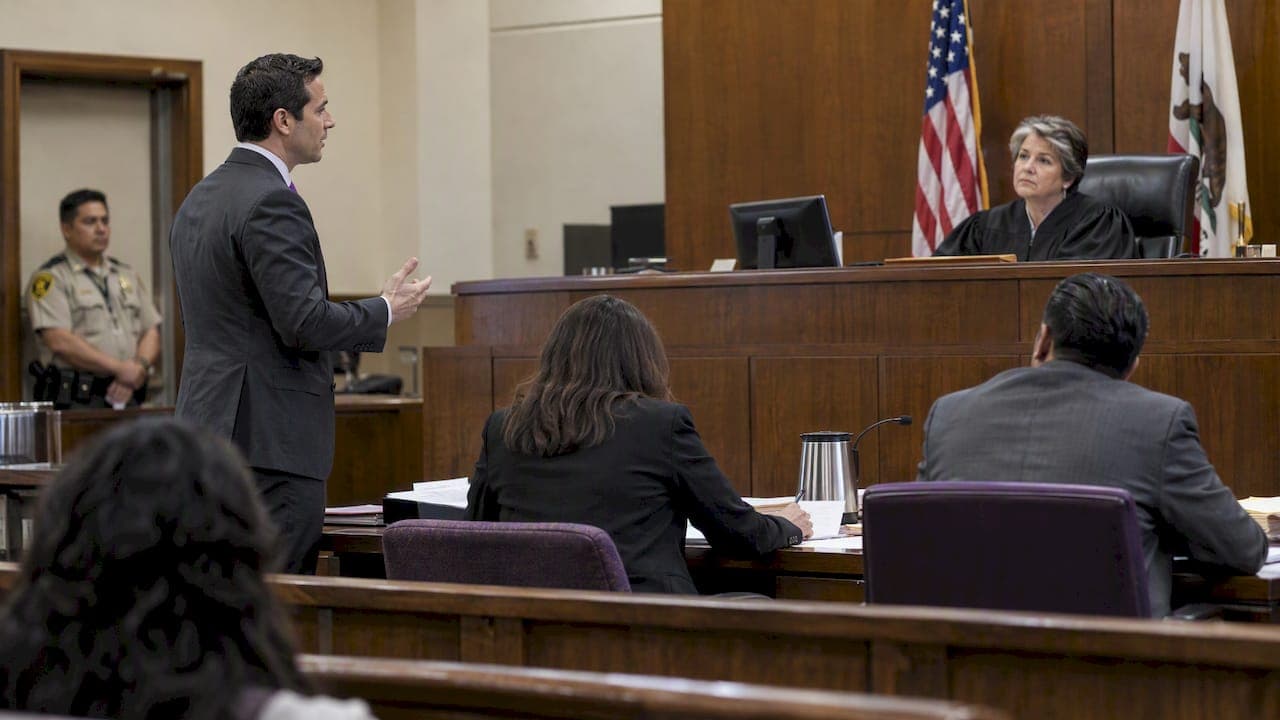
A bail reduction motion is a request asking a California judge to lower your bail, or to release you on non-financial conditions, because the amount set is more than the law allows you to be held on. You can ask at arraignment, through a pre-arraignment bail deviation request, or by filing a written motion later. What decides the outcome is rarely the number. It is whether the court believes a specific, verifiable release plan protects the public and gets you back to court.
This guide walks through the legal rules, the Los Angeles County options, what a strong motion contains, and the mistakes that sink families who are trying to get someone out.
TL;DR
- Bail schedules are a starting point only. Under In re Humphrey (2021), a court cannot keep someone in jail solely because they cannot afford the scheduled amount.
- In Los Angeles County, you can ask for a lower bail before arraignment through the Bail Deviation Program, at arraignment, or later by motion.
- Serious and violent felonies listed in Penal Code 1270.1 require an open-court hearing, with notice to the prosecution, before bail can go above or below the schedule.
- Judges respond to a concrete release plan (housing, work, treatment, monitoring, stay-away terms), not to a plea that the number is too high.
- Money posted for bail can be questioned. Funds that look feloniously obtained can trigger a hold under Penal Code 1275.1.
Table of Contents
- What a bail reduction motion actually asks for
- When you can ask, and where
- The serious-felony rule that catches people off guard
- What the judge weighs
- Build a release plan, not a plea
- Domestic violence and sex offense cases: victim safety comes first
- Where the money comes from: Penal Code 1275.1
- Our perspective
- How many times can you ask?
- Mistakes that cost people their release
- When to call a defense lawyer
- FAQ
- Sources
What a bail reduction motion actually asks for
Every county has a bail schedule, a list of set amounts by offense. Arresting agencies use it at booking. The schedule is a convenience, not a finding about you. A bail reduction motion asks a judge or magistrate to make the individualized decision the schedule skips.
The California Supreme Court said it plainly in In re Humphrey: liberty is the norm, and detention before trial is the carefully limited exception. The Judicial Branch summarizes the holding this way: conditioning pretrial release solely on whether an arrestee can afford bail is unconstitutional, and courts must apply a framework built on public safety and flight risk, considering ability to pay and less restrictive conditions.
So a modern motion has three jobs:
- Show that the amount set is more than you can pay, and why.
- Show that non-financial conditions can address any real risk.
- Give the judge enough verified detail to say yes without feeling exposed.
A common misunderstanding is that California abolished cash bail. It did not. A 2018 law that would have replaced it was rejected by voters in 2020, as Ballotpedia's record of Proposition 25) shows. As of this writing, reform depends heavily on judges following Humphrey, since the legislature has not passed a statute codifying it. That makes the quality of your motion matter more, not less.
When you can ask, and where
There is more than one door, and which one you use depends on how far along the case is.
Before arraignment: the Bail Deviation Program
If the person has been arrested without a warrant and has not yet been arraigned, Los Angeles County has an administrative route. The Probation Department's Bail Deviation Program is free for adults in jail on an open felony or misdemeanor matter. Staff interview the person by phone, check their record, verify references, and pass an assessment to the on-duty bail commissioner. The commissioner can release the person on a promise to appear or reduce the bail amount.
The Superior Court's felony bail schedule states that this program processes bail increase and decrease requests for people arrested without a warrant and not yet arraigned. Verified references matter here, so a family member who can answer the phone and confirm an address and job helps a great deal.
Low-level offenses: the Pre-Arraignment Release Protocol
For many misdemeanors and non-violent felonies, Los Angeles County uses a Pre-Arraignment Release Protocol (PARP), in effect since October 2023. According to a California Law Revision Commission staff memo, 47% of PARP bookings between October 2023 and June 2026 were released without magistrate review, and 48% were reviewed by a magistrate. Of those reviewed, 94% were held until arraignment. The takeaway: PARP releases many people automatically, but if you are not in that group, do not assume a magistrate review will send you home. Serious or violent offenses stay on the standard schedule, and a deviation needs a formal open-court hearing.

At arraignment
Most people ask for a lower bail or release at their first court appearance. Arraignment is where the judge reads the charges, enters a plea, and addresses custody. If you are heading into one, our guides on what to do in the first 48 hours and winning release at a Los Angeles arraignment cover the preparation. The short version: arrive with documents, not promises.
After arraignment: a written motion
If bail was set and you could not meet it, your attorney can file a motion and set a hearing. Bail hearings run on short timelines, and the prosecution is entitled to notice. For a broader walkthrough of how hearings run, see our page on bail and bail hearings in California.
The serious-felony rule that catches people off guard
For the offenses listed in Penal Code 1270.1, a person cannot be released on bail above or below the scheduled amount without an open-court hearing before a judge. The list includes serious and violent felony categories and certain domestic violence and sex offenses. The prosecution must receive notice, and our working practice is to treat the notice window as two court days, so the evidence for your motion needs to be assembled before you walk in rather than after.
If your charge falls in that category, an informal request at the jail or through a bail agent will not work. You need a hearing, and a hearing needs a prepared record.
What the judge weighs
California courts look at the seriousness of the charge, your criminal history, the risk you will not return, and the safety of the public and of any alleged victim. Penal Code 1275 makes victim and public safety a primary consideration in setting, reducing, or denying bail. Under Humphrey, the judge must also consider your ability to pay and whether conditions short of money would work.
That gives you a practical checklist:
| Judge's concern | What answers it |
|---|---|
| Will you come back to court? | Lease or letter from a landlord, years at the same address, family in the area, employer letter, passport surrender if relevant |
| Is anyone at risk? | Stay-away terms, a different residence, electronic monitoring, no-contact agreement, firearm surrender |
| Is the amount unaffordable? | Pay stubs, bank statements, rent and dependents, a plain account of what the family can raise |
| Is there an underlying problem? | Confirmed enrollment in treatment, counseling, or a program with a start date |
Build a release plan, not a plea
The most useful idea in the Humphrey opinion for anyone drafting a motion is that bail is not just about a dollar figure. The court expects an assessment of what conditions would reasonably assure safety and appearance. We have found the strongest motions treat that as the whole assignment.
A release plan names specifics:
- Where you will live, with the address and the name of the person who confirms it.
- What you will do all day: your job, school, or program, with a letter from a real person.
- How you will be supervised: check-ins, GPS or alcohol monitoring, curfew, or a treatment schedule.
- What you will avoid: contact with named people, places, or substances.
- How you will get to court: transportation and a reminder system.
Prepare documents in a tidy packet. Letters of support should come from people who know you in a specific way (an employer, a pastor, a coach), and each should say how long they have known you and what they will do to help. Proof of enrollment in a substance abuse or mental health program carries more weight than a statement that you intend to enroll. If treatment is central to your case, our page on treatment instead of jail explains the options we pursue.
Domestic violence and sex offense cases: victim safety comes first
When the allegation involves a partner or family member, expect the prosecutor and judge to focus on the complaining witness. Defendants are often surprised: the question is not only whether you are guilty or will flee, but whether the court is satisfied the other person will be safe if you are released.
A motion in these cases should answer that directly. Offer to live elsewhere, accept a protective order, agree to electronic monitoring, and put those terms in writing. Anything vague ("I won't contact her") reads as risky. It also helps to understand what a practical safety plan looks like from the other side; this domestic violence safety plan guide shows the kinds of concrete steps that make a no-contact arrangement credible and enforceable.
For allegations that have not produced charges, the better move may come earlier. Our page on domestic violence prefile intervention explains how we approach cases before a complaint is filed. If you are already charged, see our Los Angeles domestic violence defense page. Charge level can also shift quickly, as we explain in the wobbler effect in felony domestic violence cases.
Where the money comes from: Penal Code 1275.1
Families often focus on raising the amount and forget that the source of the money can be challenged. Under Penal Code 1275.1, bail cannot be accepted unless the judge or magistrate finds that none of the money or security was feloniously obtained. If the court places a hold, the defense must be ready to show where the funds came from.
Before anyone posts bail, gather:
- Bank statements showing the funds sitting in the account for a reasonable period.
- Pay records, a sale receipt, or a loan document for any recent large deposit.
- The name of whoever is posting, and proof of their identity and relationship to you.
Cash that arrives quickly from an unclear source is the usual cause of a hold. A motion that includes this proof up front avoids a second hearing and extra days in custody.
If you want to know current scheduled amounts, see our guide to the Los Angeles bail schedule.
Our perspective
We appear in Los Angeles County courtrooms often, and that changes how we approach a bail motion. A judge on a busy calendar decides quickly, and the most persuasive thing a lawyer can hand over is a short, organized, verified packet that lets the judge say yes in two minutes. We know how the prosecutors in a given department tend to frame their opposition (usually public safety or flight risk), so we build the plan to answer those concerns on the page before they are raised.
Two habits matter most to us. First, we do not file on a thin record. If the first hearing goes poorly, you face a judge who has already heard your arguments, and new material information is what gives a renewed request a reason to be heard. Second, we treat bail as the opening of the case, not a side issue. What you do while released (work, treatment, compliance) becomes part of the story at every later hearing, including negotiations over diversion or a reduced charge.
— Jake
How many times can you ask?
We are not aware of a fixed statutory limit on the number of reduction requests. In practice, though, judges are impatient with repeat requests that offer nothing new. A renewed motion works when something has changed: a verified job offer, a place in a residential program, a family member who can now serve as a surety or a third-party custodian, or an adjustment to the charges. If nothing is new, the better use of time is usually to prepare the case itself.
Mistakes that cost people their release
- Arguing only that bail is too high. The judge hears that from everyone. Argue conditions.
- Showing up with no paperwork. A promise of a job is not a job letter.
- Ignoring the alleged victim. In domestic violence and similar cases, silence on safety reads as indifference.
- Posting bail with unexplained cash. See the 1275.1 section above.
- Missing court after release. Failure to appear carries its own consequences; read about PC 1320.5 failure to appear on bail before you leave the courthouse.
- Treating the motion as separate from the defense. Statements you make in a bail packet can be read by the prosecution, so what goes in should be reviewed by your attorney.
When to call a defense lawyer
Call as soon as someone is arrested, particularly if the charge is on the Penal Code 1270.1 list, if an alleged victim is involved, or if there is a hold on the funds. The window before arraignment is short, and a lawyer can contact the Bail Deviation Program, collect documents with the family, and arrive at the first hearing with a release plan instead of a request.
Rubin Law, P.C. defends clients across Los Angeles County in drug, DUI, domestic violence, sex offense, violent, and federal cases, and we handle bail and release issues as part of that work. You can see everything we handle on our criminal defense page, then call us to talk through the custody situation. Fee terms are set in your retainer agreement, since we do not publish prices.
FAQ
What is the new bail law in California?
There is no new law that ended cash bail. Voters rejected the 2018 replacement law in 2020. The rule that governs today comes from the California Supreme Court's Humphrey decision, which bars jailing someone solely because they cannot afford the scheduled amount.
How long does it take to get bail reduced?
It depends on the route. A Bail Deviation request before arraignment can be handled within the booking period, while a request at arraignment is decided that day if you are prepared. A written motion after arraignment waits for a hearing date, and serious felonies need notice to the prosecution first.
Do I need a lawyer to file a bail reduction motion?
You can ask the court yourself, but the motion is a persuasion exercise with deadlines, a notice requirement for serious felonies, and statements that may be used against you. A defense attorney knows what the local judges expect and can assemble the packet quickly. If the charge involves an alleged victim, representation is especially important.
Can I ask again if the judge denies the motion?
Yes, but a repeat request should bring new, verified information, such as a confirmed treatment bed, a new residence, or proof you can afford a different amount. Without a change, the court has little reason to reach a different result.
Sources
- In re Humphrey, California Supreme Court opinion
- Judicial Branch of California: Findings and Orders for Pretrial Release or Detention
- Ballotpedia: California Proposition 25 (2020))
- LegalClarity: What Happened to California's Money Bail Reform Act?
- Los Angeles County Probation: Bail Deviation Program
- Superior Court of Los Angeles County: Felony Bail Schedule
- California Law Revision Commission Staff Memorandum 2026-09
- California Penal Code 1270.1
- California Penal Code 1275
- California Penal Code 1275.1