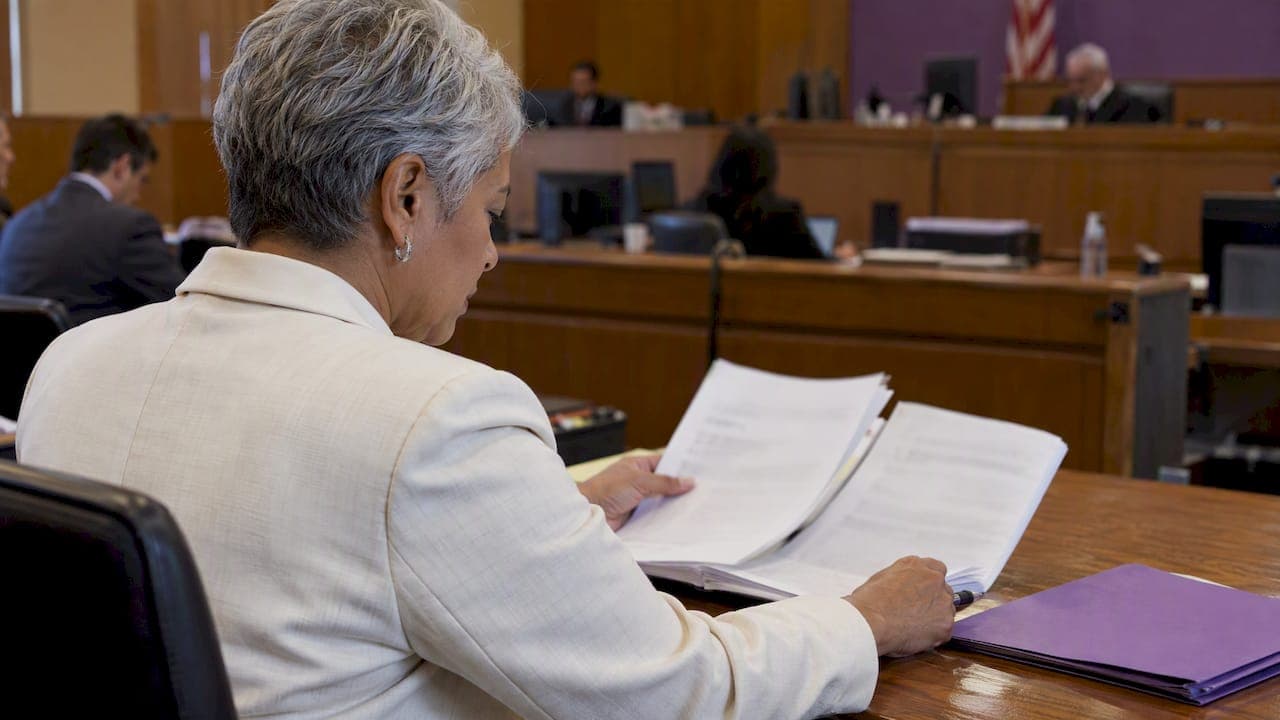
A PC 995 motion asks the trial judge to throw out felony charges because the evidence at the preliminary hearing did not justify holding you for trial, or because your rights were violated in the process. It is filed after the preliminary hearing and before trial, and it is one of the few chances to end or shrink a felony case before a jury is ever involved. If the motion fails, a different tool, a PC 17(b) reduction, may still bring a felony down to a misdemeanor.
This guide explains what a 995 motion can and cannot do, the deadlines that matter, where these motions get lost, and how 17(b) fits in.
TL;DR
- A 995 motion (a motion to set aside the information) is available in felony cases after a preliminary hearing and before trial.
- It tests the magistrate's decision to hold you to answer. It is not a second trial and the judge does not re-weigh credibility.
- Deadlines and filing steps vary by county. Some courts require you to reserve a hearing date in advance.
- A judge who never rules can leave you with a waived issue, so the defense must get an explicit ruling.
- If the felony is a "wobbler," a PC 17(b) motion is a separate route to a misdemeanor.
Table of Contents
- What a PC 995 motion actually is
- The two grounds: illegal commitment and no probable cause
- Search and seizure issues inside a 995
- Deadlines and filing rules
- The pitfall that quietly kills 995 motions: no ruling
- What happens if the motion is granted or denied
- Is a 995 motion worth filing?
- PC 17(b): the separate route to a misdemeanor
- Our perspective
- When to talk to a lawyer
- FAQ
- Sources
What a PC 995 motion actually is
In a California felony case, the prosecutor usually files a complaint, the court holds a preliminary hearing, and if the magistrate finds enough evidence, you are "held to answer." The prosecution then files an information, the document that formally charges you in superior court. You can read how that stage works in our guide to the California preliminary hearing.

A 995 motion attacks that information. Under Penal Code section 995, the court must set aside the indictment or information when the defendant was not legally committed before the magistrate, or was committed without reasonable or probable cause. Those are two separate grounds, and they call for different arguments.
The motion is not an appeal of a verdict, because there is no verdict yet. It is a check on whether the magistrate's legal decision to bind the case over was sound. The California Supreme Court has described it as the primary mechanism for testing whether the preliminary hearing evidence supports each charge, and that includes enhancements. In People v. Superior Court (Mendella), the question was whether an enhancement allegation can be challenged this way, and the court treated the evidentiary support for an enhancement like that for a primary charge.
The two grounds: illegal commitment and no probable cause
Not legally committed
This ground is about process. Examples include a magistrate who wrongly excluded defense evidence the law allowed, a hearing held in violation of statutory rights, or a commitment based on evidence that was inadmissible. The question is whether the preliminary hearing was run lawfully.
Not every irregularity wins. In People v. Pompa-Ortiz, the California Supreme Court held that defendants should raise preliminary hearing irregularities by pretrial motion. A pretrial remedy is efficient: the matter can go back to the magistrate to fix the defect. Waiting until after a conviction makes relief far harder to get.
No reasonable or probable cause
This is the ground most people mean when they search for the motion. The judge looks at the transcript of the preliminary hearing and asks whether a reasonable person could suspect, based on the evidence presented, that the defendant committed the charged crime. The standard is low for the prosecution. The judge does not decide whether you are guilty, and does not substitute his or her view of credibility for the magistrate's.
That is why the motion succeeds mostly where the record has a real gap: no evidence on one element of the offense, a witness who never identified the defendant, or an enhancement the prosecution never proved up at the hearing.
Search and seizure issues inside a 995
A 995 motion can also raise the legality of the search that produced the evidence, if the issue was properly raised at the preliminary hearing. In practice, defense lawyers often pair it with a separate suppression motion. We explain that separate tool in our article on filing a PC 1538.5 motion, and our overview of pre-trial motions in California shows how suppression and dismissal motions work together.
The order matters. A suppression ruling can remove the evidence that carried the case, and that in turn can make a 995 argument far stronger.
Deadlines and filing rules
Timing is strict. Our research shows that the motion must generally be made within 60 days after arraignment on the information in a felony case, and the statute is the place to confirm the current rule for your case. The pretrial review rules add another clock. Under Penal Code section 1510, denial of a 995 or 1538.5 motion can be reviewed before trial only if the motion was made within a set period after arraignment, which the statute fixes at 45 days. Missing that window can close the pretrial appeal route even if the motion itself was filed.
County practice adds another layer:
- San Francisco requires counsel to email a dedicated address to secure a hearing date before filing.
- San Luis Obispo has a local rule that sends 995 motions to a different law and motion track than other motions, which are heard before the assigned judge.
- Other counties, including Los Angeles County, have their own department assignments and calendaring habits, so the lawyer in your case has to know the courthouse.
A motion that ignores these protocols can be rejected or ignored on procedural grounds, no matter how good the argument is.
The pitfall that quietly kills 995 motions: no ruling
Here is a mistake that costs defendants issues. A motion is filed and argued, then the case rolls on to trial without the judge ever formally deciding it. In People v. Obie, the trial court never formally acted on the 995 motion after it was submitted, and the court of appeal inferred the judge meant to deny it because the case went to trial.
The lesson is simple. The defense lawyer must press for an explicit ruling. If you do not, the argument can be treated as if it was never made, and you lose your chance to challenge it later.
What happens if the motion is granted or denied
If the judge grants the motion, the information is set aside, in whole or in part. A partial win is common: one count or one enhancement falls and the others remain. Depending on the circumstances, the prosecution may be able to refile or seek a new preliminary hearing, so a grant is not always the end of the case. Ask your lawyer exactly what the order does in your situation.
If the judge denies the motion, the case continues toward trial. A denial may be reviewable before trial only if you met the timing rules above. Otherwise the issue is generally preserved for an appeal after any conviction, where it is harder to win. Either way, a motion that is denied can still pay off: it forces the prosecution to commit to its theory, and it exposes weaknesses that help in plea negotiations.
Is a 995 motion worth filing?
It usually is when:
- The preliminary hearing transcript shows an element with no supporting testimony.
- An enhancement, such as a firearm or great bodily injury allegation, was charged but thinly supported. See our pages on the PC 12022.53 firearm enhancement and the PC 12022.7 great bodily injury enhancement.
- The magistrate admitted evidence the law did not allow, or refused evidence the law required.
- The case was brought by a grand jury indictment and the proceedings had defects.
It is a weaker choice when the preliminary hearing record shows live witnesses who covered every element. Judges deny those motions routinely, and the low standard is the reason. A good lawyer will tell you that honestly before you pay for a motion that has little chance.
PC 17(b): the separate route to a misdemeanor
Many people searching for a 995 motion really want the felony off their record or out of their case. That is a different question, and the answer is often PC 17(b).
Some crimes are "wobblers." The law allows them to be punished either as a felony or as a misdemeanor. Penal Code section 17 sets out the situations in which a wobbler is treated as a misdemeanor, including when the judge exercises discretion at sentencing, when the magistrate makes that call at or before the preliminary hearing, or when the prosecutor files it as a misdemeanor from the start.
The key differences from a 995 motion:
| PC 995 motion | PC 17(b) reduction | |
|---|---|---|
| What it asks | Set aside charges the evidence or process did not support | Treat an eligible felony as a misdemeanor |
| Eligible offenses | Felony charges after a preliminary hearing | Wobblers only |
| Timing | After the preliminary hearing, before trial | Before, at or after sentencing, depending on the subsection |
| Decided on | The preliminary hearing record | The judge's discretion, including your history and the facts |
| Result | Counts or enhancements dismissed | Offense becomes a misdemeanor |
Not every felony qualifies. As San Diego County's public defender explains, a charge can be reduced only if it is an eligible offense, and the court exercises discretion under section 17(b)(3). Judges look at the facts of the crime, your record, your conduct on probation and whether the reduction serves justice. Strong evidence of rehabilitation, work history and community support helps. The California courts also publish a self-help guide on felony record cleaning that describes who can ask for a dismissal and when.
The two tools can work in sequence. A defense lawyer may attack the weak counts with a 995 motion, then use a 17(b) argument, or negotiate a misdemeanor filing, on what remains. Our related guides on Romero motions and factual innocence petitions cover other ways to narrow a case or clear a record.
Our perspective
We see 995 motions from the courtroom side, not the research side. The motion is rarely a magic eraser. It works when someone has read the preliminary hearing transcript line by line and found the missing element, and it fails when it is filed on a hunch.

We appear in Los Angeles County courtrooms often, and that matters here. Knowing how a particular judge treats these motions, and how a particular prosecutor builds a preliminary hearing record, changes what we ask for and when. It also changes how we cross-examine at the hearing itself, because the best 995 motion is built months earlier by making the record we need.
We also think clients deserve a direct answer. If a 995 motion is a long shot, we say so and look at constitutional challenges, pre-file intervention, diversion or a 17(b) reduction instead. The goal is the best result on your case, not the most motions.
— Jake
When to talk to a lawyer
If you have been held to answer on a felony in Los Angeles County, the clock on a 995 motion is already running. The same is true if your charge is a wobbler and you want a misdemeanor outcome. Our felony defense team reviews the preliminary hearing record, tells you whether a 995 or 17(b) motion fits, and handles the filing and the hearing. You can start from our criminal defense overview to see the charges we defend.
FAQ
What is the difference between a 995 motion and a 1538.5 motion?
A 995 motion challenges whether the evidence at the preliminary hearing, and the way the hearing was run, justified holding you for trial. A 1538.5 motion asks the court to suppress evidence obtained through an unlawful search or seizure. They are often used together, because suppressing key evidence can leave the prosecution without enough to support the charge.
Can I file a 995 motion in a misdemeanor case?
No. The motion applies to felony cases, or cases mixing felony and misdemeanor counts, after a preliminary hearing. Misdemeanor cases have their own dismissal tools, and your lawyer can tell you which fits your charge.
How long do I have to file a 995 motion?
Generally within 60 days after arraignment on the information, and earlier if you want the option of pretrial review of a denial. Local courts also set filing and hearing-date procedures, so ask your lawyer about the exact deadline in your county.
Can a felony be reduced to a misdemeanor in California?
Only if it is a wobbler, an offense the law allows to be treated either way. A judge decides under PC 17(b) after weighing the facts and your background. Serious offenses that are felonies only cannot be reduced this way.
Sources
- California Penal Code section 995
- California Penal Code section 1510
- California Penal Code section 17
- People v. Superior Court (Mendella), 33 Cal.3d 754
- People v. Pompa-Ortiz, 27 Cal.3d 519
- People v. Obie
- San Francisco Superior Court, PC 995 filing procedures
- San Luis Obispo Superior Court local rules update
- San Diego County Public Defender, reduction to a misdemeanor
- California Courts Self Help Guide, felony convictions and Proposition 47