
A protective order in a criminal case is a court order tied directly to your prosecution, and it takes effect the moment a judge signs it. Under California Penal Code §136.2, a criminal protective order (CPO) can bar you from contacting an alleged victim or witness, force you out of a shared home, and require you to surrender every firearm you own. Violate it, even by accident, and you risk arrest on a new charge stacked on top of the one you're already fighting.
Three things to do right now:
- Call your defense attorney before your next court date, not after.
- Avoid all contact with the protected party, including through third parties or social media.
- Document your housing and childcare situation immediately so your attorney can request narrower terms.
Courts routinely issue these orders at arraignment, often within hours of an arrest, which leaves defendants scrambling if they haven't prepared.
Key Takeaways
A criminal protective order takes effect immediately upon issuance, restricts contact and firearm possession for the duration of the case, and is best addressed with documentation and legal representation before arraignment rather than after terms are set.
| Point | Details |
|---|---|
| CPOs are enforceable immediately | Once a judge signs the order under PC 136.2, violations can trigger arrest on the spot. |
| Firearm surrender is mandatory | The order prohibits owning or possessing firearms for its full duration, with surrender required quickly. |
| Preparation before arraignment matters most | Housing proof, custody plans, and employer letters give judges a reason to narrow terms early. |
| Violations carry separate criminal exposure | A violation can mean new misdemeanor or felony charges, plus bail and probation consequences. |
| Rubin Law focuses on early intervention | The firm prepares documentation and motions in the 48 to 72 hours after arrest to push for narrower CPO terms. |
This article is general information, not a substitute for advice from a qualified lawyer. Consult a qualified legal professional about your own circumstances before acting on anything here.
Table of Contents
- How and When Courts Issue a Criminal Protective Order
- What a CPO Actually Restricts and Why It Hits Fast
- Steps to Narrow a Protective Order Before Arraignment
- What Happens if You're Accused of Violating the Order
- How Rubin Law Approaches CPO Defense in Los Angeles
- Strategies to Challenge the Factual Basis for the Order
- How a Protective Order Shapes Plea Talks and Trial Planning
- Temporary vs. Permanent CPOs in the Same Case
- Long-Term Fallout a CPO Can Leave Behind
- Why Early Action Beats Damage Control
- Get Help Preparing for Your Arraignment Now
- Sources
How and When Courts Issue a Criminal Protective Order
A judge doesn't need a separate hearing to impose a criminal protective order in California. Penal Code §136.2 gives the court authority to issue one on its own motion, on request of the prosecution, or occasionally at the request of the defense when circumstances call for it. The statute lets courts act at multiple stages: after an arrest, during pretrial proceedings, and again at sentencing if the case results in a conviction.
Arraignment is the most common flashpoint, especially in domestic-violence filings. Prosecutors often ask for a CPO the same day charges are filed, before your attorney has had a chance to review police reports or talk to witnesses. That timing matters enormously, and it's a major reason cases handled at arraignment without preparation tend to end up with broader restrictions than necessary.
It helps to know what a CPO is not. An emergency protective order, issued by police at the scene, lasts only a few days and exists outside the criminal case file. A civil restraining order is a separate legal action a private party files in family or civil court. A criminal protective order, by contrast, is embedded in your prosecution and stays active for as long as the judge orders, sometimes through sentencing and beyond.
What a CPO Actually Restricts and Why It Hits Fast
CPO terms vary, but most fall into a few recognizable categories. A full "no-contact" order bars any communication, direct or indirect. A "peaceful contact" variant allows limited, non-threatening interaction, often used when co-parenting is involved. A "stay-away" order sets a physical distance that you cannot enter regardless of intent.
Every one of these terms gets entered into CLETS, the statewide law enforcement database, which means any officer who runs your name sees the order instantly. That visibility is what makes accidental violations so dangerous: officers don't investigate context on the roadside, they arrest first.
The immediate fallout tends to hit in this order:
- Firearm surrender. PC 136.2 prohibits owning or possessing any firearm for the duration of the order, and law enforcement can require surrender within 24 hours.
- Housing disruption. If you share an address with the protected party, a stay-away term can force an emergency move, sometimes the same day.
- Custody complications. School pickups, shared drop-off points, and family events all become legal minefields under a strict no-contact order.
- Employment risk. Jobs requiring a firearm, security work, certain law enforcement adjacent roles, or federal contracting, can be jeopardized the instant the prohibition takes effect.
- Travel and ID issues. Some orders restrict travel near specific addresses or require surrendering a concealed carry permit.
Steps to Narrow a Protective Order Before Arraignment
Waiting until arraignment to address a CPO is one of the most common mistakes defendants make. Preparation the day before, or even the morning of, changes what a judge is willing to sign.
Here's what an effective pre-arraignment push looks like:
- Gather documentation early. Lease agreements, mortgage statements, and childcare schedules give the court something concrete to weigh against a blanket no-contact order.
- Request specific relief, not general leniency. Ask for peaceful-contact language instead of full no-contact, a narrower stay-away radius, or a supervised exchange plan for children.
- Address firearm carve-outs only where genuinely lawful. If your job requires a firearm, your attorney can raise this at the first hearing, though courts weigh public safety heavily and won't grant exceptions casually.
- Use pretrial advocacy and, where the facts support it, constitutional challenges to the basis for the order itself.
- Explore diversion or alternative sentencing when eligibility exists, since resolving the underlying case often does more to loosen order terms than any single motion.
Local judges develop informal expectations about what they'll accept from defense counsel who show up prepared versus those who don't, and appearing regularly in the same courtrooms builds credibility that pays off case after case.
Pro Tip: Bring a concise declaration packet to arraignment, not a stack of loose paperwork. A one or two-page summary with attached proof of housing, work schedule, and any custody arrangement gives the judge a fast, credible reason to narrow the order instead of defaulting to the broadest version requested.
What Happens if You're Accused of Violating the Order
Violating a criminal protective order is its own criminal exposure, separate from whatever charge triggered the order. A first violation is typically charged as a misdemeanor carrying possible jail time and fines, but repeat violations, or any violation involving an act of violence, can escalate to felony charges with mandatory minimum custody time.
"Permission" from the protected person to make contact is not a legal defense. Courts have repeatedly held that only a judge can modify or lift a CPO, and informal consent from the other party carries no legal weight in an enforcement proceeding.
A violation allegation also tends to trigger consequences beyond the new charge itself: bail can be revoked, probation terms can be modified or violated outright, and a pending plea deal can fall apart overnight.
If you're accused of violating an order:
- Contact your attorney immediately, before speaking to police or the alleged victim.
- Preserve any contemporaneous evidence, texts, call logs, location data, that shows context.
- Identify and secure witnesses who can speak to what actually happened.
- Do not attempt to explain or "clear things up" with the protected party directly.
Rubin Law's page on violations of protective orders under PC §273.6 walks through the specific defenses that apply once a violation is charged.
How Rubin Law Approaches CPO Defense in Los Angeles
Rubin Law, P.C. is a Los Angeles criminal defense firm built around frequent courtroom appearances and a working knowledge of how specific judges and prosecutors handle domestic-violence and protective-order cases. That local familiarity shapes how the firm prepares for arraignment, where CPO terms are often set within the first few minutes of a hearing.
In the first 48 to 72 hours after an arrest, the firm typically focuses on:
- Reviewing police reports and identifying weaknesses in the factual basis for the order.
- Gathering housing, custody, and employment documentation to support a narrower request.
- Drafting motions and, where the record supports it, raising constitutional challenges to overbroad terms.
- Evaluating diversion or alternative sentencing options that could resolve the underlying case faster.
The firm also handles the domestic-violence charges that frequently accompany a CPO, detailed on its domestic violence defense page, giving clients coordinated strategy across both the order and the underlying prosecution.
Strategies to Challenge the Factual Basis for the Order
A CPO rests on the allegations in the police report and the prosecutor's account of events at arraignment, not on a fully litigated record. That gap creates real room for defense pushback, particularly when the initial narrative is thin.
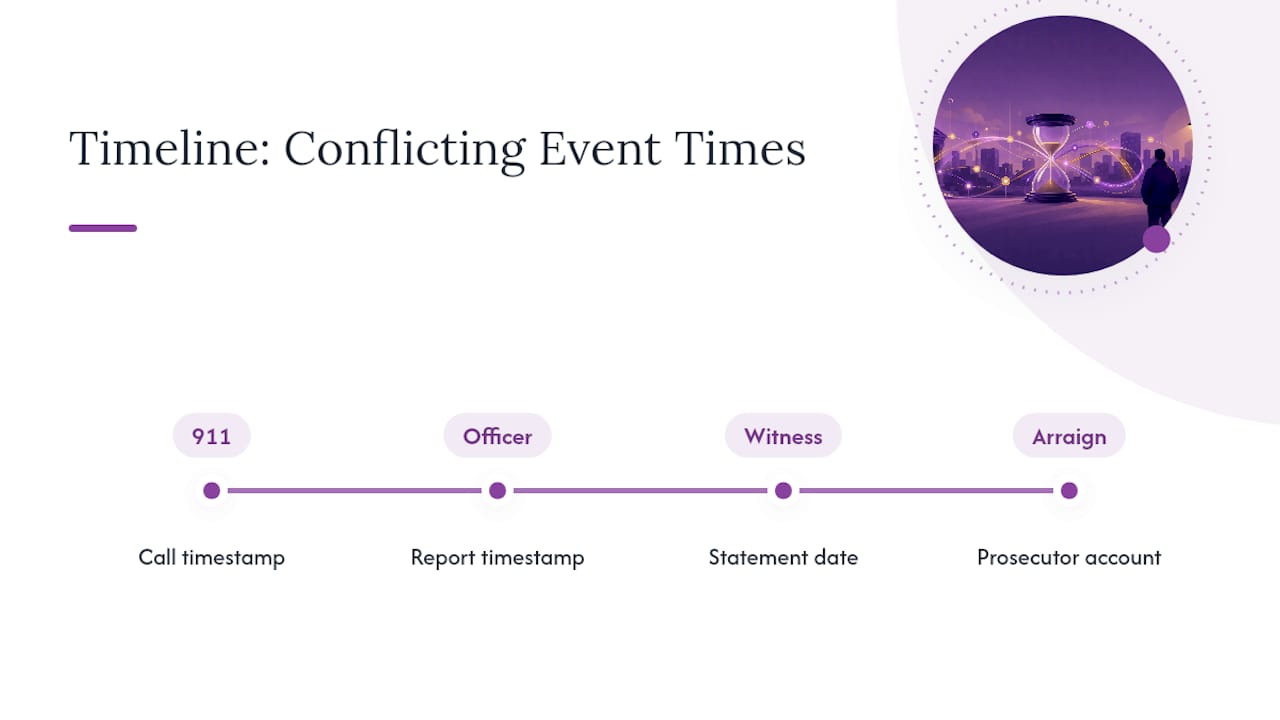
Effective challenges usually start with the timeline. Inconsistencies between a 911 call, the arresting officer's report, and any witness statements can undercut the "immediate danger" framing prosecutors use to justify broad terms. If the alleged incident involved no direct threat of violence, that distinction matters when arguing for peaceful-contact language instead of a full no-contact order.
Physical evidence, or its absence, carries weight too. A defense team can point to the lack of injury documentation, contradictory witness accounts, or evidence that the reporting party has a motive to exaggerate, such as an ongoing custody dispute. None of this proves innocence at the arraignment stage, but it doesn't need to. The standard for imposing a CPO is far lower than the standard for conviction, so even modest doubt about the facts can support a request for narrower terms.
Constitutional arguments come into play when the order itself sweeps too broad relative to the actual allegation, restricting contact with children who weren't involved, for instance, or barring you from your own residence without adequate justification. Raising these challenges early, before the order hardens into a routine part of the case file, gives a judge more room to modify it than waiting until months into the prosecution.
How a Protective Order Shapes Plea Talks and Trial Planning
A pending CPO changes the leverage on both sides of the negotiating table. Prosecutors often treat compliance with the order as a signal of how a defendant will behave going forward, and a clean record under the order can support arguments for reduced charges or diversion eligibility. A violation, even a minor one, can do the opposite: it hands the prosecution a talking point that makes leniency harder to justify.
Defense counsel has to weigh the order's terms when deciding whether to push for trial or negotiate a resolution. If the CPO has already caused serious disruption, lost housing, a strained custody arrangement, a job in jeopardy, that pressure can push a defendant toward accepting a plea just to end the uncertainty, even when the underlying case has real weaknesses. Recognizing that dynamic is part of the job: a good defense strategy accounts for the order's collateral damage, not just the criminal charge itself.
At trial, the existence of a CPO can also become an evidentiary issue. Prosecutors sometimes attempt to reference the order or a defendant's compliance with it as circumstantial evidence of guilt, which defense counsel can and should contest through pretrial motions. Separating the criminal charge from the protective order in the jury's mind is often as important as the substantive defense itself.
Temporary vs. Permanent CPOs in the Same Case
A single criminal case can carry more than one protective order, and the terms often shift as the case moves forward. The order issued at arraignment is typically temporary, meant to manage immediate safety concerns while the case is still pending. It stays in effect through pretrial hearings and can be modified, narrowed, or extended at subsequent court dates as new information comes in.
If the case ends in a conviction, the court can issue what's often called a post-conviction protective order. FindLaw's summary of PC 136.2 notes courts must consider a protective order in domestic-violence convictions and can extend it for up to ten years in specified cases. This is a meaningfully different order from the pretrial version: it's tied to sentencing, harder to modify, and lasts far longer than anything issued at arraignment.
The practical takeaway is that the order you're handed at your first court date isn't necessarily the order you'll live under for the life of the case. Terms set early can be challenged and narrowed as the defense builds its record, but they can also become more restrictive and longer lasting if the case results in conviction. That's part of why the plea negotiation stage carries so much weight: the deal you accept can directly determine whether you're facing a temporary restriction or a decade-long one.
Long-Term Fallout a CPO Can Leave Behind
The consequences of a criminal protective order don't necessarily end when the underlying case closes. A post-conviction order lasting up to ten years, as FindLaw's statutory summary describes, can continue to restrict where you live, whether you can attend family events, and whether you can legally own a firearm long after probation ends.
Firearm prohibitions tied to a CPO can also intersect with other statutes. Someone found in possession of a firearm while a protective order is active can face separate charges, an issue covered in detail on Rubin Law's page about firearm possession despite a restraining order under PC §29825. That overlap means a single lapse years into an order's term can generate an entirely new criminal case.
There are softer, harder to quantify effects too. A protective order on your record can surface in background checks for certain jobs, complicate custody modifications long after the criminal case is resolved, and affect eligibility for professional licenses in fields that screen for domestic-violence history. None of these are automatic, but they're common enough that defense strategy shouldn't stop at "get through arraignment." The terms negotiated early, and whether the case ends in dismissal, diversion, or conviction, shape what your life looks like five and ten years down the road.
Why Early Action Beats Damage Control
Most advice about protective orders focuses on what happens after a violation, how to fight the new charge, how to explain the misunderstanding. That's backwards. The leverage you have is greatest in the 24 to 48 hours before arraignment, before a judge has anchored on a set of terms and before the order becomes the default baseline for every hearing that follows.
The conventional wisdom, wait and see what the judge orders, then request changes later, undersells how much harder modification becomes once terms are already on the books. Judges are far more receptive to shaping an order before it exists than to unwinding one they've already signed. That's not a quirk of temperament; it's how the incentive structure works. A judge who narrows a request looks cautious. A judge who loosens a standing order looks like they're reversing themselves.
If there's one thing worth prioritizing, it's treating the pre-arraignment window as the real fight, not a formality before the "actual" case begins. Bring documentation. Push for specific, narrow language instead of general leniency. And recognize that a protective order isn't a side issue attached to your case, it's often the piece that determines how livable the next several months are going to be.
— Jake
Get Help Preparing for Your Arraignment Now
If you're facing a protective order tied to a criminal case in Los Angeles County, the window to shape its terms is short, and it closes fast once a judge signs the order at arraignment. Rubin Law, P.C. focuses on exactly this kind of time-sensitive preparation: gathering housing and custody documentation, drafting motions to narrow overbroad terms, and showing up in courtrooms where the attorneys already know the judges and prosecutors involved.
That local familiarity is the practical advantage over generic advice found online: instead of guessing what a specific courtroom will accept, Rubin Law's team has already argued in front of many of the same judges handling protective order requests across Los Angeles County. Whether your case involves domestic-violence allegations, a firearm-related charge, or another offense that triggered a CPO, the firm's Los Angeles County service area page outlines how to get a consultation started. If your case involves domestic-violence charges specifically, the domestic violence defense page covers what representation looks like from arraignment through resolution. Call to schedule a consultation before your next court date, not after.
Sources
- Guide to Protective Orders | California Courts | Self Help Guide
- California Penal Code Penal Code - Section 136.2 | Justia
- California Penal Code 136.2: Criminal Protective Orders - LegalClarity
- California Code, Penal Code - PEN § 136.2 | FindLaw