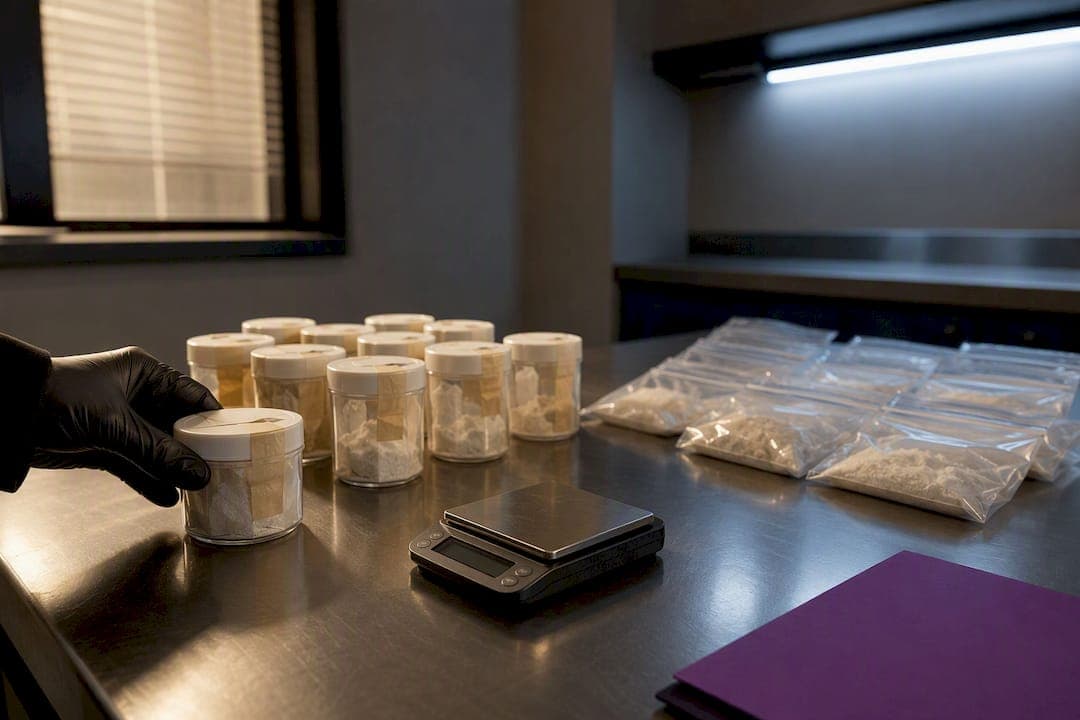
Possession means you had control of a drug; possession with intent to sell means prosecutors say you had control plus evidence suggesting you planned to distribute it. Simple possession usually stays a misdemeanor or low-level felony with limited jail exposure. Intent to sell is charged as a felony, carries far steeper penalties, and can trigger federal mandatory minimums. The whole case usually turns on circumstantial proof: how much you had, how it was packaged, and what your phone said.
TL;DR:
- Intent to sell charges are generally supported by large quantities, packaging in individual units, scales with residue, and multiple cell phones with coded messages, rather than by direct proof of a sale.
- Prosecutors often rely on rebuttable presumptions based on statutory thresholds, but courts analyze all circumstances collectively rather than pinning guilt on a single factor.
- Federal sentencing for trafficking averages over six years, while simple possession only carries about a year maximum, highlighting the substantial penalty gap.
- Collateral consequences for intent charges include asset forfeiture, deportation risk, and professional license issues, which do not typically apply for simple possession.
- Defendants should immediately preserve evidence, avoid answering police questions without legal counsel, and consider constitutional or evidentiary challenges to weaken intent cases.
Table of Contents
- Possession vs. Intent to Sell: The Legal Definitions That Matter
- How Do Prosecutors Prove Intent to Sell?
- What Are the Penalties for Possession vs. Intent to Sell?
- What Defenses Actually Work Against an Intent-to-Sell Charge?
- What Should You Do Immediately After a Drug Charge?
- How Rubin Law, P.C. Approaches Intent Cases
- The Real Takeaway on Possession vs. Intent to Sell
- Talk to Rubin Law, P.C. About Your Drug Charge
- Sources
- FAQ
Possession vs. Intent to Sell: The Legal Definitions That Matter
Prosecutors have to prove different things for each charge, and the gap between them is bigger than most people expect.
For simple possession, the state needs two elements: knowledge that the substance was a controlled drug, and control or dominion over it. That's it. No sale, no packaging, no plan required. For possession with intent to sell, the state has to prove that same possession plus a mental state: that you intended to distribute the drug rather than simply use it yourself.
Legal possession also splits into two categories that trip people up constantly:
- Actual possession means the drug was on your body or within immediate physical reach, like in your pocket or your hand.
- Constructive possession means you didn't have it on you, but you had knowledge of it and the ability to control it, such as drugs found in your car's glove compartment or a shared apartment closet.
Constructive possession is the doctrine prosecutors lean on hardest in shared-space and vehicle cases, since nobody has to catch you holding anything for the charge to stick. Ownership vs. intent to sell becomes a separate legal question once constructive possession is established. Just because you controlled something doesn't automatically mean the state can prove you meant to sell it.
How Do Prosecutors Prove Intent to Sell?
Does possession imply intent? Not on its own. Intent has to be built from circumstantial evidence, since defendants rarely admit to planning a sale and officers rarely witness one in progress.
Prosecutors typically assemble a case from a mix of the following:
- Quantity far exceeding what a typical user would keep on hand for personal use.
- Packaging into individual baggies, dosage units, or measured portions rather than one bulk container.
- Scales, especially digital ones with drug residue.
- Large amounts of cash, particularly in small denominations.
- Multiple cell phones or coded text messages referencing sales, weights, or prices.
- Absence of use paraphernalia like pipes or syringes, which can suggest the drugs weren't meant for personal consumption.
The Department of Justice's federal sentencing guidance confirms this is standard practice: prosecutors most often build intent cases on quantity, packaging, scales, cash, and communications rather than eyewitness sales.
Some states also set statutory threshold quantities that create a rebuttable presumption of intent to sell once a defendant crosses them. That shifts the practical burden onto the defense to explain the quantity, though it doesn't strip away the presumption of innocence at trial. No single item on this list automatically convicts anyone. Courts apply a totality-of-the-circumstances test, weighing everything together rather than treating one factor as decisive on its own.
What Are the Penalties for Possession vs. Intent to Sell?
The sentencing gap between these two charges is where the stakes become real, and it's often far wider than defendants expect going in.
At the state level, simple possession is frequently charged as a misdemeanor or a low-level felony, sometimes eligible for diversion or probation, especially for first-time offenders. Possession with intent to sell almost always gets charged at a higher felony class, with sentencing ranges that can run into years rather than months.
Federal cases sharpen that contrast even further. The U.S. Sentencing Commission reports that the average federal trafficking sentence runs 82 months, while a first-offense simple possession conviction may carry a maximum of about one year. That's roughly seven times the exposure, driven almost entirely by the intent element and the quantity thresholds that trigger federal mandatory minimums. The DEA's Controlled Substances Act materials lay out the scheduling and threshold framework federal prosecutors rely on when deciding which tier applies.
Beyond prison time, an intent-to-sell conviction usually brings collateral consequences that a possession charge doesn't:
- Asset forfeiture of cash, vehicles, or property tied to the alleged distribution.
- Immigration consequences for non-citizens, up to and including deportation.
- Professional licensing problems in fields that run background checks.
What Defenses Actually Work Against an Intent-to-Sell Charge?
Fighting an intent charge means attacking either the possession element or the inference of intent, and often both at once.
On possession, the strongest angle is usually disputing knowledge or control, particularly in constructive possession cases involving a shared car, apartment, or storage unit. If three people had access to that glove compartment, the state has to prove you knew what was in it, not just that you were nearby.
On intent, the defense strategy is contextualization. Cash can come from a paycheck. Scales can weigh food. Multiple phones can belong to a small business owner. A large quantity can reflect a documented substance use disorder rather than a distribution plan, and expert testimony on usage patterns sometimes reframes what looks damning to police as ordinary personal consumption.
Other angles worth raising early:
- Fourth Amendment challenges to an illegal search or seizure that led to the evidence being found at all.
- Chain-of-custody attacks, questioning whether the substance tested in a lab is actually what was seized. A clear understanding of chain-of-custody standards helps identify gaps in how evidence moved between the scene, the lab, and the courtroom.
- Informant reliability attacks, when a case is built on a confidential source's tip rather than direct observation.
Pro Tip: Save every receipt tied to cash on hand at the time of arrest, whether it's from a paycheck, a settlement, or a cash sale of personal property. That paper trail is often the fastest way to undercut a prosecutor's "cash equals dealing" narrative.
When the evidence against intent is genuinely thin, diversion or a reduction to simple possession becomes realistic, particularly for defendants with no prior record and a documented substance use history.
What Should You Do Immediately After a Drug Charge?
The first 48 hours after an arrest shape the rest of the case more than most people realize.
- Get a lawyer before answering any substantive questions. Anything said to police before counsel is retained gets used to build the intent narrative.
- Preserve evidence on your own side. Back up your phone, write down witness names while memory is fresh, and request any nearby surveillance footage before it's overwritten.
- Hold onto records that explain cash or purchases, rather than getting rid of anything that could look suspicious.
- Ask about diversion eligibility immediately, since many programs have strict filing windows that close fast after arraignment.
How Rubin Law, P.C. Approaches Intent Cases
Rubin Law, P.C. starts by separating quantity from consumption pattern, since that distinction usually decides whether an expert witness on substance use is worth retaining. The firm regularly raises constitutional challenges around search and seizure and pushes on chain-of-custody gaps when lab testing or evidence handling looks inconsistent. In shared-space and vehicle cases, the defense often centers on competing claims to control among multiple occupants. The priority across these cases is suppression first, then diversion or a reduction, in that order.
The Real Takeaway on Possession vs. Intent to Sell
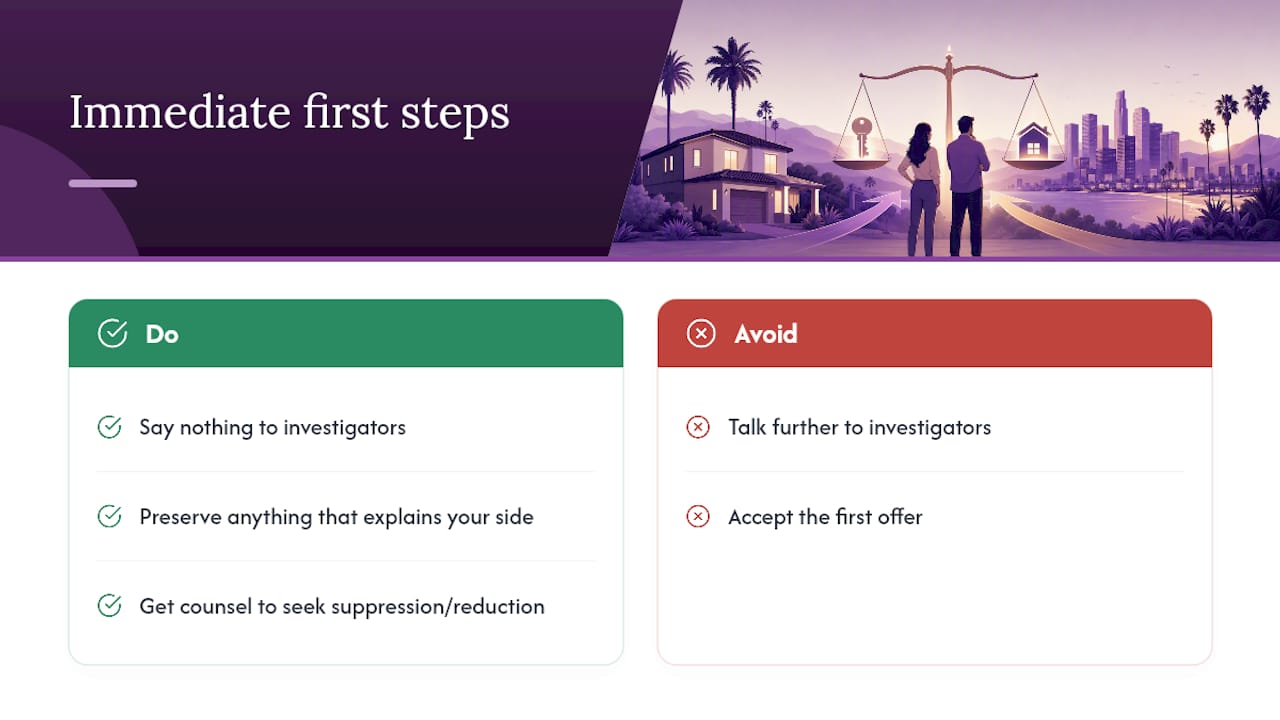
The distinction between possession and intent to sell isn't academic. It's the difference between a case that resolves quietly and one that follows you for a decade through sentencing, forfeiture, and immigration consequences. Most people charged with intent didn't sell anything to anyone; they got charged because a scale, a text message, or a quantity looked bad out of context.
If you're facing either charge, do two things immediately: say nothing further to investigators, and start preserving anything that explains your side, before it disappears. This approach is built around exactly this kind of case, with a record of pushing for suppression and reduction rather than accepting the first offer on the table.
— Jake
Talk to Rubin Law, P.C. About Your Drug Charge
Legal representation can be the alternative to waiting and hoping the case sorts itself out. For someone facing a possession or intent-to-sell charge, an effective defense often involves frequent courtroom presence and a working knowledge of how local prosecutors and judges handle these evidentiary fights, not just how the statute reads on paper.

Effective defense often involves suppression motions, diversion negotiation, and courtroom advocacy tailored to whether the case involves simple possession or a full intent charge. Before a consultation, gather charging documents, any receipts explaining cash or purchases, and a timeline of the arrest as remembered. Early assessment of whether a Fourth Amendment challenge or a diversion path is realistic can be critical before the state locks in its position. If you've been charged under California's drug possession statutes or a possession-for-sale allegation, visit the Los Angeles drug crimes defense page to schedule a case review and get a strategy specific to your charge.
This article is general information, not a substitute for advice from a qualified lawyer. Consult a qualified legal professional about your own circumstances before acting on anything here.
Sources
- United States Sentencing Commission — Quick Facts: Drug Trafficking
- Cornell Law School — WEX: Constructive possession
- Drug Enforcement Administration — Controlled Substances Act information
FAQ
What Are the Three Types of Possession?
Courts generally recognize actual possession (physical custody), constructive possession (knowledge plus the ability to control, without physical custody), and joint possession (shared control among multiple people over the same item).
Does Possession Automatically Imply Intent to Sell?
No. Possession only proves control and knowledge; intent to sell requires separate circumstantial evidence like quantity, packaging, scales, or communications suggesting distribution.
What Percentage of Drug Dealers Go to Jail?
There's no single national figure, since outcomes vary heavily by jurisdiction, quantity, and prior record, but federal trafficking convictions average 82 months in prison, according to the U.S. Sentencing Commission, while first-offense simple possession tops out around one year.
What Happens to a Dealer's Money When They're Caught?
Cash and assets connected to alleged drug sales are frequently subject to forfeiture proceedings, which run separately from the criminal case and can result in permanent loss of the property even without a conviction.
Can a Possession Charge Get Reduced From Intent to Sell?
Yes, particularly when the quantity is consistent with personal use, no packaging or sales paraphernalia was found, and there's no prior record. A documented drug diversion pathway can also apply once intent evidence is successfully challenged.