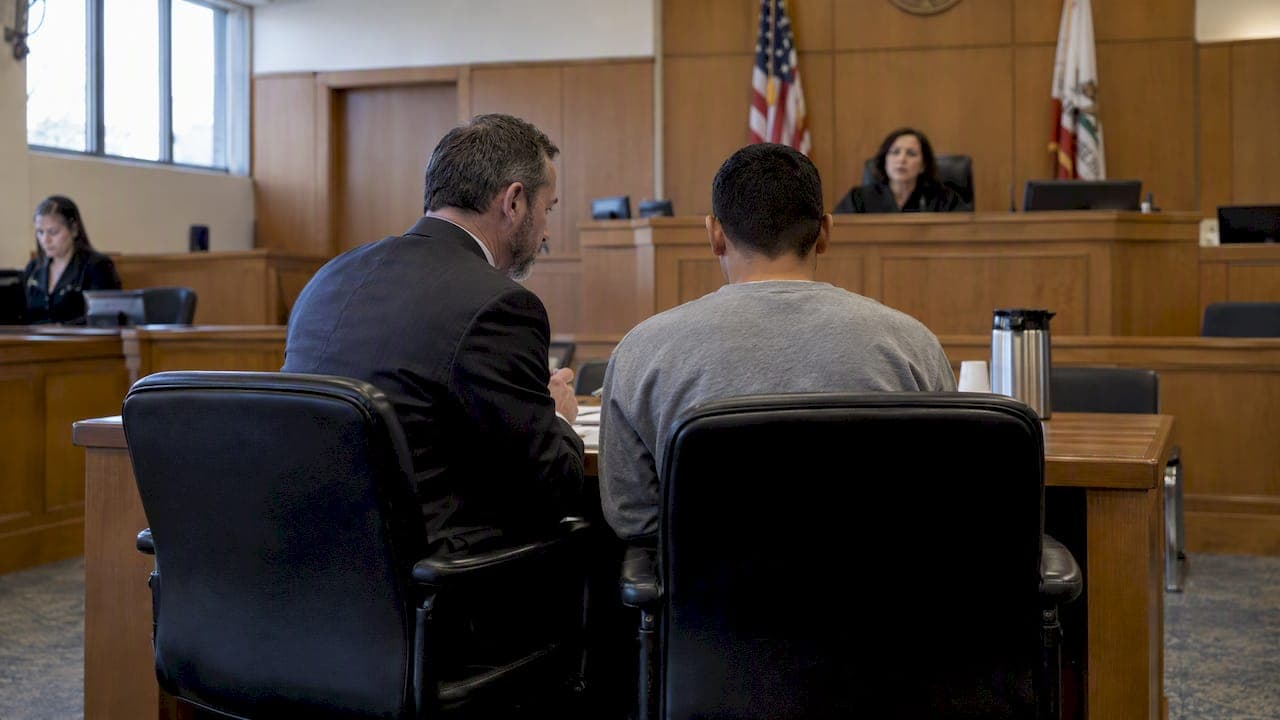
California treats carjacking as a serious violent felony under Penal Code §215, carrying a base state prison term of 3, 5, or 9 years. Firearm and weapon enhancements can add years or decades on top of that range, and prior serious or violent felony convictions can push a case into Three Strikes territory. Anyone facing this charge should treat it as a strike-level matter and get defense counsel involved immediately.
TL;DR:
- Firearm enhancements can add 10 to 25 years to life on top of the base prison term for carjacking, drastically increasing the potential sentence.
- Proving each element beyond a reasonable doubt is crucial, especially regarding immediate presence and use of force or fear, which are often contested in defenses.
- Combined charges such as robbery or vehicle theft may increase total exposure, but prosecutors cannot punish the same act under multiple statutes if they are duplicative.
- Defendants can challenge force, presence, or intent to weaken the case, and early legal strategies heavily influence potential plea deals or case dismissals.
- Prior serious or violent convictions can trigger additional enhancements or life sentences under California's Three Strikes law, making early review of priors vital.
Table of Contents
- What counts as carjacking under Penal Code §215
- Penalties and sentencing details: base terms, enhancements, and priors
- When prosecutors add robbery, vehicle theft, or other charges
- Common defenses and mitigation strategies
- What happens after an arrest: hearings, pleas, and timeline
- A practitioner's priorities for early carjacking defense
- How Rubin Law can help if you are facing carjacking charges
- Sources
- FAQ
What counts as carjacking under Penal Code §215
Carjacking is defined narrowly, and every element matters to how a case gets defended. The prosecution has to prove each piece beyond a reasonable doubt, and the fight over these elements is usually where cases are won or lost, not in a dispute over whether a car changed hands.
- Taking a vehicle: the defendant took a motor vehicle not belonging to them.
- From a person or immediate presence: the vehicle was taken from the possession of another person or from their immediate presence, meaning it was close enough that the victim could have retained control absent the force or fear used.
- Against the victim's will: the taking happened without the person's consent.
- Force or fear: the defendant used force or fear to accomplish the taking or to prevent the victim from resisting.
- Intent to permanently or temporarily deprive: the defendant intended to keep the vehicle away from the owner, even briefly.
Passengers count as victims too. Someone riding in the car who is forced out, or who is present when force or fear is used against the driver, can support a separate carjacking count. Because the statute hinges on immediate presence and the use of force or fear rather than simply "the car was stolen," defense attorneys spend much of their early case review testing whether the facts actually support each of these elements, not just the outcome.
Penalties and sentencing details: base terms, enhancements, and priors
The starting point for any carjacking sentence is Penal Code §215(b), which sets a prison term of 3, 5, or 9 years. The statute's subdivision (b) does not itself specify a fine, so financial penalties and restitution orders typically come from separate provisions and case-specific restitution calculations rather than from §215 directly.
Firearm and weapon enhancements can dwarf the base sentence:
- Under Penal Code §12022.53, a defendant who personally uses a firearm during a carjacking, or who discharges one, or who causes great bodily injury or death by discharging one, faces additional consecutive terms of 10, 20, or 25 years to life, depending on which theory applies. Only the single longest applicable enhancement is imposed per person, so identifying the correct theory matters enormously.
- Penal Code §12022 firearm enhancement analysis covers how being armed with, rather than personally using, a deadly weapon during a carjacking can add separate incremental time, generally in the range of one to three years, depending on the specific allegation and weapon involved.
Prior convictions change the math further. Penal Code §1170.12, California's Three Strikes law, along with Penal Code §667, allows five-year enhancements for each qualifying prior serious felony and can require indeterminate life sentencing when a defendant has multiple qualifying strikes pled and proved.
A single §12022.53 firearm allegation can add 10, 20, or 25 years to life on top of the base carjacking term, which is why enhancement litigation is often the single biggest lever in reducing exposure, according to the statutory structure of Penal Code §12022.53.

Beyond the prison term itself, a carjacking conviction typically comes with parole or postrelease community supervision after release, victim restitution orders, and custody credit calculations that depend on the specific offense and any applicable limits on credit-earning for violent felonies.
When prosecutors add robbery, vehicle theft, or other charges
Carjacking rarely stands alone in a charging document. Prosecutors frequently consider related counts depending on how the facts unfold, and understanding the overlap helps explain why total exposure in a single case can look much higher than the base 3, 5, or 9 years.
- Unauthorized vehicle taking (Vehicle Code §10851): Vehicle Code §10851 criminalizes taking or driving a vehicle without consent, but it does not require force, fear, or immediate presence. Prosecutors may turn to this charge, which carries a different and often lower penalty structure, when those elements are weak or absent.
- Companion counts: kidnapping, assault, and separate weapons charges often ride alongside a carjacking count when the facts support them, and each adds its own sentencing exposure that stacks onto the aggregate.
Common defenses and mitigation strategies
Defending a carjacking charge usually starts with the elements, then moves to the procedure that produced the evidence. Because the potential sentence is so steep, early and aggressive case review tends to matter more here than in lower-level offenses.
- Challenge force or fear. If the vehicle changed hands through consent or a misunderstanding rather than coercion, the core element of the crime is missing.
- Attack immediate presence. When the vehicle was not close enough to the victim's control at the time of the taking, the case may reduce to a vehicle theft rather than a carjacking.
- Dispute intent. Carjacking requires intent to deprive the owner of the vehicle, and confusion, mistaken identity, or a claim of right can undercut that intent.
- Raise procedural defects. Illegal stops, flawed identification procedures, or improperly pled enhancement and prior allegations can lead to suppressed evidence or dismissed enhancements.
- Pursue negotiated resolutions. Where the facts are contested but not favorable enough for trial, counsel may negotiate withdrawal of an enhancement allegation or, in limited circumstances, pursue diversion.
Pro Tip: Litigating a firearm or prior-conviction allegation separately from the underlying carjacking count can cut years off a sentence even when the base charge is not in serious dispute.
What happens after an arrest: hearings, pleas, and timeline
A carjacking case moves through a fairly predictable sequence, though the timeline stretches out for violent felonies compared to lesser offenses.
- Booking and arraignment happen first, where formal charges are read and bail is addressed.
- Bail is often set higher for carjacking than for non-violent offenses given its classification as a violent felony, and judges weigh flight risk and public safety heavily.
- Preliminary hearing or grand jury indictment follows, where a judge decides if there is enough evidence to proceed to trial.
- Pretrial motions, including suppression motions and challenges to enhancement pleadings, often shape the rest of the case.
- Diversion is rare for violent felonies like carjacking, though pre-file intervention before formal charges are even filed remains an option worth exploring.
- Sentencing, if a conviction results, folds in probation reports, victim impact statements, and formal findings on any enhancement or prior allegations.
A practitioner's priorities for early carjacking defense
The first weeks after a carjacking arrest often decide how much leverage the defense has later. Early review of the charging document, prompt discovery requests, and constitutional suppression motions where a stop or search looks questionable can reshape a case before it ever reaches trial. Enhancement and prior allegations deserve the same scrutiny as the underlying count, since a weak firearm or prior-conviction allegation is often more vulnerable than the carjacking charge itself. Frequent courtroom presence and familiarity with how local judges and prosecutors evaluate these cases shape what a realistic plea offer looks like, and that groundwork usually pays off long before a jury is ever seated.
— Jake
How Rubin Law can help if you are facing carjacking charges
A criminal defense law firm represents clients facing violent felony charges, including carjacking, robbery, and related weapons and prior-conviction allegations. The approach centers on frequent courtroom appearances, direct attorney attention, and constitutional challenges aimed at reducing or dismissing charges before they escalate.

If you have been arrested or are under investigation for carjacking, avoid discussing the incident with police, preserve any evidence that supports your version of events, and ask for counsel before answering questions. Rubin Law's criminal defense practice covers:
- Violent felony and carjacking defense, including enhancement litigation
- Prior-record and strike-allegation review
- Prefile intervention before formal charges are filed
Reach out for a consultation to review your charges and discuss next steps.
FAQ
What is the penalty for carjacking in California?
Carjacking under Penal Code §215 carries a base state prison sentence of 3, 5, or 9 years. Firearm enhancements under Penal Code §12022.53 or prior-conviction enhancements under the Three Strikes law can add substantial additional time on top of that base term.
Is carjacking a federal crime?
Carjacking is primarily prosecuted under California state law through Penal Code §215, though certain circumstances can bring a case into federal court depending on jurisdictional factors. Federal sentencing guideline references exist for cases charged federally, but the state statute remains the primary source for most California carjacking prosecutions.
How much theft is a felony in California in 2026?
Carjacking itself is always charged as a felony under Penal Code §215 regardless of the vehicle's value, since the statute focuses on force, fear, and immediate presence rather than a dollar threshold. Separate vehicle theft charges under Vehicle Code §10851 can be charged as either a misdemeanor or felony depending on the circumstances and the defendant's record.
How does a prior conviction affect carjacking sentencing?
A qualifying prior serious or violent felony can trigger a five-year enhancement under Penal Code §667, and under the Three Strikes law in Penal Code §1170.12, multiple qualifying priors can lead to an indeterminate life sentence. The prosecution must plead and prove each prior, which gives defense counsel a distinct opportunity to challenge the allegation.
Can a carjacking charge be reduced to vehicle theft?
Yes, when the facts do not clearly support force, fear, or immediate presence, a case can sometimes resolve under Vehicle Code §10851 instead of Penal Code §215. This distinction matters because §10851 carries a different and often less severe penalty structure than carjacking.