
If you or someone you care about is sitting in a California jail, here is the short answer: you can ask for release on your own recognizance (OR) right now, at booking or at arraignment, and California Penal Code §1270 actually entitles misdemeanor defendants to OR unless the court finds, on the record and by clear and convincing evidence, that release would compromise public safety or not reasonably assure your appearance. The California Supreme Court's ruling in In re Humphrey added a second layer: judges cannot set bail so high that it functions as detention unless they have first considered nonfinancial conditions and your ability to pay.
Take these steps immediately:
- Call a criminal defense attorney before your arraignment, even if it means calling from jail. Counsel can contact the court, gather documentation, and argue OR on your behalf before the judge rules.
- Tell jail staff you are requesting OR release at intake. This preserves the request on the record and may trigger a pretrial services interview.
- Gather proof of community ties: a lease, pay stubs, utility bills, family contact information, or enrollment in a treatment program.
- Ask for a pretrial services interview if the county offers one. A favorable risk-assessment report can shift a judge's decision.
Key Takeaways
Under California Penal Code §1270 and the In re Humphrey framework, misdemeanor defendants are entitled to OR release unless the court makes specific on-the-record findings, and even felony defendants must have nonfinancial conditions considered before unaffordable bail is set.
| Point | Details |
|---|---|
| PC §1270 entitlement | Misdemeanor defendants are entitled to OR unless the court finds, by clear and convincing evidence, that release compromises public safety or appearance. |
| Humphrey limits on bail | Courts must consider nonfinancial conditions and ability to pay before setting bail that functions as detention. |
| Immediate steps | Call an attorney, request OR at booking, gather proof of community ties, and ask for a pretrial services interview. |
| OR conditions are enforceable | Violating OR terms, including failure to appear, can result in a bench warrant and new criminal charges under PC §1320. |
| Rubin Law, P.C. | The firm handles OR requests and bail hearings across Los Angeles County, with courtroom experience that matters most in the 48 hours before arraignment. |
Table of Contents
- What is an own recognizance release in California?
- Who can grant OR and when does the decision happen?
- How judges evaluate OR requests: the factors that actually move decisions
- How to request OR at arraignment, step by step
- What conditions come with OR release?
- What happens if you violate your OR terms?
- Why In re Humphrey and pretrial services data matter now
- How long does OR release actually take?
- A practitioner's perspective on what actually works at arraignment
- Rubin Law, P.C. can help you prepare before arraignment
- Sources
What is an own recognizance release in California?
An OR release is a promise. You sign a written agreement under Penal Code §1318 committing to appear at every scheduled court date and to comply with any conditions the court attaches. No money changes hands. No bail bondsman. You walk out on your word, backed by the threat of criminal penalties if you break it.
That is the key practical difference from cash bail. With cash bail, you or a bondsman posts a set dollar amount as a financial guarantee. With OR, the guarantee is legal, not financial. You still face serious consequences for noncompliance, but you are not required to come up with money you may not have.
OR vs. cash bail at a glance:
| Factor | OR Release | Cash Bail |
|---|---|---|
| Upfront cost | None | Full amount or bondsman's fee |
| Financial risk | None at release | Forfeiture if you fail to appear |
| Conditions attached | Yes, court-ordered | Yes, plus financial obligation |
| Who decides | Judge or magistrate | Judge sets amount; bondsman decides to write bond |
| Most common for | Misdemeanors, lower-risk defendants | Felonies, higher-risk defendants |
OR is most likely for first-time misdemeanor defendants with stable housing, employment, and no history of missing court dates. For serious felonies, violent charges, or defendants with prior failures to appear, money bail or detention becomes more likely, though Humphrey still requires the court to work through nonfinancial options first.
Who can grant OR and when does the decision happen?
Three separate decision points exist, and knowing which one applies to your situation tells you where to direct your request.
Cite-and-release at the scene or station. For minor misdemeanors, a patrol officer or booking officer can issue a citation and release you on the spot. You sign a promise to appear, and you go home the same day. No bail, no booking into county jail.

Jail intake. If you are booked into county jail, a supervising officer can authorize OR release before arraignment for lower-level offenses. This is where telling intake staff you are requesting OR matters. Some counties run pretrial services interviews at this stage, and a favorable report can result in release within 24 hours.
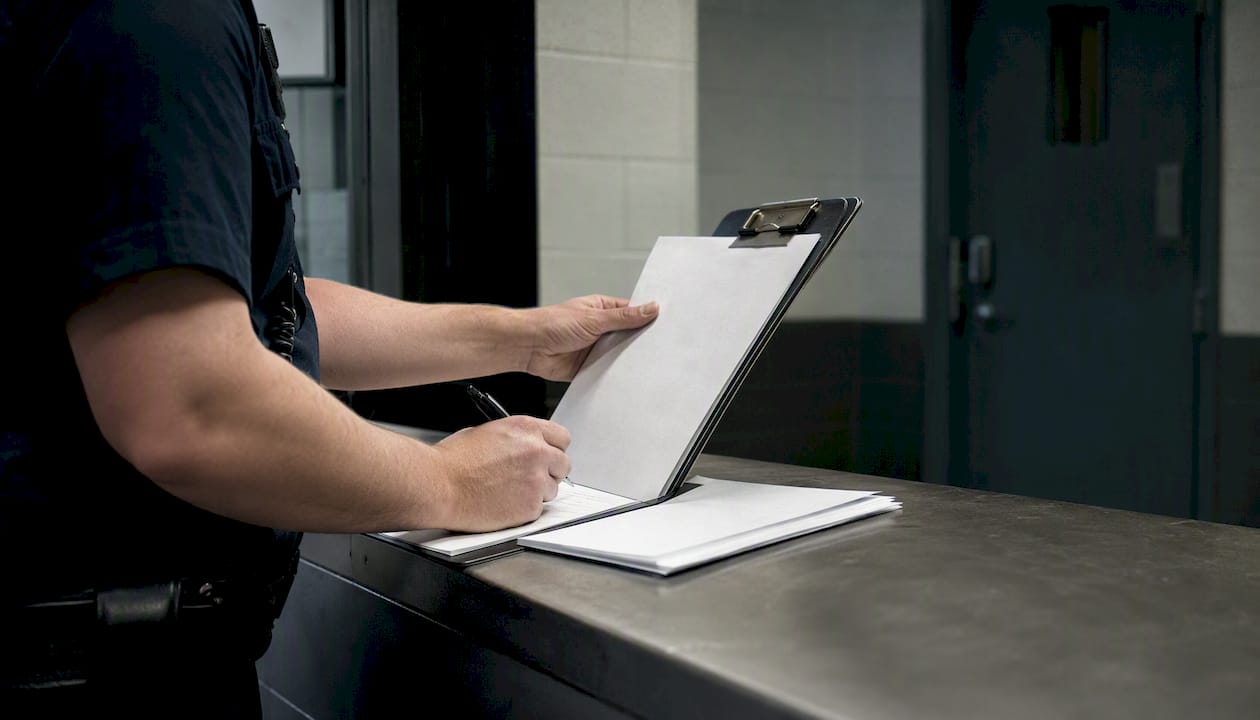
Arraignment. This is the main event for most defendants. A judge or magistrate reviews the charges, hears arguments from the prosecutor and your attorney, and decides whether to release you on OR, set bail, or order detention. For misdemeanors, the court must grant OR unless it makes specific findings on the record. For felonies, the judge has broader discretion, though Humphrey still constrains how that discretion is exercised.
At booking, say clearly: "I am requesting release on my own recognizance." Ask whether a pretrial services officer is available to interview you. These two steps cost nothing and can materially change what happens at arraignment.
How judges evaluate OR requests: the factors that actually move decisions
Public safety is the primary consideration under Penal Code §1270, and judges are required to put their findings on the record. That means the decision is not a gut call. It follows a framework, and you can prepare for it.
Judges weigh these factors:
- Seriousness of the charge. A petty theft misdemeanor and an armed robbery felony are evaluated very differently. Violent charges, sex offenses, and crimes involving weapons all push toward higher bail or detention.
- Criminal record. Prior convictions, especially for similar offenses, reduce OR odds. Defendants on probation or parole face additional restrictions under Penal Code §1319.5.
- History of court appearances. A prior failure to appear is one of the most damaging facts a prosecutor can raise. A clean appearance record is one of the most helpful.
- Ties to the community. Long-term residence, stable employment, family in the area, and local roots all reduce perceived flight risk.
- Victim vulnerability. Domestic violence cases, elder abuse, and crimes against children trigger heightened scrutiny because of the risk of reoffending against the same victim.
- Flight risk. Lack of identification, recent travel out of state, or ties to another country can weigh against OR.
Consider two scenarios. A defendant charged with shoplifting, who has lived in the same apartment for four years, holds steady employment, and has never missed a court date, is a strong OR candidate. A defendant charged with felony assault on a domestic partner, with two prior failures to appear and a victim who still lives nearby, faces a much harder argument. The factors compound.
Humphrey changed one critical piece of this calculus. Before that ruling, courts routinely set bail at schedule amounts that many defendants simply could not pay, which meant they sat in jail not because a judge found them dangerous but because they were poor. Now, courts must first consider whether nonfinancial conditions can adequately protect public safety and assure appearance. To detain someone, the court must find by clear and convincing evidence that no less-restrictive alternative works. Judicial Council form CR-104 provides the checkboxes and findings fields judges use to document exactly that analysis.
How to request OR at arraignment, step by step
The arraignment moves fast. Preparation done the night before, or the morning of, is what separates a defendant who walks out from one who stays in.
- Contact a defense attorney before arraignment. Counsel can appear with you, argue OR on the record, and anticipate the prosecutor's objections. An attorney who knows the local judge's tendencies is worth considerably more than a generic argument.
- Request a pretrial services interview at booking. Many California counties have pretrial services officers who conduct risk assessments before arraignment. A favorable report lands in front of the judge before you say a word.
- Gather and organize documentation. Bring or have someone bring: a current photo ID, proof of California residence (lease, utility bill, bank statement), recent pay stubs or an employer letter, contact information for family members who can vouch for you, and any documentation of enrollment in a treatment, counseling, or diversion program.
- At arraignment, your attorney makes the OR argument. The core points: clean or limited record, strong community ties, no flight risk, willingness to accept conditions, and the Humphrey framework requiring the court to consider nonfinancial conditions before setting unaffordable bail.
- If the judge sets bail you cannot afford, request a formal bail hearing under PC §1270.2. This is a separate, more detailed hearing where your attorney can present additional evidence, call witnesses, and argue that the bail amount functions as detention under Humphrey.
- Ask the court to consider pretrial services monitoring as a condition. Offering to accept GPS monitoring or regular check-ins can tip a close decision toward OR rather than bail.
For bail hearings in California, the procedural rules and what judges expect differ by county. Los Angeles courts move quickly, and a prepared attorney makes a measurable difference.
Pro Tip: Submit your documentation to pretrial services before the arraignment begins, not during it. Judges are more receptive to a pretrial services report that is already in the file than to documents handed up cold at the podium.
What conditions come with OR release?
OR is not unconditional freedom. Courts attach requirements, and violating any one of them can land you back in custody immediately.
Routine conditions include:
- Appear at all scheduled court hearings without exception
- Remain within California or within a defined geographic area
- Surrender your passport if international travel is a concern
- No contact with named victims or witnesses
- No possession or use of alcohol or controlled substances (common in DUI and drug cases)
- Firearm surrender under PC §29810 if the charge involves a weapon or domestic violence
- Enrollment in or continuation of a substance-abuse or mental-health treatment program
For defendants who present a moderate risk but still qualify for nonfinancial release, courts can impose a Supervised Own Recognizance Program (SORP). As Santa Clara County Pretrial Services describes it, OR is not a blank check. SORP conditions typically include GPS electronic monitoring, scheduled check-ins with a pretrial officer (weekly or more frequent), and mandated participation in counseling or treatment. Some counties charge a nominal monitoring fee; others absorb the cost.
If your case involves mental health factors, PC §1001.36 mental health diversion may be an option worth raising at arraignment, since enrollment in a diversion program can support an OR argument and potentially resolve the case without a conviction.
What happens if you violate your OR terms?
Violating OR is not a technicality. The consequences are immediate and serious.
Failure to appear is the most common violation. Under PC §1320, willfully failing to appear while on OR is itself a criminal offense, charged as a misdemeanor if the underlying case is a misdemeanor and as a felony if the underlying case is a felony. The court issues a bench warrant the same day. If you signed the PC §1318 OR agreement, that document may include an extradition waiver, meaning California can seek your return from another state without a separate extradition hearing.
Condition violations other than failure to appear, such as contacting a protected victim or testing positive for drugs, can trigger a revocation hearing. The prosecutor files a motion, the court holds a hearing, and if the violation is established, the judge can revoke OR and set bail or order detention. The standard at a revocation hearing is lower than at trial, so documented violations are hard to fight without counsel.
If a bench warrant has already issued, the right move is to call an attorney immediately, stay within California, and arrange a voluntary surrender through counsel. Judges treat a voluntary surrender significantly more favorably than an arrest on a warrant. Trying to wait it out rarely ends well.
Why In re Humphrey and pretrial services data matter now
The California Supreme Court's In re Humphrey decision reshaped how OR decisions are made across the state. The core holding is direct: courts cannot use unaffordable bail as the functional equivalent of detention. Before setting money bail that a defendant cannot pay, a judge must first consider whether nonfinancial conditions, including supervised OR, can adequately protect public safety and assure appearance. To order detention outright, the court must find by clear and convincing evidence that no less-restrictive alternative works.
"The common practice of conditioning freedom solely on whether an arrestee can afford bail is inconsistent with the fundamental principle that liberty is the norm and detention prior to trial is the carefully limited exception." — In re Humphrey, California Supreme Court
The Harvard Law Review's analysis of Humphrey situates the ruling within broader research showing that pretrial detention harms case outcomes and destabilizes employment, housing, and family relationships, which is part of why California has invested in expanding pretrial services programs statewide.
The numbers from the Judicial Council's Pretrial Services Program Year 4 report show how that shift looks in practice:
Cite-and-release is by far the most common pathway, which reflects how many low-level cases are resolved before arraignment. OR and monitored releases together account for nearly 30,000 defendants who were released without posting money bail. Pretrial risk assessments, where a trained officer interviews the defendant and produces a scored report, are increasingly available to judges before arraignment and have been shown to increase OR and monitored-release rates when programs include supportive services.
Pro Tip: If your county has a pretrial services program, ask your attorney to request that a pretrial services report be prepared and submitted before the arraignment. A favorable score in that report gives the judge a documented, independent basis for granting OR.
How long does OR release actually take?
The timeline depends heavily on the charge and the county.
- Same day (cite-and-release): For minor misdemeanors, an officer can issue a citation at the scene or at the station. You sign, you leave. No booking, no waiting.
- Within 24–72 hours (jail intake OR): If you are booked into county jail, a supervising officer or pretrial services staff can authorize OR before arraignment for qualifying offenses. Los Angeles County, for example, processes many low-level defendants within this window.
- At arraignment (1–3 days after arrest): California law generally requires arraignment within 48 hours of arrest for felonies (excluding weekends and holidays). Misdemeanor arraignments can be scheduled further out. This is when most OR decisions are made by a judge.
- Longer delays: Serious felony charges, holds from other jurisdictions, pending warrants, or no valid identification can extend detention significantly. A defendant with an outstanding warrant from another county will not be released until that hold is resolved.
To shorten the wait: have your attorney contact the court and pretrial services as early as possible, submit documentation before the arraignment date, and make sure there are no outstanding warrants in any California county. A quick warrant check by counsel before arraignment can prevent a surprise hold from derailing an otherwise strong OR argument.
A practitioner's perspective on what actually works at arraignment
The gap between knowing the law and winning at arraignment is almost always preparation. Judges in Los Angeles County see dozens of OR requests every morning. What stands out is not a recitation of Humphrey but a defendant whose attorney walks in with a pretrial services report, a letter from an employer, and a clear statement of conditions the defendant will accept.
Prosecutors push back hardest on two things: prior failures to appear and victim safety. If your record has a prior FTA, address it directly. Explain what happened, show it was an isolated event, and offer enhanced conditions like check-ins or electronic monitoring to offset the concern. If the charge involves a victim, a no-contact order as a condition of OR often neutralizes the prosecutor's public-safety argument.
What surprises judges is when a defense attorney shows up without documentation. The OR hearing is not the place to say "my client has a job" without a letter to back it. Judges have been burned by unverified claims, and they remember. Bring paper.
Rubin Law, P.C. can help you prepare before arraignment
Arraignment timelines in Los Angeles are tight. You often have less than 48 hours between arrest and your first court appearance, which is exactly the window where having experienced criminal defense representation in Los Angeles County makes the most difference.
Rubin Law, P.C. handles OR requests, bail hearings, and pretrial strategy for clients across Los Angeles County. The firm's attorneys appear regularly in local courtrooms, know the prosecutors and judicial officers by practice, and can contact pretrial services, gather documentation, and build your OR argument before you ever stand before a judge. When you call, have your booking number, the charges as you understand them, and any release paperwork ready. The first consultation focuses on your arraignment date, your charges, and what documentation can be assembled in time. For clients facing domestic violence charges or other serious allegations where victim-safety arguments are likely, early counsel is not optional. Reach Rubin Law, P.C. at rubinlawpc.com to schedule a consultation now.
Sources
- California Code, PEN 1270.
- IN THE SUPREME COURT OF CALIFORNIA
- Criminal Law: Findings and Orders for Pretrial Release or Detention | Judicial Branch of California
- Santa Clara County Pretrial Services — Pretrial investigations and releases
This article provides general legal information about California pretrial release procedures and is not a substitute for advice from a licensed attorney about your specific case. Confirm current rules and procedures with a qualified criminal defense attorney or the relevant court.