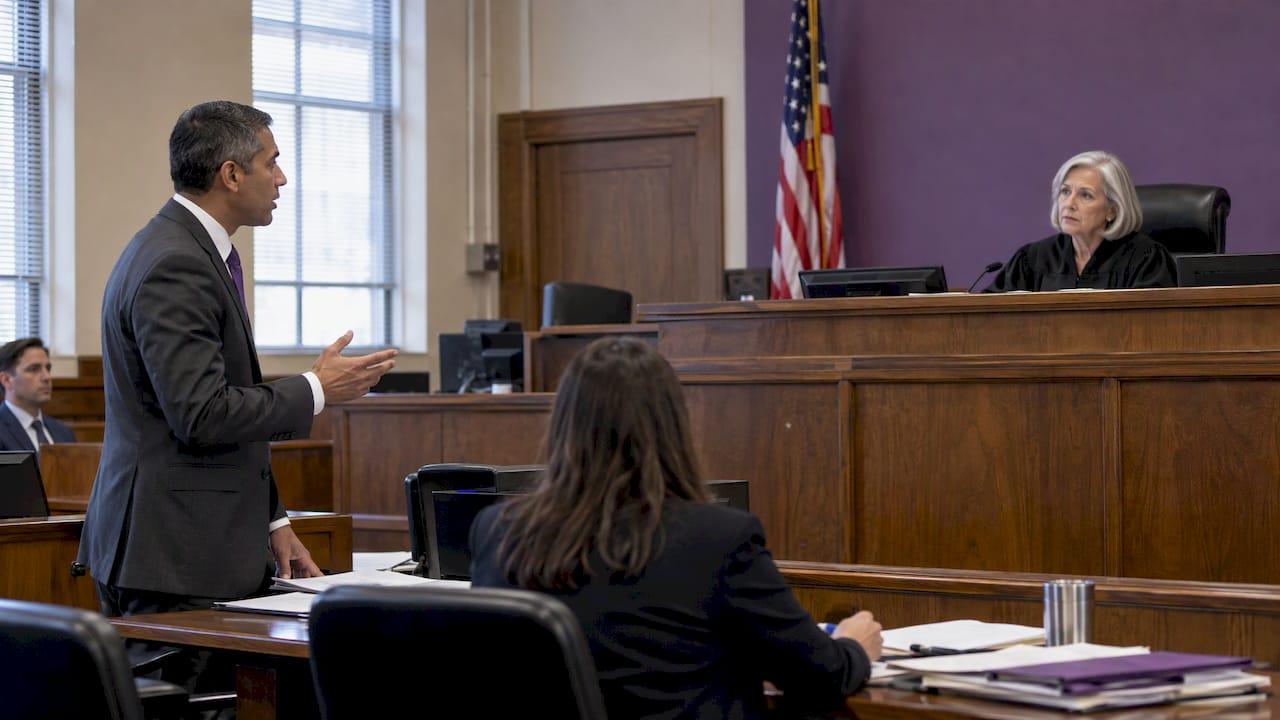
In California, "heat of passion" is a legal doctrine that can reduce an intentional killing from murder to voluntary manslaughter. It applies when the person was provoked, acted rashly under intense emotion, and the provocation was enough to push an ordinary person of average disposition to act without careful thought. It is not a full defense. A person who succeeds with it is still convicted of a homicide offense, but one that carries a much lower sentence.
This guide explains the elements, how courts judge provocation and cooling-off time, what separates voluntary from involuntary manslaughter, and what evidence tends to matter. It is general information, not advice on a specific case. If you or someone you love is under investigation or charged with a killing, speak with a criminal defense attorney before you speak with anyone else.
TL;DR
- Heat of passion reduces murder to voluntary manslaughter because it negates malice. It does not excuse the killing.
- Three things are required: provocation, rash action under intense emotion, and provocation that would move a person of average disposition to act rashly.
- The emotion does not have to be anger. Any violent or intense emotion that overrides reasoning can qualify.
- If enough time passed for an average person to cool off, the doctrine fails.
- Voluntary manslaughter carries 3, 6 or 11 years in state prison under Penal Code section 193(a).
Table of Contents
- What "heat of passion" means under California law
- The three elements the jury weighs
- What counts as provocation
- The cooling-off problem
- Sudden combat and accidental killings
- How heat of passion reduces murder to voluntary manslaughter
- Heat of passion versus imperfect self-defense
- Voluntary versus involuntary manslaughter
- Sentencing range
- Building a heat-of-passion argument
- Talk to a Los Angeles criminal defense attorney
- FAQ
- Sources
What "heat of passion" means under California law
California Penal Code section 192 defines manslaughter as the unlawful killing of a human being without malice. It lists voluntary manslaughter as a killing upon a sudden quarrel or heat of passion. The key word is malice. Murder requires it. When a person kills while truly overwhelmed by provocation, the law treats the malice as absent, and the offense drops a level.
The jury instruction used in California courts, CALCRIM No. 570, describes the state of mind this way: the person acted rashly and under the influence of intense emotion that obscured their reasoning or judgment. The action comes from passion rather than judgment.
Many readers assume the doctrine is about rage. It is broader. The same instruction says the emotion need not be anger or rage and may be any violent or intense emotion that causes action without due deliberation and reflection. Fear, shock, grief and humiliation can all fit, as long as the other elements are met.
The California Supreme Court explained the underlying logic in People v. Beltran: heat of passion is a mental state caused by legally sufficient provocation that prevents the formation of malice, which is why an unlawful killing becomes manslaughter instead of murder.
The three elements the jury weighs
CALCRIM No. 570 identifies three core requirements:
- Provocation. The person was provoked.
- Rash action. As a result of the provocation, the person acted rashly and under the influence of intense emotion that obscured reasoning or judgment.
- Sufficient provocation. The provocation would have caused a person of average disposition to act rashly and without due deliberation, from passion rather than judgment.
The first two are subjective. They ask what actually happened inside this person. The third is objective. It asks how an ordinary person would have reacted. People v. Moye shows that the doctrine has both parts: legally sufficient provocation must exist, and the defendant must actually have killed while under the resulting strong passion. A defendant who was calm and calculating cannot rely on the doctrine even if the victim did something outrageous. A defendant who was truly furious cannot rely on it if the provocation was trivial.
What counts as provocation
There is no required category. The provoking conduct may be physical or verbal, but it must be provocative enough to cause an ordinary person of average disposition to act rashly or without due deliberation and reflection. A heated argument, a physical attack, or the sudden discovery of a serious betrayal are the kinds of situations courts have had to evaluate, and each turns on its own facts.
Two limits matter in practice.
The provocation must come from the victim. It must be caused by the victim, or by conduct the defendant reasonably believed the victim engaged in. Anger at a third party, or a general bad mood, does not qualify.
The standard is not the defendant's own. The jury considers the same situation and the facts known to the defendant, but the law does not let a defendant set a personal standard of conduct. A short temper does not lower the bar.
The "would an ordinary person kill" misunderstanding
A common mistake is thinking the jury asks whether an average person would have killed. It does not. In Beltran, the court held that the objective test asks whether an average person would be induced to react from passion rather than judgment, not whether that person would specifically kill. The question is about loss of judgment, not about the precise homicide charged. That distinction matters a great deal when defense counsel frames the evidence for a jury.
Limits on provocation based on gender or sexual orientation
Since January 1, 2024, Penal Code section 192(f) provides that provocation based on discovering, knowing about, or potentially disclosing a victim's actual or perceived gender, gender identity, gender expression or sexual orientation is not objectively reasonable. That includes certain situations involving unwanted nonforcible advances. The same statute does not stop a jury from considering relevant facts to decide whether the defendant was actually provoked, so the subjective question stays open.
The cooling-off problem
Timing is where many heat-of-passion claims fail. California requires that the person acted under the direct and immediate influence of the provocation. Slight or remote provocation is not enough. If enough time passed for a person of average disposition to cool off and regain clear reasoning and judgment, the killing is not reduced to voluntary manslaughter on this ground.
There is no stopwatch rule. People v. Moye illustrates how fact-driven it is. The defendant had been in a fight the previous evening, and the court held that this fight, standing alone, did not support a heat-of-passion instruction because he had cooled off by the next morning and was no longer upset. His own evidence that he had calmed down defeated the argument.
Some practical questions that come up when cooling time is analyzed:
- What happened between the provocation and the killing, and for how long?
- Did the person leave, make calls, get a weapon, or plan anything in between?
- Was there a continuing series of provocations, or one event that had already passed?
- What does the person's own account, and other witness accounts, say about their emotional state at the time?
Evidence on these points can include the victim's physical or verbal conduct, the defendant's actual emotional state at the time, and the time between provocation and killing.
Sudden combat and accidental killings
The doctrine also appears in cases of sudden fights. The 2025 CALCRIM supplement states that an accidental killing in the heat of passion may be excused when the defendant was suddenly provoked or drawn into combat and did not take undue advantage, use a dangerous weapon, kill cruelly or unusually, intend to kill, act with conscious disregard for life, or act with criminal negligence. Because every one of those conditions must hold, this route is narrow, and the details of the fight decide it.
How heat of passion reduces murder to voluntary manslaughter
The doctrine works at the level of malice. The 2025 Judicial Council instructions state that a killing that would otherwise be murder is reduced to voluntary manslaughter when it occurs because of a sudden quarrel or heat of passion.
Two California Supreme Court decisions explain how this plays out at trial:
- In People v. Rios, the court explained that provocation and imperfect self-defense negate malice rather than serving as extra elements the prosecution must prove for a voluntary manslaughter conviction. When the evidence raises a reasonable doubt about malice because of provocation, the fact finder must acquit of murder and may convict of voluntary manslaughter.
- In People v. Lasko, the court confirmed that a killing in sudden quarrel or heat of passion is voluntary manslaughter whether the killing was intentional or involved conscious disregard for life, because malice is absent.
The trial court also has a role. The Judicial Council states that a trial court has a duty to instruct on heat-of-passion or imperfect-self-defense voluntary manslaughter on its own motion when the evidence is substantial enough to merit jury consideration. A defense lawyer's job is to make sure that evidence actually reaches the record.
Heat of passion versus imperfect self-defense
These are two separate routes to voluntary manslaughter, and they are sometimes confused. Heat of passion rests on provocation and loss of judgment. Imperfect self-defense, described in CALCRIM No. 571, involves an actual belief in imminent danger of death or great bodily injury and an actual belief that immediate deadly force was necessary, where at least one of those beliefs was unreasonable. Either one can reduce an otherwise murderous killing to voluntary manslaughter. Depending on the facts, a case may raise one, both, or neither, and which theory fits changes how the defense is built.

Voluntary versus involuntary manslaughter
Both are under section 192, but they are different offenses. Voluntary manslaughter covers an intentional or consciously reckless killing without malice because of provocation. Involuntary manslaughter covers killings that happen during specified unlawful or dangerously performed acts, without an intent to kill. If you want to see how each charge is structured, our pages on voluntary manslaughter under PC 192(a) and involuntary manslaughter under PC 192(b) walk through the elements and defenses.
| Feature | Voluntary manslaughter | Involuntary manslaughter |
|---|---|---|
| Statute | Penal Code 192(a) | Penal Code 192(b) |
| Typical trigger | Sudden quarrel or heat of passion | Unlawful or dangerously performed act |
| Intent to kill | May be present, but malice is negated by provocation | Not required |
| Mental state focus | Provocation and loss of judgment | Conduct and negligence |
Sentencing range
Penal Code section 193(a) sets the statutory sentence for voluntary manslaughter at 3, 6 or 11 years in state prison. Where a person lands in that range depends on the facts of the case and on any sentencing factors a court finds. A prosecutor may also add enhancements or other charges, so the final exposure in a real case can differ from the base range. An attorney who reviews the actual charging documents can tell you what applies.
Building a heat-of-passion argument
This is a fact-intensive argument, and it is usually made alongside other defense theories rather than alone. Experienced defense counsel typically looks at:
- The provocation itself. Who did what, in what order, and what witnesses, messages, recordings or injuries confirm it.
- The defendant's state of mind. Statements made right after the event, behavior at the scene, and any history that helps explain the reaction without lowering the objective standard.
- The timeline. A tight, continuous sequence helps. Gaps invite the cooling-off argument.
- How the evidence was gathered. Searches, seizures and statements can be challenged on constitutional grounds, which can reshape what the jury ever sees.
- Charging decisions. Early engagement can influence whether murder is charged at all, or how the case is framed.
For readers who want to see how another firm describes general defense work in homicide matters, there is more on criminal defense representation for serious charges. If your case is in Los Angeles County, our own manslaughter pages cover the local picture.
What we see in practice
Heat-of-passion cases are won or lost on details that are easy to lose in the first few days: who said what, how long it lasted, where everyone was standing, and what the accused did next. We put a lot of weight on getting into the case early, because the record that exists in the first days is often the record a jury will see.
Our approach is rooted in being in Los Angeles County courtrooms often. Knowing how local judges handle jury instructions and how local prosecutors tend to frame provocation lets us anticipate the other side's argument instead of reacting to it. We also look hard at whether the evidence was lawfully obtained, because a constitutional challenge can change the entire shape of a homicide case.
Clients get direct attention from their attorney and a strategy built around their facts, not a template. A murder charge is not the end of the analysis. When the facts support provocation, the difference between murder and voluntary manslaughter is measured in years of a person's life.
Jake
Talk to a Los Angeles criminal defense attorney
If you are under investigation or have been arrested for a killing, do not try to explain your side to police on your own. What you say about your emotional state and the timeline can be used for or against a heat-of-passion argument later.
Rubin Law, P.C. defends serious felony and violent crime cases in Los Angeles County, including murder and manslaughter, and offers pre-file intervention for people who learn they are under investigation before charges are filed. You can see the full range of what we handle on our criminal defense page, or reach us through our main site.
We do not publish fixed fees for these cases. Talk with us about your situation and we will explain how we can help.
FAQ
Is heat of passion a complete defense to murder in California?
No. It is a partial defense that negates malice and reduces murder to voluntary manslaughter. The person is still convicted of a homicide offense, but the sentencing range under Penal Code 193(a) is 3, 6 or 11 years.
Does the person have to be angry for heat of passion to apply?
No. The California jury instruction says the emotion need not be anger or rage. Any violent or intense emotion that causes a person to act without due deliberation and reflection can qualify, as long as the provocation and timing requirements are also met.
How long is too long between the provocation and the killing?
There is no fixed number of minutes or hours. The question is whether enough time passed for a person of average disposition to cool off and regain clear judgment. Courts look at the facts, including what the defendant did in the interval and what the defendant's own evidence shows about their state of mind.
Can words alone be enough provocation?
Potentially yes. California courts have said provocative conduct may be physical or verbal. It still has to be sufficiently provocative that an ordinary person of average disposition would act rashly, and certain categories, such as provocation based on a victim's sexual orientation or gender identity, are excluded as objectively unreasonable under section 192(f).
What is the difference between heat of passion and imperfect self-defense?
Heat of passion is about provocation causing a loss of judgment. Imperfect self-defense is about an actual but unreasonable belief that deadly force was needed to stop imminent death or great bodily injury. Both can reduce murder to voluntary manslaughter, and a case may raise either or both.
Sources
- California Penal Code section 192
- California Penal Code section 193
- CALCRIM No. 570, Voluntary Manslaughter: Heat of Passion
- CALCRIM No. 571, Voluntary Manslaughter: Imperfect Self-Defense
- People v. Moye (2009), California Supreme Court opinion
- People v. Moye, CourtListener
- People v. Beltran (2013), California Supreme Court opinion
- People v. Rios (2000), California Supreme Court opinion
- People v. Lasko (2000), FindLaw
- CALCRIM 2025 Supplement, Judicial Council of California
- CALCRIM 2025 Edition, Judicial Council of California
- CALCRIM 2024 Supplement, Judicial Council of California