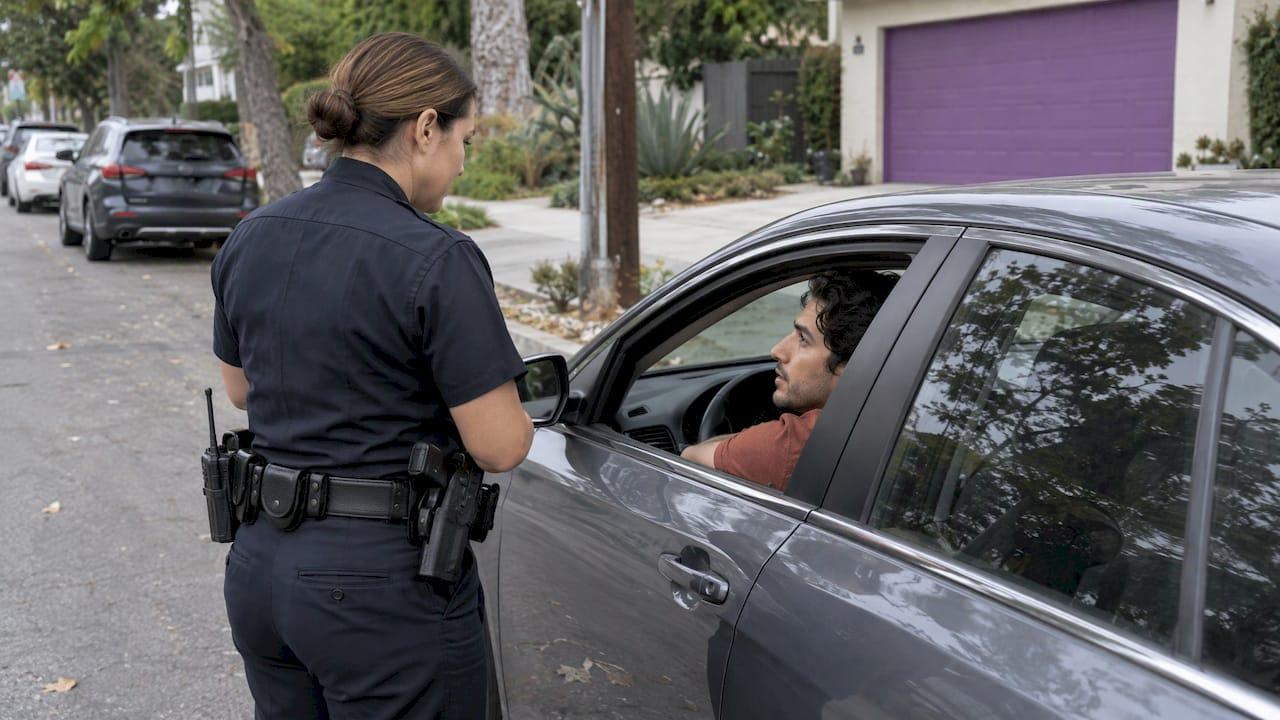
A 10851 charge is defended by attacking what the prosecution must prove: that you took or drove a car without the owner's consent, and that you meant to deprive the owner of it, even temporarily. Consent, intent, identity, the car's value and how the police gathered their evidence are the five places where these cases are won or reduced. A defense lawyer who appears in Los Angeles County courtrooms regularly can test each one before the case hardens into a plea.
People call this "joyriding," but the label is misleading. In California, the offense in Vehicle Code § 10851 can be charged as a felony, and a conviction can follow you into jobs, housing and immigration proceedings. This guide explains the charge in plain terms and walks through the defenses that actually apply.
TL;DR
- Section 10851 covers taking or driving a vehicle that is not yours without the owner's consent, with intent to deprive the owner of it permanently or even temporarily.
- It is a "wobbler," meaning it can be charged as a misdemeanor or a felony, and the vehicle's value and the type of conduct often decide which.
- The main defenses attack consent, intent, identity, value, the "substantial break" in post-theft driving, and unlawful searches or stops.
- Prior permission to use a car does not automatically count as consent for a later use, so this defense needs careful facts.
- Early intervention matters: charging decisions, diversion and evidence challenges are all easier before a plea.
Table of Contents
- What Vehicle Code 10851 actually prohibits
- How 10851 differs from grand theft auto
- The defenses that apply to a 10851 charge
- What happens if you are convicted
- A worked example
- What to do right now
- Why early defense changes the result
- How Rubin Law, P.C. can help
- FAQ
- Sources
What Vehicle Code 10851 actually prohibits
Under Vehicle Code § 10851(a), it is a public offense to drive or take a vehicle that is not yours, without the owner's consent, with intent to permanently or temporarily deprive the owner of title or possession. The statute applies whether or not you intended to steal the car. It also reaches people who help or take part, not only the person behind the wheel.
That last point matters for the reader who was a passenger or a friend who "just went along." The statute names parties, accessories and accomplices, so presence in the car is not the end of the analysis, but neither is it proof of guilt. The prosecution still has to prove each element against you personally.
What the prosecution has to prove
The 2026 CALCRIM No. 1820 jury instruction is the script judges read to juries. For a taking, it says the People must prove three things:
- You took someone else's vehicle without the owner's consent.
- When you took it, you intended to deprive the owner of possession or ownership for any period of time.
- The vehicle was worth more than $950, if the charge is the theft-based felony form.
For driving rather than taking, the instruction speaks of post-theft driving, where the driving happened after a substantial break from the original theft. It also says a taking requires that the vehicle be moved, though any distance, however small, is enough.
Each item is a place to push. If the government cannot prove one, the charge fails or shrinks.
Why it is not called joyriding anymore
The older "joyriding" statute, Penal Code § 499b, now covers only bicycles, motorboats and vessels, according to CALCRIM 1820. Taking a car for a joyride is charged under § 10851 instead. An older Court of Appeal decision, People v. Green (1995), explains that grand theft auto, § 10851 and joyriding involve substantially the same physical conduct and are separated mainly by the intent behind the act. That is why intent is the center of so many defenses.
How 10851 differs from grand theft auto
The practical difference comes down to intent and value. In People v. Bullard (2020), the California Supreme Court explained that former grand theft auto required intent to permanently deprive the owner, while § 10851 covers intent to permanently or temporarily deprive. The same decision held that, except for post-theft driving, a § 10851 violation must be punished as a misdemeanor if the vehicle is worth $950 or less.
The Los Angeles County District Attorney's One Minute Brief 2025-11 lays out the prosecutors' own view. Section 10851 can be violated four ways. Only the theft-based form, taking with intent to permanently deprive, requires proof the vehicle was worth more than $950 for a felony. The other three forms, including post-theft driving, may be punished as a felony regardless of value.
This is why the way the complaint is written matters. A car worth less than $950 charged as a theft-based taking is a very different case from the same car charged as post-theft driving. If you want to see how the related theft statutes work, our pages on PC 487 grand theft, grand theft auto under PC 487(d)(1) and petty theft under PC 484 cover the neighboring charges.
The defenses that apply to a 10851 charge
Not every defense fits every case. The strongest ones are tied to the specific facts: who owned the car, how you came to be in it, what you believed, and how the police found you.
1. Consent
The prosecution must prove the owner did not consent. If the owner, or someone with authority to lend the car, told you that you could use it, the first element fails.
This defense has a trap. Vehicle Code § 10851(c) says consent to a taking or driving cannot be presumed or implied from the owner's consent on a previous occasion, by the same or a different person. So "he let me borrow it last month" does not settle the question for tonight. The facts that help are the ones about that specific use: a text message, a spoken permission a witness heard, a standing arrangement in a family or a roommate setup, or the owner's own conduct that day.
This defense is common when the accuser is an ex-partner, a relative or a former friend, and the car became part of a larger dispute. Those cases are often about credibility, and a lawyer who has cross-examined these witnesses before can use inconsistencies in how the story changed.
2. Lack of intent to deprive the owner
The second element requires intent to deprive the owner of possession or ownership for some period of time. A person who believed the car was theirs, a person who moved a car a short way by mistake, or a person who took the wrong car from a lot can argue they never had that intent. This is a factual defense: it rests on what you believed and did, such as leaving the car in an obvious place, having the keys handed over to you, or promptly calling the owner.
Because "temporary" deprivation is enough, a plan to "bring it right back" is not a defense when you had no permission. The defense works when the belief about ownership or permission was genuine, not when the intent was simply to return it later.
3. Identity: you were not the driver or taker
Many 10851 cases begin with a car found abandoned, or spotted by a patrol officer, with several people nearby. The government has to tie the specific defendant to the taking or driving. Weak points include a short or poor view of the driver, a fingerprint that only shows someone touched the car at some point, a witness who identifies a person after seeing a single photo, and surveillance video too blurry to rely on.
Being a passenger does not equal driving. Because the statute does reach accomplices, the question becomes what you knew and what you did to help, which is again a matter of evidence.
4. The vehicle's value
For the theft-based form, the felony needs a vehicle worth more than $950. As the Bullard decision explains, a vehicle valued at $950 or less must be punished as a misdemeanor in that setting. In People v. Jackson (2018), the Court of Appeal described § 10851(a) as a wobbler and explained that, under Proposition 47, someone who obtains a vehicle worth $950 or less by theft must be charged with petty theft. Older cars, damaged cars and cars with unclear valuations give a defense lawyer room to argue the value is below the threshold.
This defense does not work against every version of the charge. Under the district attorney's brief cited above, the other three forms, including post-theft driving, may be felonies regardless of value. That is why the first job is to find out which theory the prosecution is using.
5. The "substantial break" in post-theft driving
Post-theft driving means driving a car after someone else stole it. CALCRIM 1820 requires that the driving occurred after a substantial break from the original theft. If you were in a car hours or days after it was taken, and you did not know it was stolen, the defense turns on what you knew. Facts that help are an unforced ignition, a car handed to you by someone who appeared to own it, and a plausible story for why you had it. Facts that hurt are a broken steering column, missing plates or a switched key.

Because Jackson recognized that stealing and then continuing to drive are separate violations, a lawyer should also watch for stacked counts from the same incident.
6. Unlawful stop, search or seizure
Many of these cases start with a traffic stop, a license plate reader hit, or officers approaching a parked car. If the stop or search was unreasonable, the evidence found may be thrown out. Penal Code § 1538.5(a)(1) lets a defendant move to suppress evidence from a warrantless search or seizure found unreasonable, or from a search with a warrant that was defective. The motion must be in writing with a memorandum of points and authorities.
In a 10851 case, the questions are practical. Why was the car stopped? Did the officers have a reason to detain you? Did they search the car, your phone or your bag, and did they have authority to do so? Challenging search and seizure is part of what we do, and it can change the outcome when the key evidence is a statement or an item found in the car.
What happens if you are convicted
The statute sets the outer limits. Under § 10851(a), a conviction is punishable by up to one year in county jail or imprisonment under Penal Code § 1170(h), a fine up to $5,000, or both. Subdivision (b) makes certain vehicle takings a felony punishable by two, three or four years and a fine up to $10,000.
Prior convictions raise the stakes. Under § 10851(e), a person with one or more prior felony violations of the section, or prior felony grand theft of a vehicle, is punishable under Penal Code § 666.5, with the prior alleged in the charging document. Our page on PC 666.5 repeat auto theft explains that enhancement.
Courts also add costs. The 2024 San Diego County Probation and Sentencing Handbook lists recommended terms for a misdemeanor stolen-vehicle 10851(a) case. They include a $1,000 custody fine, mandatory restitution to the victim, and a recommended DMV license suspension or revocation. That handbook is a San Diego document and Los Angeles courts apply their own practices, but it shows how many consequences ride along with the headline sentence.
Voters also changed theft law in November 2024. The California Committee on Revision of the Penal Code's 2024 Annual Report states that Proposition 36 expanded "petty theft with a prior" and allows felony charges for some drug possession offenses. If you have prior theft or drug cases, ask how that change interacts with your record.
For non-citizens, the stakes include immigration. The Ninth Circuit held in Almanza-Arenas v. Lynch that § 10851(a) is indivisible and does not categorically match a crime involving moral turpitude, so a conviction does not automatically bar cancellation of removal. How a plea is worded and recorded can still matter a great deal, so tell your defense lawyer your status before any plea discussion, and bring in an immigration attorney as well.
A worked example
Suppose a friend lends you his sedan for a weekend, and on Monday he reports it stolen after a falling out. Police stop you on Tuesday. The charge is 10851.
Step one is consent. The weekend permission is real, but under § 10851(c) it does not carry over automatically to Tuesday. The question is whether there was any permission, or reasonable belief in permission, for that day: messages, calls, who held the keys, and whether he asked for the car back.
Step two is intent. If you believed you could keep the car until he asked for it, you did not intend to deprive him of it.
Step three is the stop. Why did the officers pull you over? If the stop lacked a lawful basis, a suppression motion under § 1538.5 could remove the evidence.
Step four is value and charge type. If the car is worth $950 or less and the case is charged as a theft-based taking, a misdemeanor is the limit.
No single step guarantees an outcome. The point is that a 10851 case has several independent weak points, and a lawyer looks at all of them rather than just negotiating a plea.

What to do right now
If you have been arrested, contacted by police, or learned there is a warrant, these steps protect your position:
- Do not explain your side to the police. Statements about "borrowing" the car are often the main evidence of intent and lack of consent.
- Save your proof. Keep text messages, call logs, rideshare or payment records and the names of anyone who saw the owner hand over the keys.
- Do not contact the owner about the case. A well-meant apology can be read as an admission, or as pressure on a witness.
- Do not move, sell or return the car without advice. Each action can create evidence.
- Speak to a criminal defense lawyer before any court date. Early action is when charging decisions, diversion and motions are still open.
Why early defense changes the result
In a 10851 case, the facts that decide the outcome are collected in the first days: the owner's statement, the stop report, the car's condition and value, and your own words. Prefile intervention means a lawyer engages with the prosecutor before charges are formally filed, and it can affect whether a case is filed at all or as what. Where charges are filed, alternative sentencing and diversion programs can lead to reduced or dismissed counts for the right client.
Our view on 10851 cases
Most people who call us about a 10851 charge say the same thing: "I only borrowed it." Sometimes that is a full defense, and sometimes it is only the start of one. The difference is rarely in the story. It is in the details: who said what, when, and what the paperwork and the police report actually show.
We spend our time in Los Angeles County courtrooms, and that shapes how we approach these cases. We know how local prosecutors tend to charge a wobbler and where the evidence is usually thinnest. We press constitutional challenges to stops and searches, and we look for diversion or alternative sentencing where it fits, because a felony auto-theft record follows a person for years.
You deserve a lawyer who reads the complaint, picks the weakest element and works that point from the first day. That is how we take on every case.
Jake
How Rubin Law, P.C. can help
Rubin Law, P.C. defends felony and misdemeanor charges in Los Angeles County, including theft-related and vehicle cases, and handles warrants, probation violations and prefile intervention. Our approach combines frequent courtroom appearances, direct attorney attention, constitutional challenges to searches and seizures, and diversion programs where they are available. If you are charged, under investigation or have a warrant, see our criminal defense services and reach out before your first court date.
If your situation involves related charges, these pages explain them: carjacking under PC 215, driving on a suspended license and reckless evading under VC 2800.2.
FAQ
Is 10851 a felony or a misdemeanor?
It can be either. The Court of Appeal in People v. Jackson described § 10851(a) as a wobbler, meaning the prosecutor or the court decides how it is treated. Value, the type of conduct charged and your prior record all affect the decision.
Can I be charged if the owner let me use the car before?
Yes. Under § 10851(c), earlier consent is not presumed to cover a later use. Your defense depends on proof that you had permission, or honestly believed you did, for the specific occasion.
Do I need to have meant to keep the car?
No. The statute covers intent to deprive the owner permanently or temporarily, and it applies whether or not you meant to steal the car. That is why defenses focus on whether you had consent or a genuine belief you did.
Is a car worth under $950 always a misdemeanor?
Not always. Bullard requires misdemeanor punishment at $950 or less except for post-theft driving. The county's One Minute Brief states that the other three forms may be felonies regardless of value.
Sources
- California Vehicle Code § 10851
- California Penal Code § 1538.5
- CALCRIM No. 1820
- People v. Bullard (2020), California Supreme Court
- LA County District Attorney, One Minute Brief 2025-11
- People v. Jackson (2018)
- People v. Green (1995)
- San Diego County Probation and Sentencing Handbook (2024)
- California Committee on Revision of the Penal Code, 2024 Annual Report
- Almanza-Arenas v. Lynch, Ninth Circuit